Essential recipes
Working with chocolate is where culinary science meets edible artistry. Unlike other ingredients that forgive small mistakes, chocolate demands respect for its physical properties—temperature curves, crystal structures, and fat-water ratios all play critical roles in success or failure. Yet this precision shouldn’t intimidate you. Once you understand the fundamental principles behind essential chocolate techniques, you’ll approach every recipe with confidence rather than anxiety.
The recipes that form the cornerstone of chocolate pastry aren’t arbitrary traditions. Each one—from perfectly tempered bonbons to silky ganache emulsions to molten-centered cakes—teaches you something crucial about how chocolate behaves. Master these foundational preparations, and you’ll have unlocked the skills needed to tackle virtually any chocolate project. This comprehensive resource breaks down the core techniques, the science behind them, and the practical know-how that transforms uncertain attempts into consistent, professional results.
Selecting the Right Chocolate for Your Recipe
Not all chocolate is created equal, and understanding these differences is your first step toward pastry success. The chocolate you choose directly impacts texture, flavor intensity, and even structural integrity in your final creation.
Understanding Couverture vs Standard Chocolate
The term couverture chocolate refers to chocolate with a higher cocoa butter content—typically 32% or more—compared to standard baking chocolate. This extra fat creates a thinner, more fluid consistency when melted, making it ideal for coating, dipping, and creating smooth ganaches. Standard baking chocolate works adequately for brownies or cookies where it’s mixed with other fats, but couverture delivers the professional snap, shine, and mouthfeel that defines quality chocolate work.
Think of it like comparing heavy cream to milk in a sauce—both are dairy, but one creates richness the other simply cannot achieve. When you’re investing time in tempering or crafting delicate shells, couverture chocolate rewards your effort with superior results that standard varieties cannot match.
Single-Origin Chocolate and Flavor Profiles
Single-origin chocolates showcase beans from one specific region, each bringing distinct flavor notes to your pastry. Ecuadorian chocolate might offer bright, fruity aromatics with floral hints, while Madagascar varieties often present berry-like acidity. Venezuelan beans typically deliver nutty, caramel complexity.
These characteristics aren’t just marketing—they genuinely affect your final dessert. Pairing a fruity Peruvian chocolate with raspberry creates harmonic resonance, while a robust Dominican variety stands up beautifully to coffee or spices. Understanding these flavor profiles allows you to make intentional choices rather than defaulting to generic “dark chocolate” in every recipe.
Rehabilitating Quality Forastero for Structure
Forastero beans have historically been dismissed as inferior to prized Criollo varieties, but this reputation oversimplifies reality. High-quality Forastero, when properly processed, delivers robust chocolate structure with resilient texture—exactly what you need for recipes demanding stability. Its straightforward cocoa profile creates an excellent chocolate skeleton that supports more delicate flavors without competing with them.
For layered entremets or complex assemblages with multiple flavor components, quality Forastero provides reliable backbone without the aromatic complexity that might clash with vanilla, caramel, or fruit elements. It’s the culinary equivalent of a solid supporting actor who makes the leads shine brighter.
Mastering the Science of Chocolate Emulsions
Ganache—that luxurious mixture of chocolate and cream—exemplifies the broader principle of emulsions in chocolate work. When these preparations fail, they don’t just look wrong; they taste grainy, separated, or greasy. Understanding the physics prevents frustration and waste.
The Physics Behind Perfect Ganache
An emulsion suspends tiny fat droplets within liquid, creating a stable, homogeneous mixture. In ganache, you’re convincing chocolate’s cocoa butter to integrate smoothly with cream’s water content—two substances that naturally repel each other. Lecithin in chocolate acts as an emulsifier, but only when conditions are right.
Temperature is critical here. Adding cold cream to hot chocolate causes thermal shock that prevents proper bonding. Conversely, overheating damages the emulsion’s structure. The sweet spot typically falls between 90-95°F (32-35°C) for the final mixture—warm enough to keep fats fluid, cool enough to preserve emulsifiers.
Think of emulsification like convincing two people who speak different languages to dance together—you need a translator (lecithin), the right environment (temperature), and patient technique (gentle stirring) to achieve harmony.
Troubleshooting Broken or Grainy Emulsions
When ganache splits, showing visible separation or developing a grainy texture, don’t discard it. Most broken emulsions can be rescued with the right approach:
- For split ganache: Add small amounts of warm liquid (cream or milk) while stirring vigorously to re-establish the bond between fat and water phases
- For grainy texture: The chocolate likely overheated; blend with an immersion blender to break down sugar crystals that have formed
- For greasy appearance: Too much fat has separated out; incorporate small amounts of warm cream while using elastic friction with a spatula
Prevention beats repair, however. Always heat cream just to steaming (not boiling), pour it over chopped chocolate in thirds, and stir from the center outward to create gradual incorporation.
Temperature and Liquid Base Selection
Your choice of liquid base profoundly affects both flavor and technical success. Heavy cream (35% fat) creates the richest, most stable ganache because higher fat content supports emulsification. Whole milk works but produces softer results requiring higher chocolate ratios to compensate.
Non-dairy alternatives like coconut cream behave differently—their fat structure varies from dairy, often requiring invert sugars or additional emulsifiers for stability. Coffee, fruit purées, or infused liquids introduce water activity that demands careful ratio adjustment to prevent separation.
As a general principle, higher water content requires higher chocolate-to-liquid ratios to maintain stable structure. A standard dark chocolate ganache uses 1:1 ratios, but raspberry purée ganache might need 2:1 chocolate to liquid for comparable consistency.
Tempering: The Foundation of Professional Chocolate Work
If you’ve ever made chocolate that looked dull, felt soft, or developed white streaks upon setting, you’ve experienced the consequences of untempered chocolate. Tempering isn’t optional for professional results—it’s the technique that controls how cocoa butter crystallizes.
Understanding Crystal Formation
Cocoa butter can form six different crystal structures (numbered I through VI), but only Form V crystals create the characteristics you want: glossy appearance, firm snap, and stability at room temperature. Uncontrolled cooling produces mixed crystal forms that result in soft, streaky, unstable chocolate.
Tempering is essentially the process of heating chocolate to melt all existing crystals, cooling it to encourage Form V crystal formation, then gently rewarming to working temperature while maintaining those desired crystals. Temperature precision matters here—just a few degrees in either direction produces different results.
Seeding Method for Consistent Results
The seeding method offers the most reliable tempering approach for home bakers and small-batch work. Here’s the process:
- Melt two-thirds of your chocolate to 113-118°F (45-48°C) for dark chocolate, lower for milk or white varieties
- Remove from heat and add the remaining one-third as chopped “seed” chocolate, stirring constantly
- The seed chocolate introduces stable Form V crystals while lowering temperature to 82-84°F (28-29°C)
- Gently rewarm to working temperature: 88-90°F (31-32°C) for dark, 86-88°F (30-31°C) for milk, 82-84°F (28-29°C) for white
This method works because you’re essentially “teaching” the melted chocolate how to crystallize by introducing already-tempered seed chocolate as a template.
Identifying and Preventing Fat Bloom
Those white streaks or spots on chocolate’s surface indicate fat bloom—cocoa butter that has migrated to the surface and re-crystallized incorrectly. This happens when chocolate experiences temperature fluctuations or was improperly tempered initially.
Prevention strategies include maintaining consistent storage temperatures (60-68°F/15-20°C), ensuring proper tempering, and avoiding refrigeration unless absolutely necessary. If you must refrigerate ganache-filled chocolates, bring them slowly to room temperature while still wrapped to prevent condensation from triggering bloom.
Classic Chocolate Preparations Every Baker Should Master
Beyond techniques, certain recipes serve as essential building blocks that appear repeatedly in chocolate pastry work. These preparations teach technique while creating versatile components.
Salted Butter Caramel and Perfect Balance
Salted caramel has evolved from trendy addition to permanent staple, and for good reason—salt enhances both sweetness and complexity while tempering caramel’s cloying potential. The key lies in precise salt measurement (0.5-1% of total caramel weight) and choosing the right salt type. Flaky sea salt provides textural contrast and clean flavor; fine salt integrates seamlessly for smooth consistency.
Technical success depends on three critical decisions: cooking sugar to the right color (amber, not black), adding butter at the correct moment (after removing from heat to prevent excessive bubbling), and incorporating cream gradually to control temperature drop. Adding fat too early creates greasy separation; too late results in hardened sugar chunks that won’t dissolve.
The Almond-Chocolate Pairing in Pastry
Almonds and chocolate create one of pastry’s most reliable partnerships—the nut’s subtle sweetness and delicate bitterness harmonize naturally with chocolate’s flavor profile. Recipes like chocolate financiers or flourless chocolate-almond cakes demonstrate this synergy while teaching the technique of double baking: creating structure through almond flour while maintaining moisture through chocolate’s fat content.
The trick to preventing dense, heavy results lies in proper mixing technique and respecting the ratio of dry to wet ingredients. Almond flour lacks gluten structure, relying instead on eggs and careful folding to maintain airiness. Overmixing deflates incorporated air; undermixing creates pockets of dry ingredients.
Signature Technique: The Perfect Molten Chocolate Cake
The molten chocolate cake (mi-cuit in French) represents the pinnacle of timing precision in chocolate pastry. That flowing center isn’t accidental—it results from calculated underbaking that sets the exterior while leaving the core just below full coagulation temperature.
Professional kitchens often use a frozen ganache core placed in the batter before baking. As the exterior cooks, the ganache center melts, guaranteeing that signature flow. For home bakers, this technique offers remarkable advantages: you can prepare cakes completely in advance, freeze them unbaked, and cook directly from frozen with predictable results.
Choosing the right mold matters significantly. Individual metal molds conduct heat more efficiently than ceramic ramekins, creating better contrast between set exterior and liquid center. Butter and flour the molds thoroughly, or use non-stick spray with cocoa powder instead of flour to prevent white residue on your dark chocolate cake.
The ideal baking temperature hovers around 425°F (220°C) for 12-14 minutes. You’re looking for set edges with a center that still jiggles slightly when gently shaken. Let them rest exactly one minute before inverting—too soon and the structure collapses; too long and the center sets too firmly.
Demolding requires confidence: place a plate over the mold, flip quickly, let gravity work for three seconds, then lift the mold straight up. If resistance occurs, a thin knife run along the edge usually releases the cake without damage.
These essential recipes and techniques form the foundation of confident chocolate work. Whether you’re crafting simple ganache truffles or complex plated desserts, the principles remain constant: respect chocolate’s physical properties, maintain precise temperatures, and understand the science behind each process. Start with one technique, practice until it becomes intuitive, then build your repertoire systematically. The journey from nervous beginner to confident chocolatier is built one perfectly tempered piece, one silky emulsion, one flowing molten center at a time.
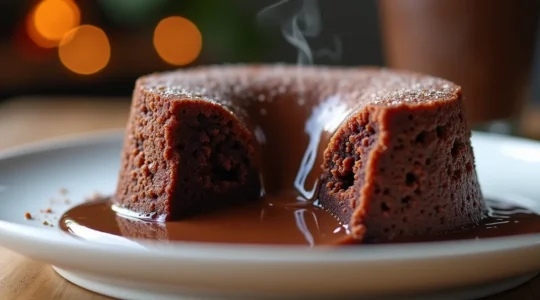
How to Time the Baking of Lava Cakes to the Exact Second?
The key to perfectly timed lava cakes isn’t a stopwatch; it’s a rigorous system that eliminates variables before the cake ever enters the oven. Success depends on thermal control—understanding batter temperature, heat conductivity of the vessel, and carryover cooking. Failure-proofing…
Read more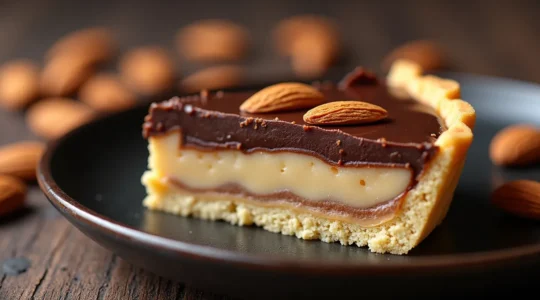
How to Lighten Almond Cream for a Balanced Chocolate Tart?
The secret to light almond cream isn’t whipping it airy—that’s what causes it to collapse. The goal is a stable, silken emulsion. A raw center is caused by the ganache insulating the cream; a partial pre-bake is the only solution….
Read more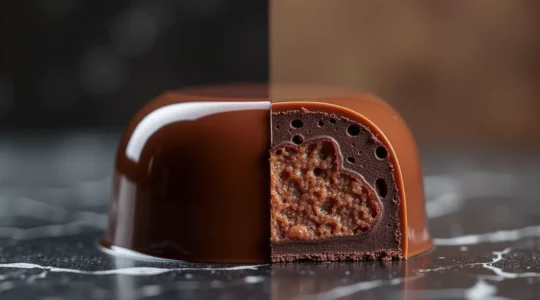
How to Create a Ganache With a Shelf Life of 6 Weeks?
Achieving a professional, shelf-stable ganache is a matter of food engineering, not just following a recipe; it requires controlling water activity and the physical state of fat. The key is to create a fine, stable emulsion where water is chemically…
Read more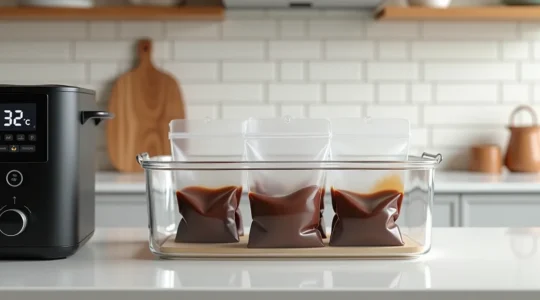
Mastering Chocolate Tempering: A Sous-Vide Protocol for Flawless Crystallization
Sous-vide tempering is not a shortcut; it is a high-precision instrument for dictating chocolate’s final crystalline structure. It delivers sub-degree temperature control, preventing the accidental destruction of the vital Beta-V crystals essential for snap and gloss. It creates a closed…
Read more
Why Does Salt Actually Make Caramel Taste Sweeter?
The magic of salted caramel isn’t just taste contrast; it’s a neurochemical trick where salt suppresses bitterness and amplifies your brain’s perception of sugar. Sodium ions in salt prime the SGLT1 receptors on your tongue, making them more efficient at…
Read more
Why Is Tempering Essential for Snap and Shelf Life?
Contrary to popular belief, tempering isn’t just about melting chocolate—it’s about mastering molecular science to build the perfect crystal structure. Cocoa butter can form six different types of crystals; only one (Beta V) creates the desired snap, shine, and stability….
Read more
Why Does Your Dark Chocolate Ganache Split and Look Oily?
Contrary to popular belief, a split ganache is not a sign of bad luck or poor ingredients; it’s a predictable failure of a chemical emulsion. A split occurs when the fat (from cocoa butter and cream) and water (from cream)…
Read more
Why High-Quality Forastero Is Essential for Structured Ganaches?
Contrary to popular belief, Forastero is not an inferior bean; its high cocoa-solid content provides an unmatched structural ‘backbone’ for professional pastry applications. Forastero’s robustness creates a dense particle network, resulting in ganaches that set firmer and cakes that are…
Read more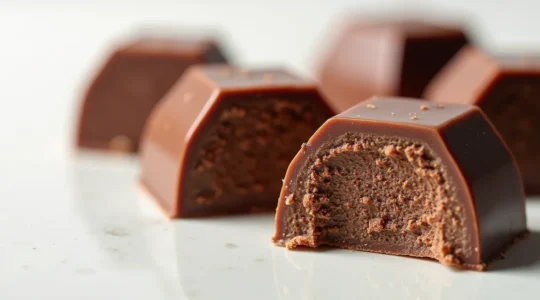
Why Use Single-Origin Couverture for Superior Ganache Results?
The secret to a flawless ganache lies not in subjective flavor notes, but in mastering the objective science of a single-origin chocolate’s structure and chemical behavior. The specific cocoa butter crystallography of an origin dictates the final texture, sheen, and…
Read more