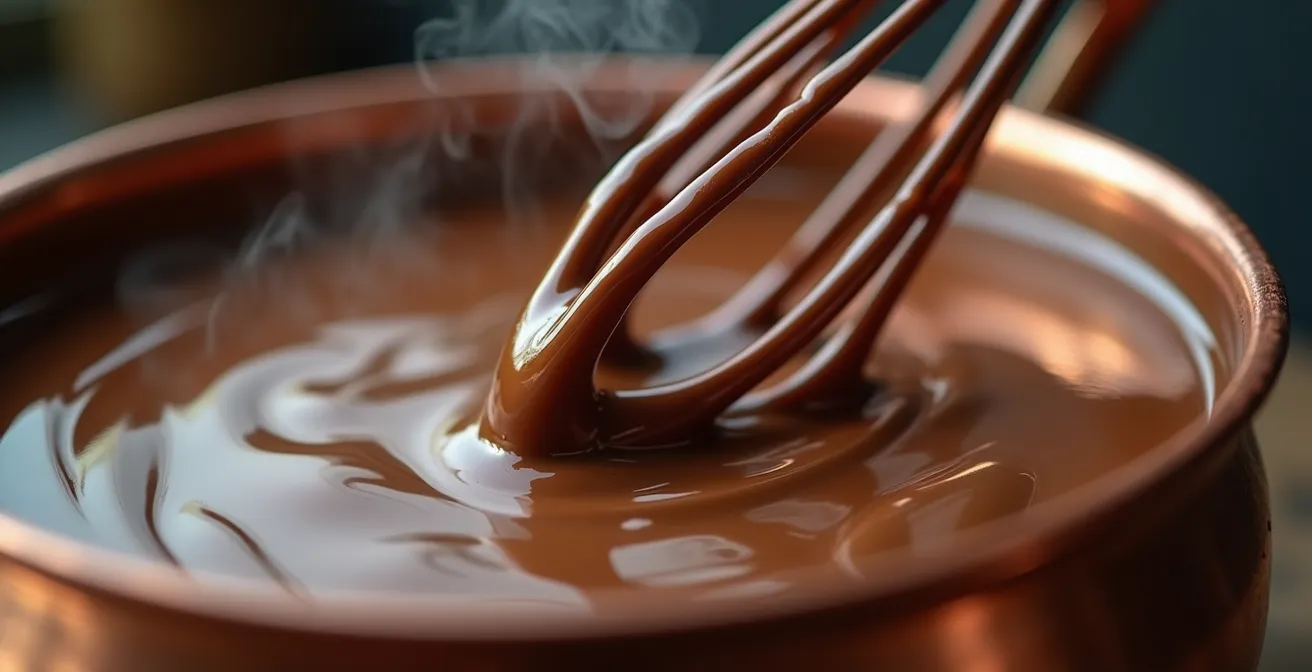
Achieving a luxurious, spoon-coating hot chocolate has nothing to do with adding starches or powders.
- The secret lies in mastering the perfect emulsion between high-quality chocolate and your liquid.
- Strategic aeration and precise temperature control are what unlock a velvety mouthfeel and complex flavors.
Recommendation: To achieve this texture, always start by creating a stable, glossy ganache base before gradually incorporating the rest of your warm liquid.
The quest for the perfect hot chocolate often ends in disappointment. We dream of a thick, decadent, European-style elixir, yet we’re frequently left with a thin, watery drink that barely coats the mug. The common response is to reach for thickeners like cornstarch, a shortcut that dulls flavor and creates a pasty, artificial texture. This approach fundamentally misunderstands the nature of luxury chocolate. It treats the symptom—a lack of body—without addressing the cause.
The true art of hot chocolate lies not in adding fillers, but in understanding its fundamental structure. For baristas and connoisseurs, achieving that coveted velvety consistency is a matter of technique, not tricks. It hinges on a molecular trinity: a stable emulsification of cocoa butter and liquid, the deliberate introduction of air through aeration, and meticulous temperature control to protect the chocolate’s delicate aromatics. Forget everything you know about simply melting chocolate into milk. We are not just making a drink; we are engineering a sensory experience.
This guide will deconstruct the process, moving beyond simplistic recipes to explore the science and artistry behind a truly exceptional hot chocolate. We will analyze the impact of the liquid base, explore how aeration techniques change flavor perception, and reveal the critical temperature mistake that sabotages most attempts. By mastering these principles, you will be able to create a hot chocolate with profound depth, an unctuous body, and a clean, lingering finish—all without a single grain of cornstarch.
To guide you through this journey of textural and flavor mastery, this article is structured to build your expertise from the ground up, from foundational choices to advanced finishing touches.
Summary: Crafting a Velvety Hot Chocolate Without Thickeners
- Water vs. Oat Milk: Which Reveals More Cocoa Nuances?
- Why Using a Molinillo or Frother Changes the Flavor Perception?
- Cayenne and Cinnamon: How to Spice Without Overpowering?
- The Serving Mistake: Why Boiling Milk Burns the Chocolate?
- Churros vs. Biscuits: What is the Ideal Dipping Partner?
- Why Do Heart-Shaped Chocolates Sell 5x Better in February?
- Why “Dark Milk” Chocolate Is the New Trend for Connoisseurs?
- Layering Flavors: How to Keep Coffee and Chocolate Distinct?
Water vs. Oat Milk: Which Reveals More Cocoa Nuances?
The foundation of any exceptional hot chocolate is the liquid it’s built upon. The choice between water and a milk alternative like oat milk is not a matter of right or wrong, but a strategic decision that dictates the final flavor architecture. Using water, a technique favored by many chocolatiers for single-origin tasting, creates what is known as a “true” hot chocolate. It acts as a neutral canvas, allowing the terroir-specific notes of the cacao—be they fruity, floral, or earthy—to express themselves with unparalleled clarity. The resulting beverage is less about creamy comfort and more about an intense, pure chocolate experience.
Conversely, oat milk introduces its own character. Its inherent creaminess, fat content, and subtle sweetness contribute to a richer, more rounded mouthfeel. This can be advantageous for balancing the bitterness of a very high-cacao chocolate or for creating a more comforting, dessert-like beverage. However, this richness can also mask the subtler nuances of the chocolate. A delicate, floral-noted Madagascan chocolate, for instance, might have its profile flattened by the oaty character of the milk. The Italian method often finds a middle ground, using a smaller ratio of milk to a larger amount of chocolate, creating thickness through concentration rather than additives.
Ultimately, the choice depends on your objective. For a forensic exploration of a specific chocolate’s profile, start with water. For a sumptuously creamy and satisfying drink, oat milk is an excellent choice. An advanced practice is to conduct a split-batch tasting: create a concentrated chocolate ganache and dilute half with water and half with warmed oat milk to directly compare the textural and aromatic differences.
Why Using a Molinillo or Frother Changes the Flavor Perception?
Aeration is the second pillar in our molecular trinity, and it is far more than just creating foam. The process of whisking, frothing, or stirring air into hot chocolate fundamentally alters its chemistry and our perception of its taste. Without aeration, hot chocolate can feel dense and heavy on the palate, with its bitter notes presenting more aggressively. Introducing air breaks up this density, creating a lighter, more voluminous texture that feels more luxurious. This process is a form of sensory amplification.
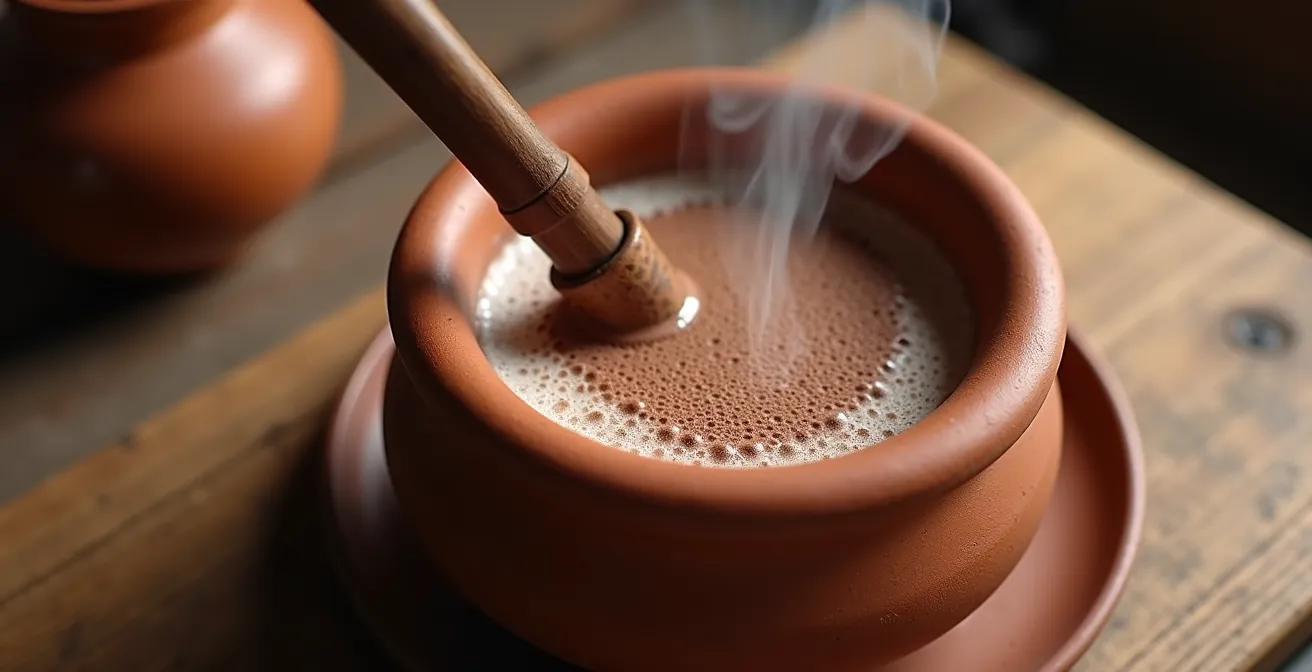
Different tools create different results. A traditional wooden molinillo, rolled between the palms, incorporates air in a gentle, churning motion that produces a medium, integrated foam. This method is celebrated for releasing complex aromatics without creating a detached, airy topping. An electric frother, by contrast, creates a very fine, stable microfoam. This thick layer of tiny bubbles changes the tasting experience significantly; the chocolate is often perceived as sweeter and less bitter because the foam alters how the liquid coats the tongue and releases its volatile compounds. Even a simple hand whisk introduces large bubbles, which can lighten the texture and begin the process of sweetness enhancement.
This principle is perfectly illustrated by the use of a traditional molinillo, which is designed not just to mix but to transform the beverage’s body and aroma through controlled aeration. The visual of the foam patterns developing is part of the ritual itself.
Interestingly, this effect can even be achieved through ingredients. A study on marshmallow foam integration shows that melting marshmallows into the drink creates natural aeration as they dissolve, producing a frothy top while simultaneously adding sweetness and body. This demonstrates that aeration is a key lever in textural engineering, turning a simple drink into something far more sophisticated.
Cayenne and Cinnamon: How to Spice Without Overpowering?
Once the base texture is perfected, building the flavor architecture with spices requires a delicate hand. The goal is to complement the chocolate, not conquer it. Spices like cinnamon and cayenne are classic partners, rooted in the traditions of Mesoamerican chocolate consumption, but their intensity can easily overwhelm a beverage. The most common mistake is to simply stir in ground spices at the end, which often results in a gritty texture and a harsh, “raw” spice flavor.
The professional technique to avoid this is called “blooming.” This involves gently heating the spices to release their essential oils before they are incorporated into the main liquid. For whole spices, such as a cinnamon stick or a dried chili, this means toasting them in a dry pan for about 30 seconds until fragrant, then steeping them in the warm milk (below boiling) for 5-7 minutes. This allows for a deep, controlled infusion of flavor without any grittiness. The whole spices are then strained out before the chocolate is added.
For ground spices, the process is slightly different. The powder should be mixed with the cocoa powder or a small amount of the hot liquid to form a paste. This paste is then whisked into the larger batch. This method ensures even distribution and cooks out the raw taste, resulting in a harmonious and integrated flavor profile. The key is gradual addition and constant tasting. You can always add more, but you can never take it away.
The Serving Mistake: Why Boiling Milk Burns the Chocolate?
Temperature control is the most critical and least respected aspect of making elite hot chocolate. The single biggest mistake that leads to a grainy, broken, or bitter beverage is using liquid that is too hot. Boiling milk or water (212°F/100°C) will scorch the delicate solids in the chocolate, creating a burnt taste. Even more damaging, it causes the cocoa butter to separate from the cocoa solids—a process called “seizing”—resulting in a greasy, gritty texture instead of a smooth, glossy emulsion. Maintaining thermal integrity is non-negotiable.
To prevent this, you must treat the mixture like a classic ganache. The ideal temperature of your liquid should never exceed 180°F (82°C). Professional chocolatiers recommend keeping your hot chocolate below this threshold to protect the volatile flavor compounds. The best practice is to heat your milk until it is just steaming, around 160-170°F (71-77°C), and then remove it from the heat *before* you add the chocolate.
The correct method is to pour about one-third of the warm liquid over finely chopped chocolate, let it sit for 30 seconds to gently melt, and then whisk from the center outward. This encourages the cocoa butter and liquid to form a stable, glossy emulsion. Only then should you gradually whisk in the remaining liquid. This two-stage process guarantees a perfectly smooth, unctuous base.
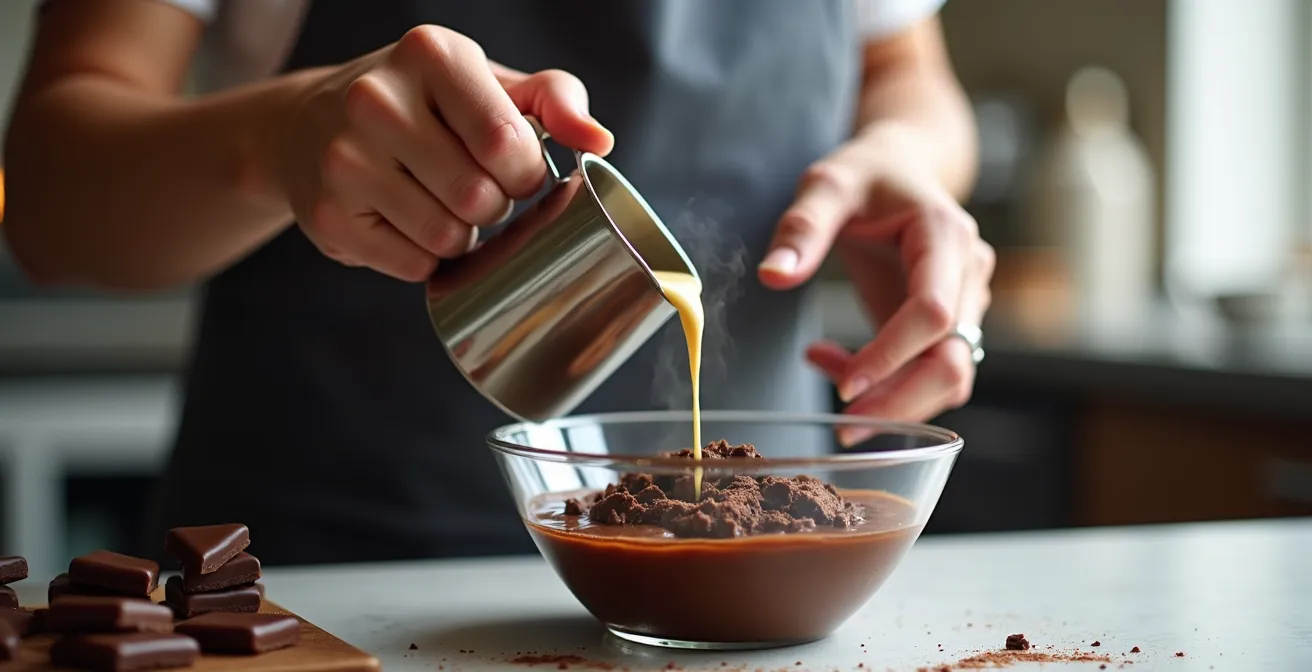
This ganache method is the core secret to achieving thickness without cornstarch. The emulsion itself creates the viscosity and rich mouthfeel you’re seeking. The following checklist breaks down the exact steps to achieve a flawless result every time.
Your Action Plan: Chocolatier’s Ganache Method to Prevent Seizing
- Chop chocolate into small, uniform pieces for even melting.
- Heat milk to 160-170°F (71-77°C)—warm and steaming, but not simmering.
- Remove the milk from the heat source before adding any chocolate.
- Pour one-third of the warm milk over the chocolate and let it sit undisturbed for 30 seconds.
- Begin whisking from the very center of the bowl, moving in small circles outward to create a stable emulsion.
Churros vs. Biscuits: What is the Ideal Dipping Partner?
With the hot chocolate itself perfected, the ritual of consumption comes into focus. A beverage this thick and rich is not just for drinking; it is for dipping. The choice of accompaniment is crucial, as its structure and flavor must be able to withstand the dense chocolate while providing a pleasing contrast. The ideal partner requires a balance of structural integrity and porosity.
The traditional Spanish pairing of churros y chocolate is a masterclass in textural contrast. Freshly fried churros have a crispy, ridged exterior with a high porosity that eagerly soaks up the thick chocolate, while their soft interior holds its shape for a few crucial seconds. The cinnamon-sugar coating also adds another layer of flavor that complements the dark chocolate beautifully. Similarly, Italian biscotti are engineered for dipping. Being twice-baked, they possess a superior structural integrity that prevents them from disintegrating, while their medium porosity allows for deep flavor absorption.
Softer items, like French madeleines or sponge cake, are less ideal. Their low porosity and delicate crumb structure mean they soften and fall apart almost immediately upon contact. The following table provides a structural analysis of common dipping partners, highlighting why some are better suited than others for a thick, European-style hot chocolate.
This comparative data, drawn from an analysis of dipping accompaniments, shows a clear correlation between baking method and dipping performance.
| Dipping Partner | Porosity Level | Structural Integrity | Flavor Contrast | Optimal Dip Time |
|---|---|---|---|---|
| Spanish Churros | High (crispy ridges) | Excellent when fresh | Cinnamon-sugar coating | 2-3 seconds |
| Italian Biscotti | Medium (twice-baked) | Superior – engineered for dipping | Almond/anise notes | 4-5 seconds |
| French Madeleines | Low (sponge cake) | Moderate – softens quickly | Buttery, delicate | 1-2 seconds |
| Sourdough Toast | Medium (open crumb) | Good with olive oil coating | Tangy, savory contrast | 2-3 seconds |
Why Do Heart-Shaped Chocolates Sell 5x Better in February?
While mastering the physical properties of hot chocolate is a science, we cannot ignore the powerful role of psychology in the chocolate experience. The astounding commercial success of heart-shaped chocolates in February is a perfect case study in visual-taste transference. The form of the chocolate primes our emotional and sensory expectations before we even take a bite. The heart shape is a universally recognized symbol of love, care, and indulgence. This strong emotional association can subconsciously enhance our perception of the chocolate’s taste, making it seem sweeter, richer, or more satisfying than the exact same chocolate presented in a neutral shape.
This phenomenon isn’t just a marketing gimmick; it’s rooted in food psychology. The brain does not process taste in isolation. It integrates visual cues, aromas, and even the context of consumption into a single, holistic experience. When we see a heart shape, our brain anticipates a rewarding, emotionally resonant treat. This anticipation can trigger a release of dopamine, effectively sweetening the deal before the chocolate even touches our lips. The shape acts as a powerful placebo, amplifying the inherent pleasure of the confection.
This concept extends to our hot chocolate ritual. Serving a perfectly crafted beverage in a beautiful, heavy ceramic mug versus a plain paper cup changes the perceived value and taste. The shape of the vessel, the color, the weight—all are part of the flavor architecture. Understanding this allows a barista or host to curate an experience that goes beyond the liquid in the cup, leveraging psychological cues to elevate the simple act of drinking chocolate into a memorable event.
Why “Dark Milk” Chocolate Is the New Trend for Connoisseurs?
For decades, the world of fine chocolate was starkly divided: dark or milk. Connoisseurs typically gravitated toward high-cacao dark chocolates for their complexity, while milk chocolate was often dismissed as overly sweet and simplistic. The emergence of “dark milk” chocolate represents a paradigm shift, creating a category that offers the best of both worlds and is perfectly suited for luxury hot chocolate.
Dark milk chocolate occupies a unique space, typically with a cacao content between 40% and 60%. This is significantly higher than conventional milk chocolate (which can be as low as 10-20%) but lower than intensely bitter dark varieties. This “sweet spot” retains the complex fruity and roasted notes of the cacao bean while using a small amount of milk powder to round out the sharp edges, add a creamy texture, and introduce subtle caramel notes. It is a chocolate designed for flavor, not just sweetness. For hot chocolate, professional chocolatiers recommend using chocolate with a cacao content of 52-55% for an ideal balance of richness and complexity.
The result is a beverage with the aromatic depth of dark chocolate but with a silkier, more approachable mouthfeel. Brands like Valrhona and Callebaut have been pioneers in this space, creating professional-grade dark milk “fèves” (discs) that are optimized for melting and emulsification. When selecting a dark milk chocolate, look for a high cacao percentage, cocoa butter listed prominently in the ingredients, and an absence of vegetable oils. A quality bar will have a clean, sharp “snap” when broken, indicating a good temper and high cocoa butter content—the very essence of a chocolate that will melt into a beautifully viscous and velvety drink.
Key Takeaways
- True thickness comes from a stable ganache emulsion, not from adding starches like cornstarch.
- Aeration is a crucial step that lightens texture and makes the chocolate taste sweeter and less bitter.
- The quality of your raw material, particularly the rise of “dark milk” chocolate, defines the potential of your beverage.
Layering Flavors: How to Keep Coffee and Chocolate Distinct?
For the true beverage artist, the final frontier is the creation of layered drinks, where flavors are presented both distinctly and harmoniously. A common pairing, the mocha, often fails this test, becoming a homogenous blend where neither the coffee nor the chocolate truly shines. The secret to creating distinct layers, as seen in high-end barista creations, lies in understanding and manipulating density.
A thick, European-style hot chocolate, prepared using the ganache method with less liquid, will be significantly denser and more viscous than a freshly brewed shot of espresso. This density differential is what allows for layering. By preparing the hot chocolate base first and allowing it to cool slightly (to around 160°F), its viscosity increases. The hot, fresh espresso is then poured very slowly over the back of a warm spoon onto the surface of the chocolate. This technique disperses the flow of the coffee, allowing it to float on top of the denser chocolate layer, creating a visually stunning and complex tasting experience.
Beyond technique, flavor pairing is critical. Not all coffees complement all chocolates. The goal is to choose profiles that either contrast or complement each other. An earthy, herbal Sumatran coffee, for instance, creates a beautiful opposition when paired with a bright, red-fruited Madagascan chocolate. A balanced, nutty Colombian coffee, however, might be better suited to a Venezuelan chocolate with complementary fruity notes. This table, based on a professional pairing guide, offers a starting point for exploration.
| Coffee Origin | Flavor Profile | Best Chocolate Pairing | Why It Works |
|---|---|---|---|
| Ethiopian Yirgacheffe | Bright, fruity, floral | Mexican Soconusco (earthy) | Contrast highlights both |
| Colombian | Balanced, nutty | Venezuelan (fruity) | Complementary middle notes |
| Sumatran | Earthy, herbal | Madagascar (bright, red fruit) | Opposition creates complexity |
| Kenyan | Black currant, wine-like | Ecuador (floral, mild) | Prevents flavor competition |
By embracing the molecular trinity of emulsification, aeration, and temperature, you move beyond mere recipes and begin to truly understand the craft. This knowledge empowers you to create not just a thick hot chocolate, but a bespoke sensory experience tailored to your specific taste and the unique qualities of the chocolate you choose. Start today by focusing on the ganache method to transform your results.