The afternoon coffee and chocolate isn’t just a guilty pleasure; it’s a science-backed ritual for boosting cognitive performance.
- The synergy of caffeine and cocoa’s theobromine enhances focus more than coffee alone.
- The key is mindful portioning and pairing intensity (e.g., dark chocolate with acidic espresso) to avoid sugar crashes.
Recommendation: Use a single, high-quality piece of chocolate as a mindfulness trigger, tasting it before your coffee to prime your palate and transform your break into an intentional pause.
The dreaded 3 PM slump. It arrives like clockwork, a wave of fatigue that blurs your screen and drains your motivation. The common reflex is to grab the nearest cup of coffee and a sugary snack, a desperate bid for a quick energy spike. We see it as a simple transaction: trade sugar and caffeine for a few more productive hours. But what if this daily ritual holds the potential for something far more profound? What if, instead of a frantic fix, your coffee break could become an intentional act of restoration?
This is the essence of “Fika,” the Swedish tradition of pausing to share coffee and a treat. It’s not about mindlessly consuming; it’s about resetting your mind and body. The secret lies in moving beyond random pairings and embracing the neuro-sensory synergy of coffee and chocolate. By understanding how these two powerful ingredients interact, we can transform a simple break into a restorative ritual that genuinely enhances focus, elevates mood, and makes the rest of your day better.
This guide isn’t just about what tastes good. It’s a journey into the science and art of the perfect pairing. We will explore why coffee and chocolate are a cognitive power couple, how to choose the right portions to sustain energy, and how to match flavors with the precision of a connoisseur. You will learn the service techniques that protect delicate aromas and, most importantly, how to use a single bite to anchor a moment of true mindfulness, turning your break from an interruption into an essential part of a productive, well-balanced day.
This article provides a structured path to mastering the art of the coffee and chocolate break. The following sections will guide you through each step, from the underlying science to the practical techniques for creating your own perfect Fika moment.
Summary: Mastering the Art of the Coffee and Chocolate Pairing
- Why Coffee and Chocolate Boost Focus Better Together?
- How to Choose the Perfect Portion Size to Avoid a Sugar Crash?
- Dark Chocolate vs. Milk: Which Matches an Acidic Espresso?
- The Service Mistake: Placing Chocolate Too Close to Hot Cups
- How to Use a Single Bite as a Mindfulness Trigger?
- How to Pair Single Origin Coffee with Matching Chocolate Terroirs?
- Why Does Great Chocolate Linger on Your Palate for 20 Minutes?
- How to Pair Single Origin Coffee with Matching Chocolate Terroirs?
Why Coffee and Chocolate Boost Focus Better Together?
The bond between coffee and chocolate is more than a matter of taste; it’s a powerful cognitive partnership. While many reach for caffeine to power through demanding tasks—indeed, research shows that an estimated 92% of college students consume it for this very reason—adding cocoa into the mix elevates the effect from a simple stimulant to a nuanced focus aid. The magic lies in the molecular synergy between coffee’s caffeine and chocolate’s unique compounds, primarily theobromine and flavonoids.
Caffeine is a well-known adenosine receptor antagonist, which means it blocks the brain signals that tell us we’re tired. This creates alertness but can sometimes lead to anxiety or jitters. Theobromine, found in cocoa, is a milder stimulant that works differently. It gently boosts blood flow to the brain and heart, promoting a sense of calm and well-being without the sharp peak and crash of caffeine alone. When combined, they create a balanced state of heightened, yet calm, alertness.
This isn’t just theory. A landmark study by researchers at Clarkson University and the University of Georgia investigated this very combination. As detailed in the news of the study, participants who consumed cocoa with caffeine demonstrated both improved attention and a higher motivation to perform cognitive work. The cocoa appeared to lessen the anxiety-inducing effects of caffeine, allowing for a more sustained and pleasant state of focus. The antioxidants in cocoa also offer the added benefit of fighting oxidative stress, making this pairing a smart choice for long-term brain health.
By thoughtfully pairing coffee and chocolate, you’re not just indulging; you’re engaging in a form of bio-hacking, creating an optimal mental state to tackle the challenges of your afternoon with renewed clarity and composure.
How to Choose the Perfect Portion Size to Avoid a Sugar Crash?
The goal of our intentional pause is sustained energy, not a fleeting sugar high followed by a debilitating crash. The key to achieving this lies in one crucial factor: portion control. A massive bar of milk chocolate will inevitably sabotage your focus, while a carefully chosen square of high-quality dark chocolate can fuel it for hours. The right portion size depends entirely on the type of chocolate you choose, as its cocoa content directly influences its sugar level and how your body metabolizes it.
Higher cocoa percentages mean less sugar and more healthy fats and theobromine. This combination provides a slower, more stable release of energy. A small portion of 70% or higher dark chocolate is remarkably effective. Conversely, milk chocolate contains significantly more sugar, leading to a rapid spike in blood glucose and the subsequent insulin response that causes the dreaded “sugar crash.” The art is to find the sweet spot where you get the flavor and cognitive benefits without the negative metabolic consequences.
The following table provides a clear guide for choosing a portion size that supports sustained focus rather than undermining it.
| Chocolate Type | Ideal Portion | Energy Duration | Sugar Impact |
|---|---|---|---|
| Dark (70%+) | 10-15g | 3-4 hours | Low – balanced by fats |
| Dark (50-70%) | 15-20g | 2-3 hours | Moderate |
| Milk Chocolate | 20-25g | 1-2 hours | High – quick spike |
To put this into perspective, a 10-15g portion is typically one to two small squares from a standard bar. This small amount is all that’s needed to experience the rich flavor and lasting benefits.
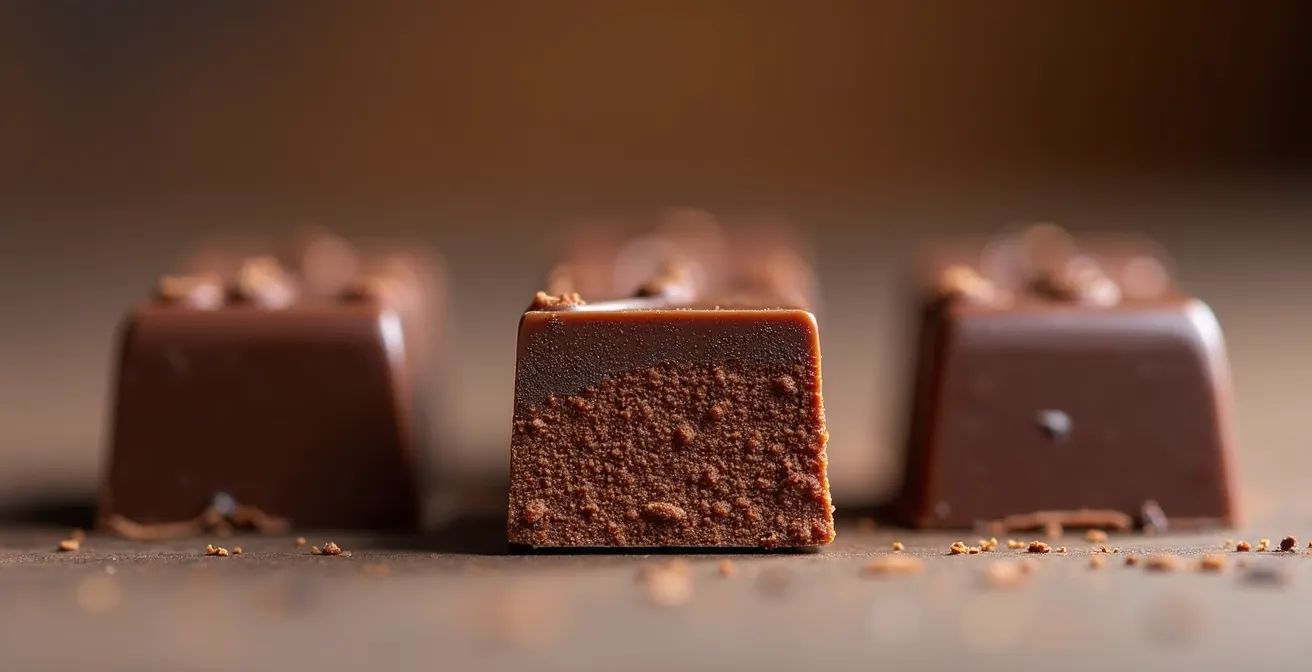
As you can see, a little goes a long way. Selecting a small, high-quality portion transforms the chocolate from a simple candy into a functional tool for your well-being, ensuring your Fika moment leaves you refreshed and ready, not sluggish and unfocused.
This mindful approach to quantity is the foundation upon which all great pairings are built, allowing flavor and function to coexist in perfect harmony.
Dark Chocolate vs. Milk: Which Matches an Acidic Espresso?
Once you’ve mastered portion size, the next layer of the art is matching intensity. A common mistake is to pair a delicate milk chocolate with a powerful, acidic espresso. The coffee’s bold flavors will completely overwhelm the chocolate, flattening its nuances. The guiding principle is simple: match intensity with intensity. A strong, acidic coffee demands a chocolate with enough character to stand up to it, and that almost always means dark chocolate.
An acidic espresso, typical of many African or high-altitude Latin American beans, has bright, fruity, or wine-like notes. Milk chocolate, with its high sugar and milk-solid content, creates a cloying sweetness that clashes with this acidity. A high-percentage dark chocolate (typically 70% or more), however, works beautifully. Its lower sugar content, higher concentration of cocoa solids, and inherent fruity or earthy notes can complement or contrast the coffee’s profile in a fascinating way.
The bitterness of the dark chocolate can balance the coffee’s acidity, while its own subtle flavor notes—be they red fruit, citrus, or spice—can create a complex and evolving taste experience. For example, a bright Ethiopian Yirgacheffe coffee pairs wonderfully with a fruity Madagascar chocolate, as both share notes of red berries and citrus, creating a harmonious and vibrant “flavor arc.”
Natasha Shariff, a coffee consultant for Bettr Barista, offers a perfect, concrete example of this principle in action when pairing with a more traditional espresso blend. As she explained to the MICHELIN Guide:
If you’re having an espresso made with a Colombian and Brazilian coffee blend, I would recommend pairing it with dark chocolate of about 70 per cent cocoa content. The dark, robust flavours of the chocolate will pair well with the chocolate and nutty notes of the coffee. And the slightly fruity notes will counter the medium acidity in the espresso.
– Natasha Shariff, Bettr Barista coffee consultant
By choosing a chocolate that can “dance” with your coffee rather than be silenced by it, you unlock a depth of flavor that elevates the entire experience from a simple snack to a true sensory exploration.
The Service Mistake: Placing Chocolate Too Close to Hot Cups
You’ve selected the perfect high-quality dark chocolate and brewed a beautiful cup of coffee. But all that careful consideration can be undone by one simple, common mistake: placing the chocolate directly on the saucer, touching the hot cup. This seemingly innocent act of presentation is a fast track to ruining the chocolate’s texture and flavor, a concept we can call “thermal contamination.”
Chocolate is a delicate, crystalline structure. Its satisfying “snap” and smooth melt-on-the-tongue texture are the result of a precise tempering process. Heat is the enemy of this structure. As professional chocolatiers recommend, chocolate maintains its ideal texture and stability below 77°F (25°C). A ceramic coffee cup can easily exceed 150°F (65°C), and the radiant heat is enough to begin melting the chocolate on the saucer almost immediately.
When chocolate melts and then cools slightly before you eat it, its crystalline structure is disrupted. It becomes soft, grainy, or waxy, losing all of its textural appeal. The delicate volatile aromas can also dissipate prematurely, muting the flavor. To preserve the integrity of your pairing, the solution is simple: physical separation. Serve the chocolate on a small, separate plate, a chilled piece of slate, or even just the other side of a larger tray, ensuring there’s no direct or radiant heat transfer.
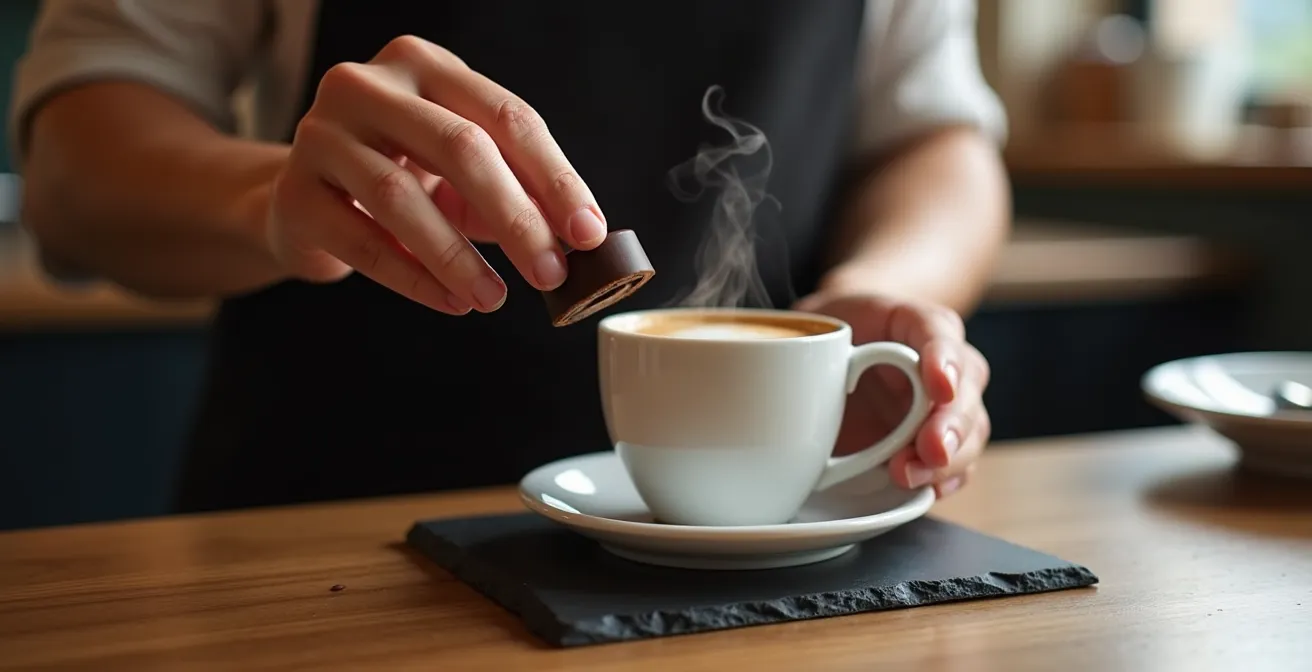
This thoughtful presentation is a hallmark of quality-focused cafes. For instance, Cup & Bar in Portland, Oregon, a cafe that integrates a chocolate maker, understands this principle well. They serve a sample of their Ranger Chocolate with every coffee, but always with careful placement to preserve its integrity. This small detail signals a respect for the ingredients and an understanding of the sensory experience.
It’s a small change in habit that makes a world of difference, allowing both the coffee and the chocolate to be experienced exactly as the producers intended.
How to Use a Single Bite as a Mindfulness Trigger?
The ultimate goal of the Fika-inspired coffee break is not just to refuel, but to create an “intentional pause”—a moment of genuine mindfulness that disconnects you from the stress of work. The coffee and chocolate pairing is the perfect vehicle for this, and the ritual begins with a single, deliberate bite. By engaging your senses in a specific sequence, you can anchor your awareness in the present moment and turn your break into a powerful meditative exercise.
The key is to use the chocolate as a primer for your palate. Many people sip their coffee first, but this can overwhelm the more delicate notes of the chocolate. By reversing the order, you allow the chocolate’s complex flavors to unfold on their own terms, preparing your senses for the coffee to come. The experts at Venchi Chocolate recommend this approach, noting that “eating the chocolate first allows you to savour the aroma of the coffee and makes it more persistent.” It coats your palate, and as the coffee washes over it, new, synergistic flavors are created in what we call a “flavor arc.”
This isn’t a rushed process. It’s a sequence designed to maximize sensory input and quiet the mind. From the sound of the snap to the final, lingering aftertaste, each step is an opportunity to be fully present. The following checklist outlines a simple but profound sequence for mindful tasting.
Your Action Plan: The Mindful Tasting Sequence
- Observe and Break: Look at the chocolate’s sheen. Break a piece near your ear and listen for a clean, sharp snap—a sign of good temper. This first interaction releases its initial aroma compounds.
- Prime the Palate: Place the piece of chocolate on your tongue and let it sit. Resist the urge to chew for at least 10-15 seconds. Let it begin to melt, noticing the evolution of its flavor from start to finish.
- Introduce the Coffee: While the flavor of the melted chocolate still lingers, take a small, gentle sip of your coffee. Don’t gulp. Let the warm liquid mingle with the chocolate on your palate.
- Notice the Synergy: Close your eyes for a moment. What new flavors emerge? Does the coffee bring out a fruity note in the chocolate? Does the chocolate soften the coffee’s acidity? Pay attention to this evolving “flavor arc.”
- Reset and Repeat: Wait at least 30 seconds before taking another bite or sip. This allows your taste buds to reset, so you can experience the next pairing with fresh clarity.
This simple, five-step ritual requires only a minute or two but can effectively reset your nervous system, pulling you out of a state of scattered digital distraction and into a state of calm, centered focus.
How to Pair Single Origin Coffee with Matching Chocolate Terroirs?
As you become more attuned to the nuances of coffee and chocolate, you can elevate your pairing game to its highest form: matching origins. The concept of “terroir“—the unique environment of soil, climate, and altitude where a plant is grown—is the single most important factor in the flavor profile of both specialty coffee and fine chocolate. Pairing a single-origin coffee with a single-origin chocolate from a complementary terroir is the pinnacle of the art, creating a conversation between two distinct geographical locations on your palate.
The goal is to find shared or complementary flavor notes that stem from their unique terroirs. For instance, a high-altitude Guatemalan coffee, known for its chocolatey and spicy notes derived from rich volcanic soil, pairs exquisitely with a chocolate also made from Guatemalan cacao. They share a mineral depth and a common flavor language. This is about creating a pairing that is not just delicious, but also tells a geographical story.
A fantastic example of this principle comes from Cup & Bar, who described a particularly insightful seasonal pairing to Fresh Cup Magazine. They paired a Vietnamese coffee with a Haitian cacao chocolate from Ranger. The link? A shared spicy flavor profile. They noted, “it falls in the green peppery, black peppery universe—which they share in common.” This is terroir matching at its most sophisticated—identifying a specific, unusual flavor note and finding its counterpart across the globe.
To help you get started, this table provides some classic and reliable terroir-driven pairings that showcase how different regions produce distinct and complementary flavors.
| Coffee Origin | Flavor Profile | Chocolate Match | Shared Notes |
|---|---|---|---|
| Ethiopian Yirgacheffe | Floral, lemon, bright | Madagascar | Red fruits, citrus |
| Guatemala Antigua | Chocolate, spice | Guatemala local | Volcanic soil minerals |
| Sumatra | Earthy, herbal | Java | Spicy, earthy depth |
This approach moves beyond simple flavor categories like “nutty” or “fruity” and into a deeper appreciation for how a specific place on Earth can express itself through two of its most beloved products.
Key Takeaways
- Coffee and chocolate work in synergy, with cocoa’s theobromine calming caffeine’s jitters to create sustained, balanced focus.
- Portion control is critical. A small (10-15g) piece of high-quality dark chocolate (70%+) provides benefits without a sugar crash.
- The core principle of pairing is to match intensity. Bold, acidic coffees require robust dark chocolates to create a balanced flavor experience.
Why Does Great Chocolate Linger on Your Palate for 20 Minutes?
One of the most telling signs of a truly exceptional chocolate—and a successful pairing—is the finish. A mass-market candy bar’s flavor vanishes almost instantly, leaving behind a simple, sugary sweetness. A fine craft chocolate, however, leaves a complex and evolving aftertaste that can linger on the palate for a remarkably long time. This long finish, or “length,” is a hallmark of quality and a key component of a satisfying Fika.
This phenomenon isn’t magic; it’s chemistry. The duration of the aftertaste is directly related to the quality and concentration of the cocoa’s natural flavor compounds and the amount of cocoa butter. High-quality cocoa beans have an incredibly complex chemical makeup, with hundreds of aromatic compounds. During the chocolate-making process (fermentation, drying, roasting), these compounds are developed and locked into the cocoa solids and cocoa butter. In fact, professional tasters note that high-quality dark chocolate flavor compounds can persist for as long as 15 to 20 minutes.
Cocoa butter, the natural fat of the cocoa bean, plays a crucial role. It melts at just below human body temperature, coating the palate in a thin, luscious film. This film acts as a slow-release mechanism for the fat-soluble flavor compounds, allowing them to be perceived by your olfactory system over an extended period. When you introduce coffee, its warmth can re-energize these compounds, creating new waves of flavor. This is the “flavor arc” in its final, most satisfying stage.
The team at Russell & Atwell, experts in fresh chocolate, describe this beautiful interaction with poetic accuracy, perfectly capturing the essence of a great pairing:
They share flavour notes, nutty, fruity, floral, toffee, which means when you find the right pairing, they don’t just get along, they dance. The right coffee draws out hidden flavours in the chocolate; the right chocolate softens the coffee’s edges.
– Russell & Atwell, Expert Coffee and Chocolate Pairing Tips
This lingering flavor is the reward of a well-chosen pairing. It extends the pleasure of your break long after the last sip is gone, a gentle reminder of your intentional pause.
How to Pair Single Origin Coffee with Matching Chocolate Terroirs?
We’ve discussed the principle of pairing single origins, but to truly master this art, it’s essential to deconstruct the concept of terroir itself. Understanding *what* creates the unique flavors in your coffee and chocolate allows you to move from following recommendations to making your own inspired pairings based on a deeper knowledge. Terroir is the story of a place, told through flavor, and learning to read that story is the final step in your journey as a connoisseur.
For coffee, key terroir factors include:
- Altitude: Higher altitudes lead to slower-growing, denser beans with more complex acidity and floral or fruity notes (e.g., Ethiopia, Colombia).
- Soil: Volcanic soil, for example, can impart a distinct mineral-rich, spicy, or “chocolaty” quality (e.g., Guatemala, Sumatra).
- Climate: The amount of sun, rain, and temperature variation directly affects the sugar development in the coffee cherry, influencing its sweetness and body.
- Processing: How the bean is removed from the fruit (washed, natural, honey) has a dramatic impact. Natural processing often yields intense, jammy fruit flavors, while washed processing results in a cleaner, brighter acidity.
Similarly, for chocolate, the cacao’s origin and genetics are paramount. Cacao from Madagascar is famous for its bright, red-fruit acidity. Cacao from Ecuador (Arriba Nacional variety) is known for its complex floral notes. Peruvian cacao can have a unique profile of dried fruit and gentle bitterness. Just like with coffee, the fermentation and drying process at the farm level is critical in developing these precursor flavors.
Start by reading the flavor notes provided by the coffee roaster and the chocolate maker. They are your map. Use them to find a shared language between your cup and your chocolate bar, and begin creating pairings that are not only delicious but also intellectually and sensorially satisfying. This is the true art of the intentional pause.