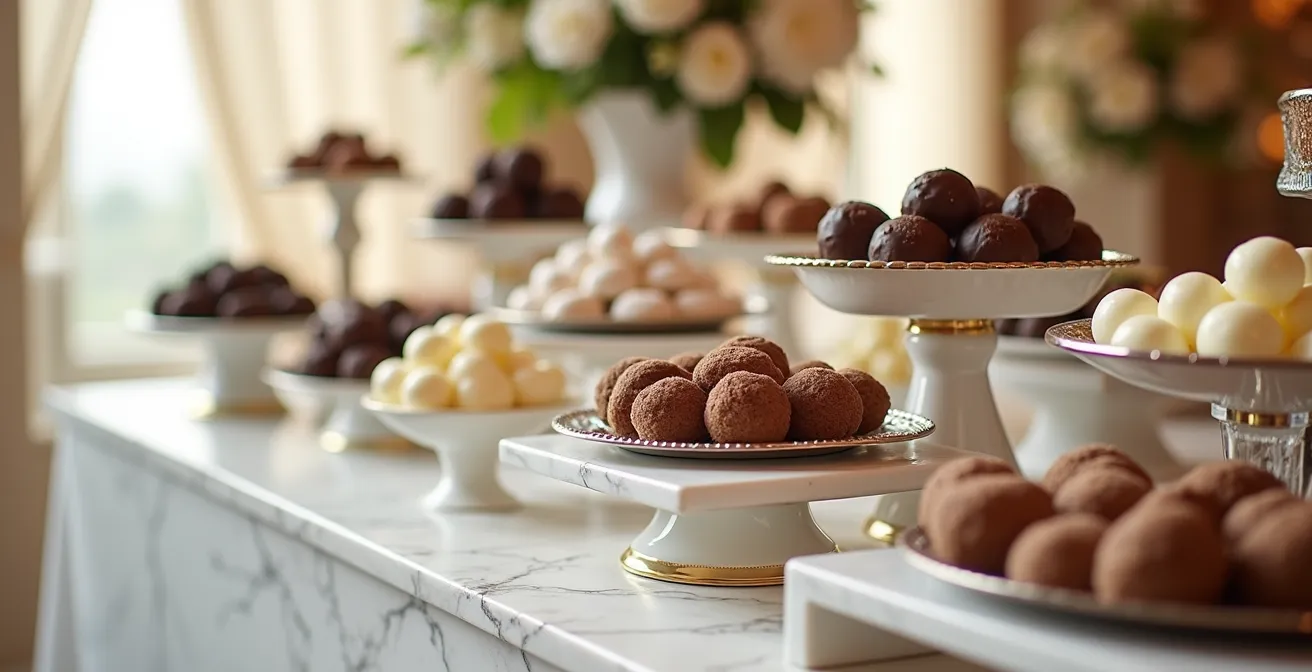
Successfully catering a 200-person wedding isn’t about a simple chocolate-per-guest formula; it’s a matter of strategic Dessert Event Management.
- Heat is your biggest enemy. Understanding chocolate’s thermal integrity is more critical than the recipe itself.
- Guest flow dictates consumption. Bite-sized, easy-to-eat options maximize enjoyment and minimize waste when guests want to dance.
Recommendation: Shift your focus from pure quantity calculation to managing temperature, timing, and presentation to build a flawless, impressive, and cost-effective proposal.
Landing a 200-person wedding contract is a major milestone for any independent caterer. The pressure is immense, and the dessert buffet is often the final, lasting impression. The immediate challenge seems to be a question of numbers: how much chocolate do you need? Many will tell you to simply multiply the guest count by a standard serving size. This is the first, and most common, mistake. It’s a formula for either disappointing shortages or costly, melted overages. The standard advice overlooks the complex dynamics of a large-scale event.
The real task isn’t just baking; it’s a comprehensive exercise in Dessert Event Management. This approach requires you to think like a logistician and a psychologist, not just a chef. You must consider the ambient temperature of the venue, the flow of guests from dinner to the dance floor, and the subtle psychology of choice at a buffet. It’s about understanding how different types of chocolate behave under pressure and how presentation can influence consumption. A truly professional proposal demonstrates mastery over these variables, not just a list of ingredients.
But what if the key to a flawless chocolate buffet wasn’t in the quantity, but in the strategic control of every element? This guide moves beyond simplistic calculations. We will deconstruct the challenge into its critical components, from selecting heat-resilient structures and managing serving logistics to curating a menu that delights every generation. This is your playbook for executing a memorable chocolate experience that solidifies your reputation and protects your bottom line.
This article provides a complete strategic framework. Below, you will find a detailed breakdown of the key decisions you’ll face, from the structural choice of your centerpiece to the final, crucial calculation of how much chocolate to order after a full meal.
Summary: A Caterer’s Strategic Chocolate Plan
- Macaron Tower vs. Choux Pyramid: Which Survives Summer Heat?
- Why Bite-Sized Bonbons Are Better Than Cake Slices for Dancing Guests?
- His and Hers: How to Offer Dark and Milk Options Elegantly?
- The Timing Mistake That Melts the Dessert Buffet Before Speeches End
- How to Package Wedding Favors So They Don’t Melt in Cars?
- How to Serve Molten Chocolate Cakes to 20 Guests Simultaneously?
- How to Curate a Chocolate Box That Pleases Every Generation?
- How Much Chocolate Per Person After a Heavy 3-Course Meal?
Macaron Tower vs. Choux Pyramid: Which Survives Summer Heat?
Your centerpiece is the visual anchor of the dessert buffet, but in the context of a wedding, it’s also your highest-risk asset. The choice between a macaron tower and a choux pyramid (like a croquembouche) isn’t just aesthetic; it’s a crucial decision about thermal integrity. A choux pyramid, often bound by caramel and filled with pastry cream, is notoriously susceptible to humidity, which can turn crisp caramel into a sticky mess and soften the choux. Macarons, with their meringue-based shells and ganache fillings, offer slightly better stability, but the real enemy for both is the melting point of their chocolate components.
The core issue is the cocoa butter in the chocolate. Recent food science research shows that chocolate melts between 34-36°C (93-97°F), a temperature easily reached in a crowded reception hall or an outdoor marquee in summer. This means any decorative chocolate elements, glazes, or even the ganache filling in macarons can lose structural integrity long before the party ends. While research into heat-resistant chocolate is ongoing, for a caterer, the practical solution lies in construction and composition.
Therefore, the macaron tower generally wins for summer events, provided you take precautions. Use a higher percentage dark chocolate for your ganache, as its higher cocoa solid content gives it a slightly better structure. Assemble the tower on-site and as late as possible. For a choux pyramid, you’d need a reliably air-conditioned indoor venue and to accept the risk. Ultimately, your choice communicates your expertise in risk management to your client. Proposing the safer, more stable option demonstrates foresight and a commitment to quality under pressure.
Why Bite-Sized Bonbons Are Better Than Cake Slices for Dancing Guests?
When planning a dessert buffet for 200 guests, you must consider the guest consumption dynamics. After a full meal, the initial rush to the dessert table gives way to a more fluid evening of dancing, mingling, and conversation. In this environment, a slice of cake on a plate, requiring a fork and a place to sit, becomes a logistical burden. Guests who want to get back to the dance floor will often skip it entirely, leading to significant waste and lower perceived value of your beautiful spread.
This is where the strategic genius of the bite-sized bonbon comes into play. A bonbon, a mini-tart, or a small chocolate-dipped strawberry is a low-commitment, high-reward treat. It can be eaten in one or two bites, without cutlery, while standing and talking. This aligns perfectly with the social flow of a wedding reception. Instead of one large slice of cake, a guest might try two or three different small items over the course of the evening, enhancing their experience and their perception of variety.
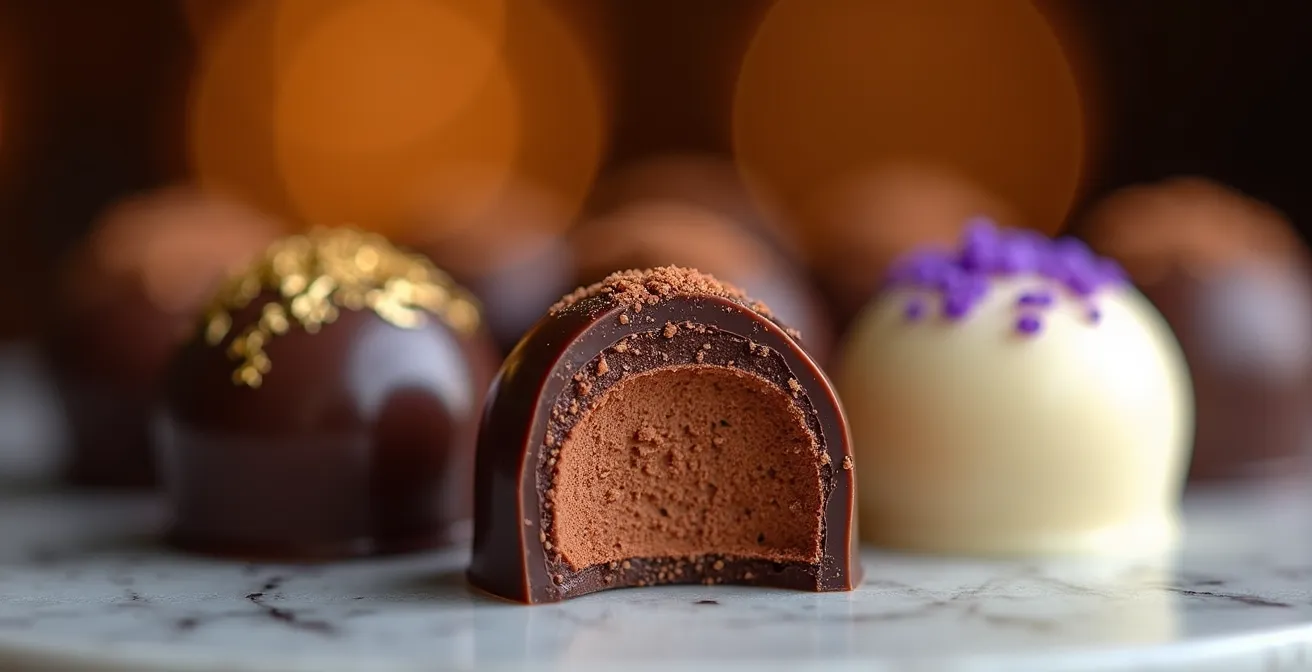
This approach also simplifies your quantity calculations. Instead of guessing how many will want cake versus another dessert, you plan for total “bites.” Catering professionals advise that when a meal is served, you should plan on 2-3 small servings of desserts for each guest. For 200 guests, this translates to 400-600 individual pieces. This modular system allows you to offer a wider, more impressive variety—like dark chocolate truffles, white chocolate Rochers, and milk chocolate caramels—without the risk of having an entire uneaten cake at the end of the night. It’s a smarter, more guest-friendly, and cost-effective strategy.
His and Hers: How to Offer Dark and Milk Options Elegantly?
Catering to a large group means accommodating a wide spectrum of palates. The classic “his and hers” concept can be elegantly adapted to the dessert buffet by offering a well-curated selection of dark, milk, and even white chocolate. However, this is not just about flavor; it’s a technical challenge. Each type of chocolate has a different composition and, critically, a different melting and working temperature. Presenting them together elegantly requires an understanding of their unique properties.
Dark chocolate, with its high cocoa solids content, is the most stable. Milk and white chocolate, containing more milk solids and sugar, are softer and more sensitive to heat. This difference is crucial when planning your display. For example, you can create molded, sharp-looking dark chocolate cups for a mousse, while a milk chocolate ganache might be better served in a verrine to keep its shape. As the MalibuGift Chocolate Science Team notes, mastering chocolate is about precise temperature control. In their “The Sweet Science: Understanding the Melting Point of Chocolate,” they emphasize this point:
Chocolate tempering is all about controlling the temperature to get cocoa butter crystals in perfect harmony. The key is to keep temperature under control, never letting it exceed 115°F for dark chocolate or 110°F for milk and white.
– MalibuGift Chocolate Science Team, The Sweet Science: Understanding the Melting Point of Chocolate
To execute this elegantly, consider a display with tiered elevations. Place the more stable dark chocolate items on higher, more exposed platters, and nestle the delicate milk and white chocolate creations on lower, potentially chilled, surfaces. Visually separating them with different platters (e.g., slate for dark, white ceramic for milk/white) also creates an intuitive guide for guests. This thoughtful presentation not only prevents a melted disaster but also signals a high level of professionalism and attention to detail.
| Chocolate Type | Melting Range | Cocoa Content | Best For |
|---|---|---|---|
| Dark Chocolate | 45-50°C (113-122°F) | 70-99% cocoa solids | Stable displays, molded pieces |
| Milk Chocolate | 40-45°C (104-113°F) | 20-50% cocoa solids | Coating, drizzling |
| White Chocolate | 37-43°C (98-110°F) | 0% cocoa solids | Delicate applications |
The Timing Mistake That Melts the Dessert Buffet Before Speeches End
The single most common—and catastrophic—mistake a caterer can make is setting up the full dessert buffet too early. A 200-person reception generates a significant amount of ambient heat, and event timelines are notoriously prone to delays. Speeches run long, dinner service is delayed, and all the while, your beautiful chocolate creations are inching toward their melting point. The goal is to maintain what chocolate experts call “room temperature,” but that ideal is far from the reality of a packed venue. For optimal safety, chocolate experts recommend that if chocolate is stored in a temperature below 75°F (24°C) and out of direct sunlight, it should be completely stable.
Achieving this requires a strategy of staggered deployment, a core principle of Dessert Event Management. Never display everything at once. The key is to work with your team to bring out desserts in waves. Start by setting up the main structural elements and less-sensitive items. Then, just before the dessert course is announced, your team performs the final placement of the most delicate items—the filled bonbons, the mousses, the ganache tarts. This ensures the buffet looks pristine and fresh at the peak moment of guest interest.
This “just-in-time” approach keeps the table looking full without putting all your inventory at risk. It creates an illusion of perpetual abundance. As some platters are depleted, they can be swapped out for fresh ones held in a cooler or air-conditioned prep area. This active management of the buffet is what separates amateurs from professionals. It requires a detailed service plan and a dedicated staff member, but it’s the only way to guarantee quality from the first guest to the last.
Your Action Plan: Dessert Buffet Thermal Integrity
- Venue Assessment: Before the event, identify the coolest, lowest-traffic area for the buffet, away from direct sunlight, doorways, or heat sources.
- Staggered Setup Plan: Create a timeline detailing which items are set out first (stable items like cookies, brownies) and which are held back until the last minute (mousses, ganaches, delicate bonbons).
- Temperature Monitoring: Assign a team member to monitor the buffet area with an instant-read thermometer. Establish a red-flag temperature (e.g., 22°C / 72°F) that triggers a response.
- Cooling Arsenal: Prepare your back-of-house with chilled trays, insulated containers, or a designated refrigerator/cooler space for holding back-up desserts.
- Rotation Schedule: Plan to swap and refresh platters every 30-45 minutes during peak dessert time to maintain a look of freshness and abundance while managing temperature exposure.
How to Package Wedding Favors So They Don’t Melt in Cars?
Your meticulous work on the dessert buffet can be undone in an instant if the chocolate wedding favors—the final taste of the evening—melt into an unappealing puddle in a guest’s car. The guest’s last memory of your catering will be one of disappointment. This final step is a critical part of the overall guest experience and requires its own logistical strategy. A car’s interior can quickly exceed 50°C (122°F) on a warm day, far above chocolate’s melting point. Standard cellophane bags or thin cardboard boxes offer zero protection.
The solution lies in protective, insulated packaging. This doesn’t have to be prohibitively expensive. Small, foil-lined favor boxes are readily available and provide a crucial radiant barrier against heat. For an extra layer of protection on very hot days, you can include a tiny, food-safe gel ice pack. This elevates the favor from a simple treat to a thoughtfully protected gift, reflecting well on your professionalism. The key is to keep the chocolate below its melting temperature of 86-90°F (30-32°C).
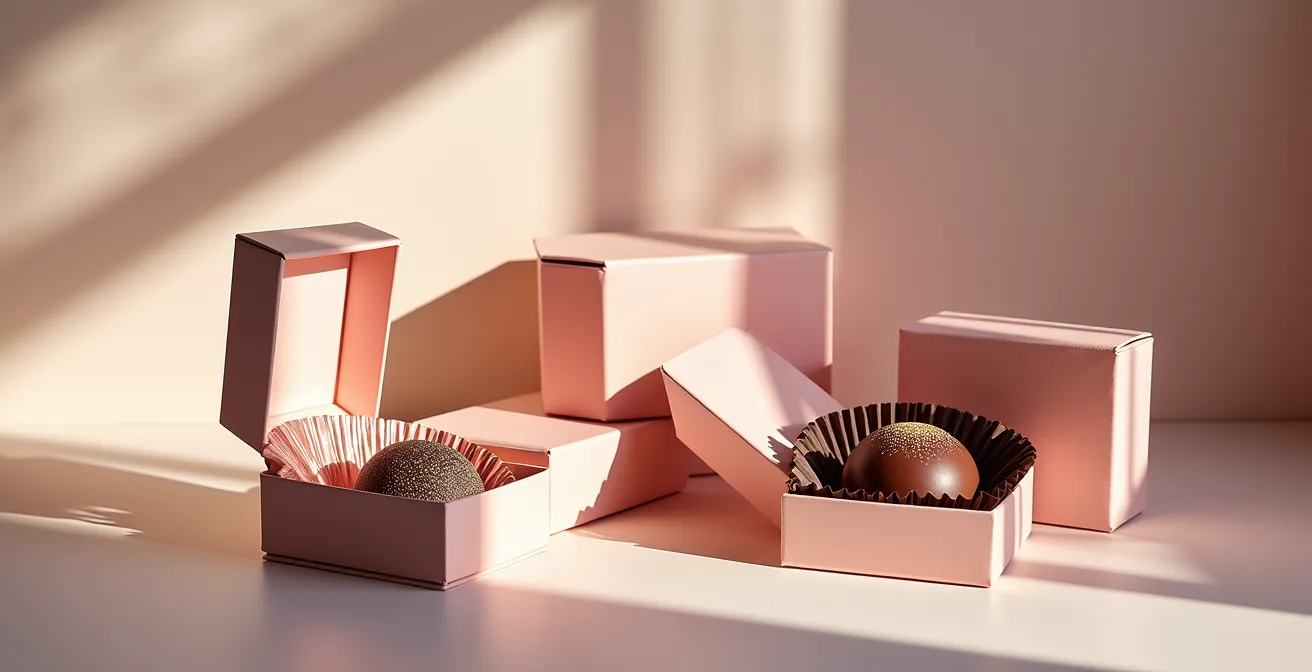
Storage and distribution are just as important as the packaging itself. The favors must be stored in an air-conditioned area until the very last moment. Do not place them on tables at the beginning of the reception. The best practice is to have a designated staff member hand them to guests as they depart. This personal touch not only ensures the favors are kept cool for as long as possible but also provides a gracious farewell. For ultimate peace of mind at high-end or very hot-weather weddings, you can even propose a “chocolate redemption card,” allowing guests to have their favors shipped to them post-wedding—a premium service for a premium event.
How to Serve Molten Chocolate Cakes to 20 Guests Simultaneously?
Serving a plated, hot dessert like a molten chocolate cake to a small table is one thing. Executing it for multiple tables—20 guests or more—at a 200-person wedding is a high-stakes logistical ballet. The window for a perfect molten center is fleeting, lasting only a few minutes out of the oven. A delay of even five minutes can result in a fully cooked, disappointing “brownie.” This is a classic logistical bottleneck that can tarnish an otherwise flawless meal.
Success requires a military-style operation rooted in the “mise en place” philosophy. The cakes should be pre-portioned into individual ramekins and held, unbaked, in a cooler. Your service plan must be timed to the second. As the main course plates are being cleared, the first batch of cakes goes into preheated ovens. You’ll need an oven with reliable, even heat and enough capacity to bake the required number in one or two waves at most.
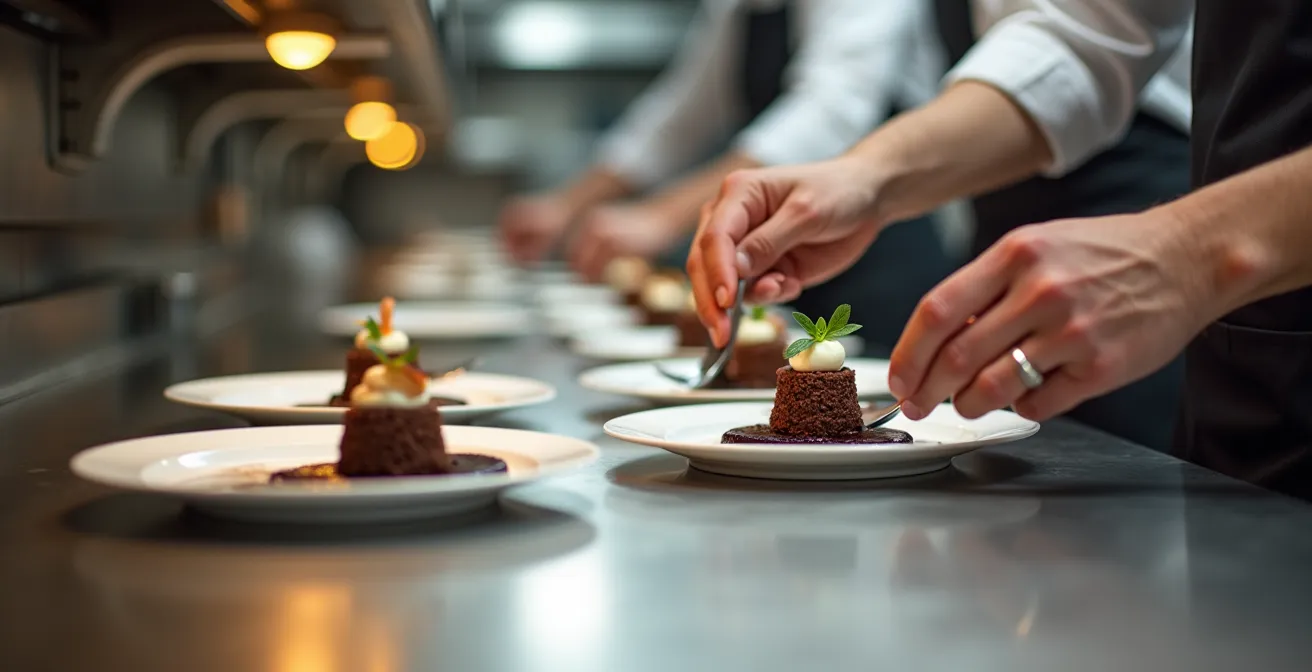
The real key is the plating station. You need an assembly line. As the cakes come out, one person unmolds them onto the plate. The next person adds the garnish—a scoop of ice cream, a dusting of cocoa powder, a sprig of mint. The final person gives the plate a wipe-down for a clean presentation before it’s handed to a server. For 20 guests, you’ll need at least a 3-person team dedicated solely to this task. The working temperature of any chocolate garnish is also key; professional chocolatiers maintain dark chocolate at 88-90°F (31-32°C) for optimal flow and shine during plating. This level of coordination is non-negotiable and is something you must detail in your proposal to justify the staffing and demonstrate your capability to execute complex service.
How to Curate a Chocolate Box That Pleases Every Generation?
If you’re offering a selection of bonbons or a take-home chocolate box, you’re not just catering to the bride and groom; you’re catering to their grandparents, their young nieces and nephews, and everyone in between. A 200-person wedding is a multi-generational event, and a one-note chocolate selection will inevitably leave some guests feeling overlooked. Curating a universally appealing selection is an art that balances the familiar with the adventurous.
The most effective strategy is the “Something for Everyone” framework. This involves creating a flavor profile with three distinct categories:
- The Classics: These are the nostalgic, comforting flavors that appeal to older guests and less adventurous palates. Think simple, high-quality milk chocolate caramels, classic dark chocolate ganache, or a straightforward hazelnut praline. These are the safe, reliable anchors of your collection.
- The Adventurous: This category is for the foodies and younger guests. Here, you can introduce more complex and trendy flavors. Consider a dark chocolate with chili, a white chocolate with matcha, a passion fruit-infused ganache, or a bonbon with a salted caramel and rosemary filling. These pieces generate excitement and conversation.
- The Kid-Friendly: Don’t forget the children. While they might enjoy the classics, having something specifically for them is a thoughtful touch. Simple chocolate-covered pretzels, a plain milk chocolate bar, or a vanilla-infused white chocolate piece are perfect. These options are less overwhelming for developing tastebuds and make younger guests feel included.
When presenting these on a buffet, use clear labels to guide guests. Grouping them by category can also help. This curated approach shows a deep understanding of the event’s social dynamics. It transforms a simple dessert offering into a sophisticated and inclusive experience, demonstrating a level of thoughtfulness that goes far beyond a simple quantity calculation.
Key Takeaways
- Shift from quantity to strategy: Success is in managing heat, timing, and presentation, not just counting heads.
- Embrace bite-sized desserts: They align with guest behavior (mingling, dancing) and allow for greater variety and perceived abundance.
- Master thermal integrity: Understand the different melting points of dark, milk, and white chocolate and plan your display and timing accordingly.
How Much Chocolate Per Person After a Heavy 3-Course Meal?
We’ve arrived at the final, pivotal calculation. After all the strategic planning around heat, timing, and variety, you still need to place your order. So, how much is enough? After a substantial three-course meal, guest appetite for dessert diminishes significantly. A common mistake is to order enough dessert for 100% of the guest list, leading to massive waste and inflated food costs. The professional approach is more nuanced.
The industry benchmark is to plan for a take-up rate, not a full head count. According to event professionals, many couples order enough dessert for about eighty to ninety percent of their guest count. For your 200-person wedding, this means you should calculate your core dessert quantity based on 160 to 180 guests. This is your baseline. This principle of “perceived abundance” ensures the buffet looks full and generous without being excessive.
Next, you apply the “bite-sized” rule. If you’re serving a variety of mini-desserts, plan for 2-3 pieces per person (using your 160-180 guest baseline). This gives you a target range of 320 to 540 total pieces. It’s always wise to add a 10-20% buffer to this final number to account for unexpectedly hungry guests or to have fresh items for rotation. This buffer is your insurance policy. This tiered calculation—guest count adjusted for take-up rate, multiplied by servings per person, plus a buffer—is the hallmark of an experienced caterer. It demonstrates to your client that you are making smart, data-driven decisions to provide an exceptional experience while managing their budget effectively.
| Meal Type | Desserts Per Person | Add 20% Buffer | Example (100 guests) |
|---|---|---|---|
| After Full Dinner | 1-2 small pieces | Yes | 120-240 pieces |
| After Light Buffet | 2-3 pieces | Yes | 240-360 pieces |
| Dessert-Only Event | 4-6 small portions | Yes | 480-720 pieces |
| Cocktail Hour | 3-4 bites per hour | Yes | 360-480 bites |
By adopting this strategic framework, you move from being a simple food provider to an indispensable event partner. This approach, which balances creative presentation with logistical precision, is the key to not only winning the contract but also building a reputation for flawless execution.
Frequently Asked Questions About Wedding Chocolate Planning
How many chocolate pieces should I plan per wedding guest?
A typical wedding crowd will consume one serving per person plus a little extra. For regular cupcakes, it’s a single cupcake; for mini versions like bonbons or mini-cupcakes, plan for three to four pieces per person; for items like cookies, two per person is a standard measure.
What flavors work best for children at weddings?
For little ones, it’s best to stick to classic chocolate and vanilla flavors. These simple and plain options go over well, as a straightforward vanilla or milk chocolate is less overwhelming to developing tastebuds than complex or bitter dark chocolates.
Should portion sizes differ based on guest demographics?
Yes, demographics can influence consumption. For a crowd with many teenage or grown men, it is wise to plan for 1.5 to 2 servings per person, especially if your chocolate desserts are the only sweet option available. This anticipates a heartier appetite for sweets in that group.