Chocolate & creative pastries
The intersection of chocolate and creative pastry represents one of the most technically demanding yet rewarding domains in culinary arts. While chocolate’s allure is universal, transforming it into stable, visually stunning pastries requires a deep understanding of ingredient chemistry, structural principles, and precision techniques. From the molecular behavior of cocoa powder to the physics of multi-layered entremet cakes, each element demands careful attention to achieve consistent, professional results.
This comprehensive resource explores the technical foundations that separate amateur chocolate desserts from refined pastry creations. Whether you’re working with liquid ganache centers, engineering stable cake structures, or perfecting the delicate balance of choux pastry textures, mastering these core principles will elevate your chocolate work from simple confections to sophisticated culinary expressions. The following sections break down the essential knowledge areas that professional pastry chefs rely on daily.
Understanding Cocoa Powder: The Foundation of Chocolate Pastry
Cocoa powder serves as the backbone of countless chocolate pastries, yet its technical nuances are frequently misunderstood. The fundamental distinction between natural and Dutch-processed cocoa extends far beyond color—it affects pH levels, flavor development, and how the powder interacts with other ingredients in your recipe.
Natural cocoa powder retains its acidic properties, typically registering between 5.0 and 6.0 on the pH scale, while alkalizing creates a neutral powder with deeper color and milder flavor. This chemical difference directly impacts leavening agents: recipes using baking soda require acidic natural cocoa to activate properly, whereas Dutch-processed versions work harmoniously with baking powder formulations.
Awakening Dormant Aromas
Professional pastry chefs understand that cocoa powder’s aromatic compounds remain largely dormant until activated. Blooming cocoa powder in hot liquid—whether water, cream, or melted butter—unlocks volatile flavor molecules that would otherwise remain trapped. This simple step, typically requiring liquid heated to 180-190°F (82-88°C), intensifies chocolate flavor by 30-40% compared to direct incorporation into batters.
Managing Fat Integration and Texture
The fat content in cocoa powder, ranging from 10-12% in standard varieties to 20-24% in premium options, fundamentally alters the final texture of your pastries. Higher fat cocoa creates denser, fudgier results—ideal for brownies and dense chocolate cakes. Lower fat versions produce lighter textures suitable for genoise and delicate mousses. Understanding this relationship allows you to adjust hydration ratios and fat sources accordingly, preventing the clumping issues that plague poorly formulated recipes.
Mastering Liquid Centers and Ganache Stability
The technical challenge of liquid or semi-liquid centers in chocolate confections lies in achieving the precise balance between flow and containment. Whether creating flowing lava cakes, liquid macaron fillings, or fruit-based chocolate bonbons, success depends on controlling water activity (Aw) and gel structure.
Water activity measures the amount of free water available for microbial growth and chemical reactions, expressed on a scale from 0 to 1. Shelf-stable chocolate confections with liquid centers must maintain an Aw below 0.85 to prevent spoilage, while achieving the desired fluidity. This delicate equilibrium requires careful calculation of sugar concentration, invert sugar ratios, and the strategic use of hydrocolloids.
Balancing Acidity with Sweetness
Fruit-based liquid centers present a unique challenge: maintaining vibrant acidity while preventing the breakdown of chocolate shells. Fruit purees naturally range from pH 2.5 to 4.5, which can destabilize ganaches and create syneresis (liquid separation). The solution involves three critical adjustments:
- Selecting fruit sources with concentrated flavor that require less volume
- Buffering acidity with glucose syrup or invert sugar rather than simply adding more sucrose
- Incorporating minimal pectin or gellan gum (0.2-0.5%) to provide structure without creating gummy textures
Preventing Shell Leakage
The integrity of chocolate shells around liquid centers depends on proper tempering, adequate shell thickness (minimum 2-3mm for bonbons), and most critically, the compatibility between the filling’s temperature and the shell’s crystalline structure. Filling a shell with centers warmer than 86°F (30°C) risks melting the inner surface, creating weak points where leakage occurs during storage or handling.
Structural Engineering: Building Stable Chocolate Cakes
Multi-layered chocolate cakes demand architectural thinking. Unlike simple layer cakes, contemporary entremet designs incorporate multiple textures—crisp bases, mousse layers, inserts, and glazes—each with different densities, moisture contents, and structural properties. Without proper engineering, these elements collapse, compress unevenly, or separate during transport.
The foundation layer bears the entire weight of the construction. Biscuit bases must be baked to complete dryness (12-15% moisture content) and often reinforced with ground nuts or crisp elements like feuilletine. A thin layer of tempered chocolate applied to the base creates a moisture barrier, preventing cream-based layers from saturating and weakening the structure over time.
Selecting Ganache for Coverage and Stability
The ganache used for coating or layering must match the cake’s structural demands. A 1:1 ratio of chocolate to cream creates a soft, spreadable texture ideal for between layers but inadequate for supporting weight. For structural applications, professional formulas shift to 2:1 or even 3:1 ratios, creating firmer ganaches that set properly when chilled and maintain clean edges when cut.
Isolation Techniques for Texture Preservation
Crisp elements—praline, nougatine, or craquelin layers—lose their textural appeal when exposed to moisture from adjacent creamy layers. Thin chocolate barriers (0.5-1mm) strategically placed between contrasting textures preserve the intended sensory experience. This principle applies equally to frozen entremet cakes, where ice crystal migration during thawing can blur carefully planned textural contrasts.
Choux Pastry Perfection: From Éclairs to Textural Contrast
The chemistry of choux pastry—pâte à choux—creates unique opportunities for chocolate applications, from classic chocolate éclairs to innovative compositions featuring contrasting textures. Understanding the behavior of this cooked dough unlocks consistent results and creative possibilities.
Proper dough development requires complete starch gelatinization during the stovetop cooking phase. The dough should reach 175°F (80°C) and form a cohesive ball that films the pan bottom, indicating sufficient moisture evaporation. Underdeveloped dough contains excess water, leading to collapsed shells and soggy interiors—the most common failure point in choux production.
Craquelin: Engineering Textural Contrast
Craquelin—the crisp cookie dough topping applied to choux before baking—serves both aesthetic and textural purposes. The formula typically combines equal parts butter, brown sugar, and flour, creating a pliable disc that’s frozen before application. As the choux expands during baking, the craquelin cracks decoratively while creating a thin, crisp shell that contrasts beautifully with the tender interior.
The key to successful craquelin lies in thickness consistency (2mm) and proper freezing. Insufficiently frozen craquelin melts prematurely, running off the expanding choux. The brown sugar content provides not only flavor but also hygroscopic properties that maintain crispness for 24-48 hours post-baking.
Waterproofing and Maintaining Crispness
Empty choux shells begin losing crispness within hours due to atmospheric moisture absorption. Professional pastry kitchens apply a thin coating of tempered chocolate to the interior immediately after baking, while shells remain warm. This creates a waterproof barrier that prevents filling moisture from migrating into the shell walls. When properly executed, chocolate-lined éclairs maintain textural integrity for 12-18 hours under refrigeration.
Chocolate Fillings: Achieving the Perfect Consistency
The texture of chocolate fillings—whether for éclairs, tarts, or layered cakes—determines the entire eating experience. Too firm, and the filling becomes waxy and unpleasant; too soft, and it oozes or fails to hold piped shapes. Mastering consistency requires understanding the interaction between chocolate, dairy, and stabilizers.
Traditional ganache relies solely on the emulsion between chocolate’s cocoa butter and cream’s water content. However, modern pastry applications often demand enhanced stability, lighter textures, or specific behaviors (pipeable, spoonable, or sliceable). This is where hydrocolloid selection becomes crucial.
Hydrocolloid Selection for Specific Applications
Different gelling agents create distinctly different textural experiences:
- Gelatin produces smooth, melt-in-mouth textures ideal for mousses and Bavarians, with setting temperatures around 59°F (15°C)
- Pectin creates soft, spreadable fillings with excellent fruit compatibility and clean flavor release
- Agar-agar sets firmly at room temperature, making it valuable for stable centers in warm environments
- Carrageenan works specifically well with milk-based ganaches, preventing syneresis without masking chocolate flavor
Preventing Graining and Achieving Smoothness
Graining—the grainy, separated texture in chocolate creams—results from fat separation or sugar crystallization. Prevention requires maintaining proper emulsion throughout preparation. The critical temperature zone lies between 95-105°F (35-40°C): too hot and the emulsion breaks, too cool and the chocolate begins setting before complete incorporation. Using an immersion blender at a 45-degree angle, keeping the blade submerged to avoid air incorporation, creates the shear force necessary for stable emulsions.
The Art of Layering and Visual Presentation
Contemporary chocolate pastries increasingly emphasize visible layers—the cross-section itself becomes a design element. Achieving clean, distinct strata requires understanding how different components behave during assembly, freezing, and cutting.
The principle of sequential freezing forms the foundation of professional entremet assembly. Each layer must freeze solid before applying the next, preventing components from mixing at their boundaries. Mousse layers require 2-4 hours at 0°F (-18°C) to set completely, while thin crisp inserts need only 30 minutes. This time investment ensures the final cross-section displays the intended visual impact.
Density Variation for Structural Integrity
Layers must be arranged with awareness of their relative densities. Heavier components (dense ganache, nut pastes) should sit lower in the construction, while lighter elements (aerated mousses, whipped ganaches) occupy upper positions. This arrangement prevents compression and maintains distinct boundaries. When incorporating fruit compotes or gelee inserts, their placement in the middle third of the cake, surrounded by stabilizing mousses, prevents them from sinking or floating during assembly.
Cutting for Display Without Condensation
The professional appearance of sliced chocolate pastries depends heavily on managing temperature transitions. Cutting frozen or very cold cakes produces the cleanest edges, but displaying them requires careful tempering to avoid condensation that dulls finishes and blurs layer boundaries. The ideal protocol involves cutting while frozen, then allowing slices to thaw gradually under refrigeration for 4-6 hours before bringing to service temperature 20 minutes before plating.
Professional Plating for Individual Servings
The presentation of individual chocolate pastries in a restaurant setting represents the final opportunity to elevate the guest experience. Unlike retail pastries that must survive transport and display, restaurant plating allows for delicate garnishes, sauces, and compositional elements applied à la minute.
The concept of negative space—the intentional use of empty areas on the plate—creates visual breathing room that focuses attention on the pastry itself. Contemporary plating typically positions the main element off-center, occupying roughly one-third to one-half of the plate, with carefully placed garnishes and sauce elements creating visual movement and balance.
Last-Minute Garnishes and Portion Control
Elements added during plating—tempered chocolate decorations, fresh herbs, edible flowers, or spun sugar—provide textural and visual contrast that pre-assembled pastries cannot achieve. These components must be prepared in advance and held under appropriate conditions, ready for quick assembly during service.
Professional portion control extends beyond cost management to guest satisfaction. Chocolate’s richness means that smaller portions often provide more satisfaction than oversized servings. A well-composed 90-110g dessert, properly balanced with acidic or bitter elements, delivers a more memorable experience than a 200g portion that becomes cloying.
Wine Pairing Suggestions
While not mandatory, suggesting wine or beverage pairings elevates the complete dining experience. Dark chocolate pastries pair exceptionally with fortified wines like Banyuls or tawny port, where residual sugar matches the dessert’s intensity while adding complementary dried fruit notes. Milk chocolate compositions find harmony with off-dry Rieslings or Moscato d’Asti, while white chocolate’s buttery sweetness complements late-harvest Gewürztraminer. Training service staff to make these informed pairing recommendations transforms dessert from an afterthought into a memorable finale.
Mastering chocolate in creative pastry applications requires patient study of fundamental principles, from ingredient chemistry to structural engineering. Each technique builds upon these foundations, allowing you to approach new challenges with confidence and achieve the consistent, professional results that distinguish exceptional pastry work.
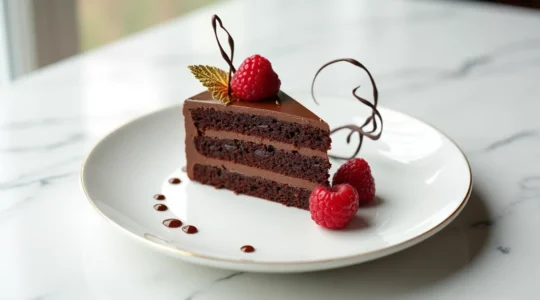
How to Plate a Single Slice of Cake to Justify a $12 Price Tag?
A single slice of cake can become a significant profit center, not just a menu afterthought. Leverage visual psychology and plating composition to create ‘Instagrammable’ moments that drive desire. Integrate tableside theatrics and strategic pairings to dramatically increase perceived value…
Read more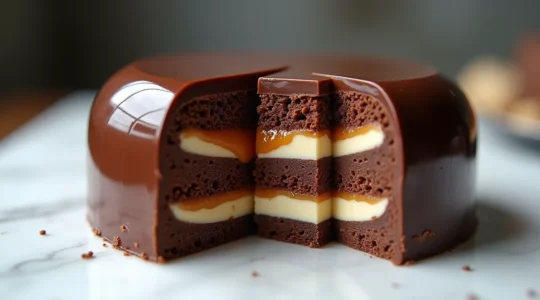
How to Create Clean Layers in Entremets for Perfect Cross-Sections?
Achieving a flawless entremet cross-section is not about following a recipe; it’s about mastering the physics of temperature, the chemistry of setting agents, and the mechanics of cutting. Each layer’s stability depends on precise freezing and gelatin ratios, which create…
Read more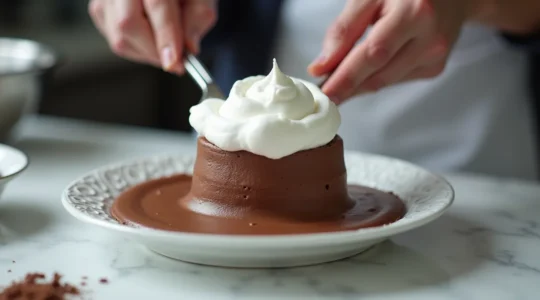
The Science of Aeration: How to Build a Stable Chocolate Mousse That Won’t Collapse
The key to a perfectly light yet stable chocolate mousse lies not in recipes, but in mastering the scientific principles of aeration and emulsion. This guide moves beyond generic advice to focus on the critical interplay of temperature control, fat…
Read more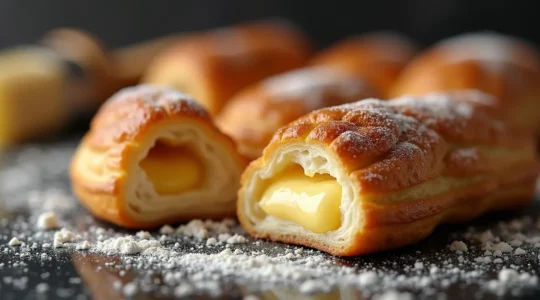
The Ultimate Guide: How to Keep Choux Pastry Crisp, Even in a Fridge
The core reason choux pastry turns soggy in a refrigerated display is uncontrolled water migration from the filling and the environment into the shell. Effective protection relies on building multiple hydrophobic (water-repelling) barriers, both internally and externally. The chemical stability…
Read more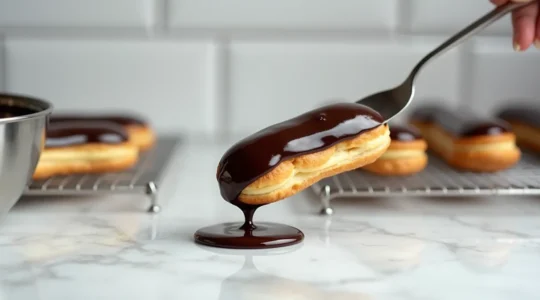
How to Glaze Éclairs perfectly Without Fingerprints or Drips?
Achieving a flawless, drip-free éclair glaze is a matter of scientific precision, not guesswork. Uniformity begins with weighing each choux shell to control its thermal mass before glazing. Modern glazes like ganache require strict temperature control (35-38°C) for optimal flow…
Read more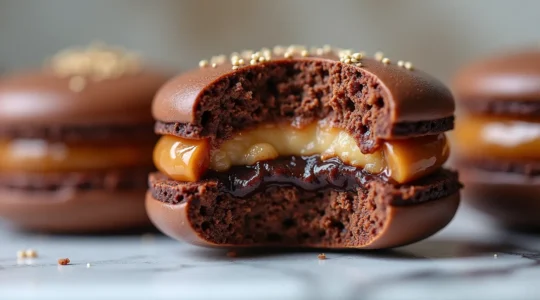
How to Keep Macaron Shells Crisp with High-Moisture Fillings?
The secret to perfectly crisp macaron shells isn’t avoiding moist fillings, but mastering their “water activity” (Aw) to control moisture migration. The internal structure of your ganache (crystallized vs. whipped) has a greater impact on shell texture than its overall…
Read more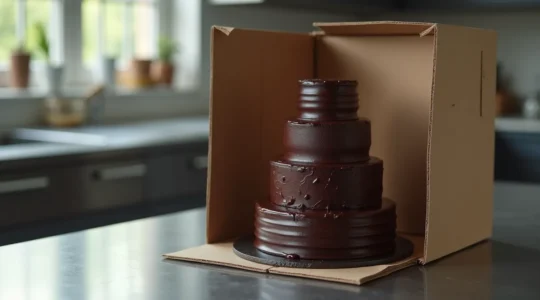
How to Build a 3-Tier Chocolate Cake That Survives Transport?
The structural integrity of a tiered cake is determined by its material science, not just its external supports like dowels. Sponge density and composition are the true foundation, dictating the cake’s ability to bear load without compression. Ganache is not…
Read more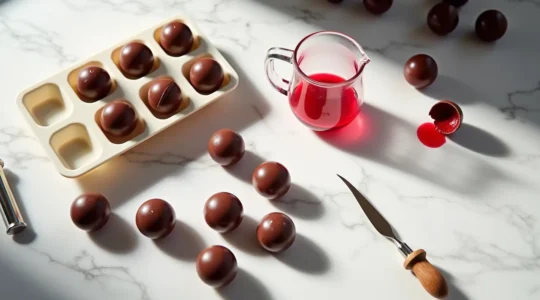
How to Encapsulate Liquid Fruit Coulis Inside a Thin Chocolate Shell?
Achieving a stable, liquid coulis inside a thin chocolate shell is a matter of scientific control, not guesswork. Success depends on managing three key variables: coulis viscosity through the right pectin, water activity (aW) for shelf-life, and thermal dynamics during…
Read more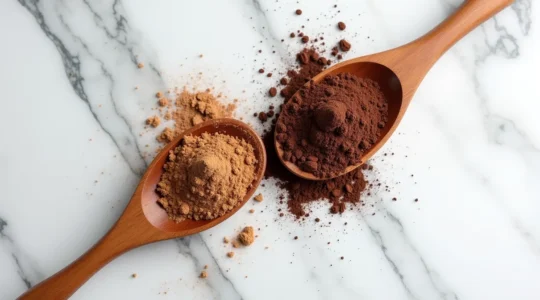
Which Cocoa Powder Type Creates the Darkest, Moistest Cakes?
The secret to a dark, moist cake isn’t a single ingredient, but understanding the chemistry of cocoa powder and how its properties interact. Color and leavening are controlled by the cocoa’s pH level (natural vs. Dutch-process). Moisture is paradoxically threatened…
Read more