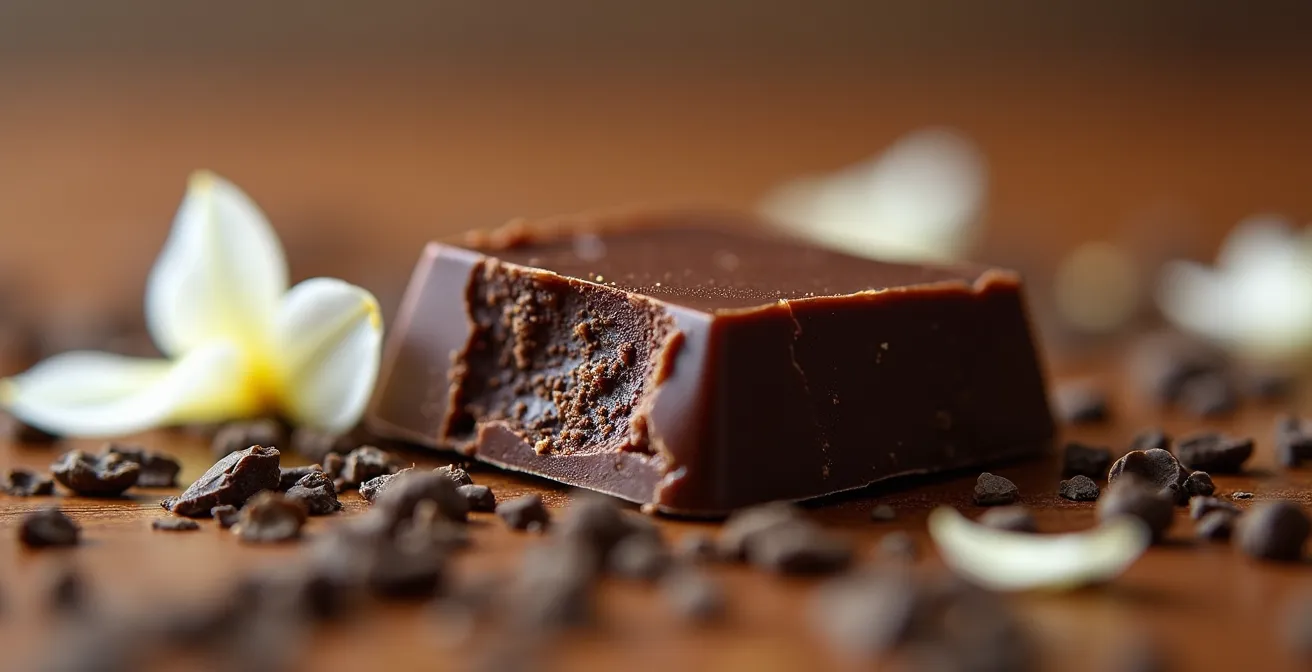
The secret to a sublime tea and floral chocolate pairing lies not in matching flavors, but in understanding their shared molecular language.
- Successful pairings build “aromatic bridges” using shared chemical compounds like esters and aldehydes.
- Techniques like cold-brewing tea and managing texture are as crucial as the choice of ingredients.
Recommendation: Approach your next tasting as a sensory architect by following a structured 7-step method to build flavor, not just combine it.
The experience is all too common for the discerning palate: you select a fine chocolate, celebrated for its delicate notes of jasmine or rose, and pair it with your favorite tea. Instead of a symphony of flavor, you are met with a muted, confused, or worse, an unpleasantly soapy taste. Many believe the art of pairing is a simple game of matching light with light or dark with dark. They might suggest avoiding sugar or milk, sound advice but merely scratching the surface of a much deeper discipline.
But what if the key to unlocking these ethereal floral notes was not found in simple flavor affinity, but in the science of molecular harmony? The true mastery of pairing lies in understanding the volatile compounds that give both tea and chocolate their identity. It’s about becoming a sensory architect, consciously building bridges between complementary aromas or creating elegant contrasts that allow each element to shine without overpowering the other. This is not about following rigid rules, but about learning the language of aroma itself.
This guide will move beyond the generic advice. We will explore the very origins of floral notes in cocoa, delve into the chemical compounds that create them, and provide concrete techniques to build pairings that are intentional, sophisticated, and deeply rewarding. You will learn not only what to pair, but precisely *why* it works, transforming your tea time from a pleasant ritual into a true act of culinary creation.
To guide you on this journey of sensory discovery, this article is structured to build your expertise from the ground up. We will explore the science, the techniques, and the common pitfalls, providing a complete framework for mastering the art of floral chocolate and tea pairing.
Contents: The Art of Harmonizing Tea and Floral Chocolate
- Why Certain Cocoa Origins Naturally Develop Jasmine Aromas?
- How to Cold-Brew White Tea to Match Floral Dark Chocolate?
- Earl Grey vs. Green Tea: Which Better Complements Ecuadorian Cocoa?
- The Pairing Mistake That Makes Floral Notes Taste Like Soap
- In What Order to Serve Floral Pairings During a Light Brunch?
- How to Identify the 3 Primary Aromatic Families in Fine Chocolate?
- How to Thicken Hot Chocolate Without Cornstarch for a Velvety Texture?
- Esters and Aldehydes: What Makes Chocolate Smell Like Flowers?
Why Certain Cocoa Origins Naturally Develop Jasmine Aromas?
The enchanting floral notes in a piece of fine chocolate are not an accident or an artificial addition; they are a complex expression of terroir, genetics, and masterful processing. The journey from a humble cocoa bean to an aromatic bar begins with the very soil and climate it grows in. However, the true magic happens during fermentation, a critical stage where microorganisms transform the bean’s chemical precursors. For instance, research demonstrates that specific yeast strains like Pichia kluyveri enhance the production of compounds like phenylacetaldehyde, which impart distinct floral and honey-like aromas.
Genetics play an equally vital role. The famed Nacional variety from Ecuador, for example, is genetically predisposed to developing these coveted scents. Its unique DNA contains the blueprint for creating specific volatile compounds. As a case in point, one study on ancestral cultivars highlighted the development of key aroma compounds within 120 hours of fermentation. These compounds, including the crucial terpene linalool, are responsible for the notes of tropical fruits, citrus, and flowers that make this cocoa so prized.
This molecular fingerprint is unique to certain regions. While Ecuador’s Nacional is famous for its floral profile, other origins offer their own nuances. The Huila region of Colombia is known for fruity and floral notes derived from stable esters and alcohols, while certain Madagascan cocoas present hints of rose. This understanding—that floral notes are a signature of origin and process—is the first step toward creating a truly informed pairing.
How to Cold-Brew White Tea to Match Floral Dark Chocolate?
When pairing a beverage with a delicate floral dark chocolate, the goal is to complement, not conquer. Hot brewing, while excellent for extracting bold flavors from black teas or oolongs, can be too aggressive for this task. The high temperatures can extract an excess of tannins and catechins, leading to an astringency or bitterness that completely overwhelms the subtle floral esters of the chocolate. This is where the elegant technique of cold-brewing comes into its own, particularly with a delicate white tea like a Silver Needle or White Peony.
Cold brewing is a gentle, slow infusion process using cold or room-temperature water over an extended period—typically 8 to 12 hours. This method fundamentally changes the chemical extraction. It draws out the tea’s sweeter, more nuanced aromatic compounds while leaving behind the majority of the bitter-tasting components. The result is a tea that is exceptionally smooth, clean, and light on the palate, with its own subtle floral and fruity notes perfectly preserved. This creates an ideal, non-competitive backdrop for the chocolate.
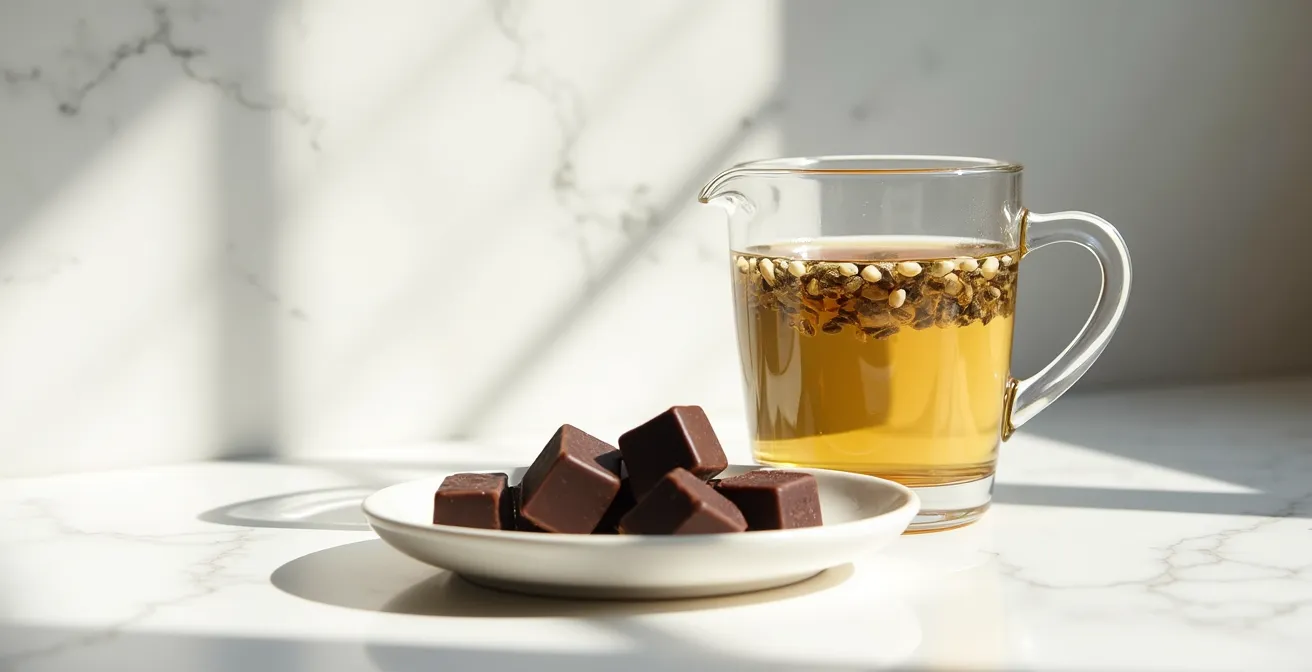
The resulting brew acts less as a competing flavor and more as a palate cleanser and enhancer. A sip of the chilled, smooth white tea prepares your taste buds, clearing away any lingering tastes and heightening your sensitivity to the complex aromatics of the chocolate. As the dark chocolate melts on your tongue, its floral volatiles are released, and the clean finish of the tea allows them to be perceived in their purest form. It’s a pairing of quiet support, where the tea’s role is to gracefully lift the chocolate onto a pedestal.
Earl Grey vs. Green Tea: Which Better Complements Ecuadorian Cocoa?
Choosing the right tea to accompany a fine Ecuadorian cocoa, known for its inherent floral notes, is a delicate balancing act. It requires a deep understanding of how flavor compounds interact. As Piotr Miga, a master blender at Tea Forté, suggests, a successful pairing can create a memorable multisensory experience. Let’s compare two popular choices: the aromatic Earl Grey and the classic green tea.
Tea Forté’s award-winning tea sommelier and master blender, Piotr Miga, shares insights on how to pair fine chocolate and tea for a memorable multisensory experience
– Piotr Miga, Tea Forté Expert Guide
Earl Grey, with its distinctive citrusy and floral character, seems like a natural fit. However, its dominant flavor comes from bergamot oil, which is high in linalool—the very same compound often found in floral cocoas. Instead of creating harmony, this can lead to an aromatic competition. The powerful bergamot can easily mask or muddle the more subtle floral notes of the Ecuadorian chocolate, creating a flat, one-dimensional experience rather than a layered one.
A Japanese Sencha green tea, on the other hand, offers a brilliant contrast. Its flavor profile is primarily vegetal, grassy, and endowed with a savory umami quality. These notes do not compete with the chocolate’s florals. Instead, they provide a clean, contrasting backdrop that makes the chocolate’s delicate aromas pop. The umami and slight marine notes of the Sencha cleanse the palate, allowing the floral and fruity characteristics of the cocoa to take center stage. For a truly harmonious pairing that bridges flavors, a light oolong often works best, but for creating a beautiful contrast, green tea is superior to Earl Grey.
The following table, based on expert pairing principles, summarizes why some teas create competition while others create harmony or contrast with a floral-forward cocoa like Ecuadorian Nacional.
| Tea Type | Flavor Profile | Pairing Effect with Ecuadorian Cocoa |
|---|---|---|
| Earl Grey | Bergamot oil dominant, citrus and floral notes high in linalool | Competes with chocolate’s subtle florals |
| Green Tea (Sencha) | Vegetal, umami, slightly marine notes | Provides contrasting backdrop that lifts floral aromas |
| Light Oolong | Natural floral and creamy notes | Creates flavor bridge harmonizing on molecular level |
The Pairing Mistake That Makes Floral Notes Taste Like Soap
The dreaded “soapy” flavor is one of the most disappointing outcomes in a food pairing. It’s an instance of aromatic overload, where competing or excessive volatile compounds clash on the palate, creating an unpleasant, chemical-like sensation. This often happens when two elements, both high in similar powerful floral or phenolic compounds, are combined. The delicate balance is tipped, and instead of a delightful floral bouquet, the brain interprets the overwhelming signal as something artificial, like soap or perfume.
Scientific research into cocoa’s off-flavors reveals how specific molecules can be responsible. For example, an excess of certain compounds like coumarin can introduce green, bitter notes, while others can create phenolic off-notes. When you pair a chocolate already rich in these complex florals with a tea that is also intensely aromatic—like a heavily perfumed jasmine tea or a potent Earl Grey—you risk pushing the concentration of certain compounds past the point of pleasure. The combined intensity of linalool, geraniol, or other terpenes can cross a sensory threshold, leading to the soapy perception.

Another fundamental mistake is the addition of milk or sugar. These additions coat the tongue and alter the flavor profile of the tea, creating a barrier that prevents the delicate interplay of aromas from ever reaching your palate. As tea experts recommend, teas should be drunk without milk or sugar in a pairing context, as the chocolate itself provides ample sweetness and texture. To avoid the soapy tragedy, the guiding principle should be subtlety and balance. Choose a tea that provides a clean, contrasting base or one with only a whisper of complementary notes, not one that shouts with the same aromatic voice as the chocolate.
In What Order to Serve Floral Pairings During a Light Brunch?
When incorporating a sophisticated tea and chocolate pairing into an event like a light brunch, the order and method of presentation are paramount to the experience. It should not be an afterthought but a curated moment. As Alison Dillon, Certified Tea Master, emphasizes, pairing mindfully crafted chocolate with high-quality tea can yield “sensational results.” The sequence should be designed to build complexity, moving from lighter to more intense flavors to avoid overwhelming the palate early on.
A good rule of thumb is to start with the most delicate pairing. For example, begin with a cold-brewed white tea paired with a white chocolate infused with rose or a 65% dark chocolate with subtle violet notes. As the brunch progresses, you can introduce a slightly more robust pairing, such as a light oolong tea alongside a 70% Madagascan chocolate with its characteristic red fruit and floral profile. Save the boldest pairings, like a darker roasted oolong with a nutty chocolate, for last. This progressive “sensory ramp-up” ensures that each pairing is appreciated with a fresh palate.
The tasting itself should be a guided ritual, not a casual bite. To elevate the experience from simple consumption to a true tasting, you can introduce a professional method. The following plan breaks down the process into clear, manageable steps that allow guests to fully engage with the nuances of both the tea and the chocolate.
Your Action Plan: The 7-Step Professional Tasting Method
- Prepare the Palate: Begin by taking a sip of the tea. Swirl it across the entire tongue before swallowing. This warms the taste buds and prepares them for the chocolate.
- Cleanse Between Pairings: Have sparkling water or a plain, unsalted cracker available to cleanse the palate before moving to the next pairing.
- Observe the Chocolate: Before tasting, observe the chocolate’s appearance. Break a piece to hear the “snap” and inhale its primary aromas.
- Evaluate the Tea: Take another thoughtful sip of the tea, focusing on its aroma, flavor, and finish without the influence of the chocolate.
- Melt, Don’t Chew: Place a small piece of the chocolate on your tongue and let it melt slowly. Chewing rushes the process and prevents the full spectrum of flavors from developing.
- Bridge the Flavors: While the chocolate is still melting, take a small sip of the tea. Notice how the flavors mingle, change, and create new sensations.
- Experience the Finish: After swallowing, exhale gently through your nose. This triggers retronasal olfaction, revealing a final, lingering layer of aroma and completing the tasting experience.
How to Identify the 3 Primary Aromatic Families in Fine Chocolate?
To move from a casual enthusiast to a true connoisseur of chocolate and tea pairings, one must first learn to deconstruct and identify the aromas in the chocolate itself. Just as a sommelier categorizes wine, a chocolatier thinks in terms of aromatic families. While the spectrum of flavor is vast, we can simplify it into three primary strategic groups for pairing: Harmonizing, Complementary, and Contrasting. Identifying which family a chocolate belongs to is the key to predicting a successful tea match.
The first and most relevant family for our discussion is Harmonizing (Floral/Fruity). These are chocolates whose dominant notes are derived from the cocoa’s origin and fermentation. They smell of flowers like jasmine, orange blossom, and rose, or fruits like raspberry, citrus, and apricot. These aromas are created by volatile compounds like esters and terpenes. When you encounter a chocolate with these characteristics, the most intuitive pairing strategy is to find a tea with a similar light, aromatic profile, such as a delicate white tea or a floral green tea, to create a seamless “aromatic bridge.”
The second family is Complementary (Nutty/Caramel). These notes typically arise from the roasting process (the Maillard reaction) and are reminiscent of toasted nuts, honey, caramel, or browned butter. They evoke a sense of warmth and richness. The ideal pairing for these chocolates is often a tea that shares this cozy, rounded profile, like a medium-oxidized oolong, which has its own natural creamy and honey-sweet notes. The third family, Contrasting (Earthy/Smoky), includes chocolates with notes of wood, leather, tobacco, or smoke. These deep, grounding flavors pair wonderfully with teas that can stand up to them, such as a dark roasted oolong or an aged, earthy pu-erh, creating a powerful and complex contrast.
This framework provides a strategic starting point for any pairing. By first identifying the chocolate’s primary aromatic signature, you can make a much more intentional choice of tea, as outlined in the matrix below.
| Aromatic Family | Chocolate Notes | Recommended Tea Starting Point |
|---|---|---|
| Harmonizing (Floral/Fruity) | Floral, fruity characteristics | Light green or white tea |
| Complementary (Nutty/Caramel) | Honey-sweet notes | Oolong tea |
| Contrasting (Earthy/Smoky) | Earthy, nutty flavors | Dark roasted oolong or pu-erh |
How to Thicken Hot Chocolate Without Cornstarch for a Velvety Texture?
While not a direct tea pairing, the texture of a chocolate beverage profoundly impacts its sensory perception and can be an integral part of a sophisticated tasting experience. A rich, velvety hot chocolate can serve as a wonderful, comforting counterpoint in a tasting flight. However, the common method of using cornstarch to thicken it is a mistake. Cornstarch adds a starchy, chalky mouthfeel and can dull the chocolate’s delicate flavor compounds—especially the floral ones. The goal is to achieve a luxurious mouthfeel without masking the cocoa’s true character.
The professional approach involves creating a stable emulsion and using alternative thickeners that respect the flavor. The base of any great hot chocolate is, of course, the chocolate itself and the liquid. Gently heating high-quality cocoa powder with a blend of cream and milk provides a rich foundation. But to achieve that signature velvety body, we need to think like a food scientist. A tiny pinch of xanthan gum can work wonders; it’s a powerful thickener that is flavor-neutral and creates a silky texture at very low concentrations.
For an even creamier, richer body, incorporating a small amount of healthy fat is an excellent technique. A spoonful of cashew butter, which has a relatively neutral flavor, can be blended in to add incredible creaminess and body. The key to a non-gritty texture is creating a stable emulsion. Using an immersion blender or a standard blender for a few seconds will shear the fat particles and ensure they are fully incorporated, resulting in a perfectly smooth, homogenous drink. Maintaining the final beverage at a temperature just below body temperature also enhances the perception of its texture, making it feel even more decadent and velvety on the palate.
Key takeaways
- The origin of floral notes lies in cocoa genetics and fermentation, not artificial additives.
- Pairing is a science of molecular harmony; match or contrast volatile compounds intentionally.
- Brewing technique (like cold brew) and texture are as important as the choice of tea and chocolate.
- A structured tasting method elevates the experience by focusing the senses on aroma, flavor, and finish.
Esters and Aldehydes: What Makes Chocolate Smell Like Flowers?
We have discussed terroir, fermentation, and tasting techniques, but the true heart of a floral aroma lies in its chemistry. The reason a piece of chocolate can evoke a field of jasmine or a fresh rose is due to a fascinating family of organic molecules known as volatile compounds, primarily esters and aldehydes. These molecules are light enough to evaporate at room temperature, travel up into our nasal cavity, and trigger our sense of smell. Their creation is the ultimate goal of the entire chocolate-making process, from bean to bar.
Fermentation is where this alchemy begins. As fermentation research shows, a cascade of chemical reactions initiated by yeasts and bacteria transforms the bean’s precursors into a complex array of flavors, including acidic, fruity, and, of course, floral aromas. Yeasts are particularly crucial in producing various precursor compounds, such as alcohols. During the subsequent roasting and conching stages, these alcohols react with acids in the cocoa to form esters. For example, the ester phenylethyl acetate is a major contributor to rose-like scents.
Aldehydes are another critical class of compounds. Phenylacetaldehyde, for instance, is a powerful aromatic that provides distinct honey and floral notes. The presence and concentration of these specific molecules are what separate a generic chocolate from a fine-flavor one. Advanced metabolomics research identifies compounds like linalool, irone, and coumaric acid as key markers for floral notes. Understanding this molecular basis is the final and most profound step in mastering pairings. It allows you to move beyond guessing and start thinking about building “aromatic bridges” on a chemical level, pairing a linalool-rich tea with a linalool-prominent chocolate to create a seamless and sublime harmony.
Begin your own sensory journey today by selecting a fine floral chocolate and applying these principles. Approach your next tea time not just as a break, but as a delicious experiment in molecular harmony, and discover a new world of flavor that has been waiting to be unlocked.