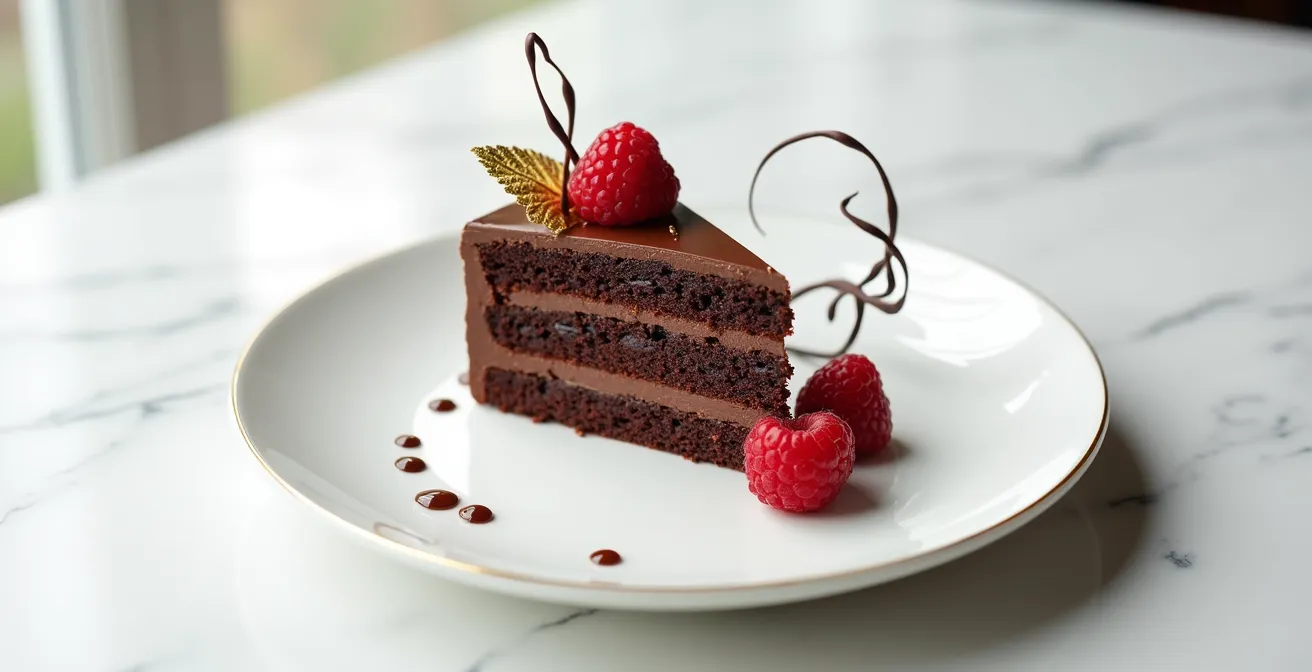
A single slice of cake can become a significant profit center, not just a menu afterthought.
- Leverage visual psychology and plating composition to create ‘Instagrammable’ moments that drive desire.
- Integrate tableside theatrics and strategic pairings to dramatically increase perceived value and upsell opportunities.
Recommendation: Focus on engineering a complete guest experience around the dessert, from visual appeal and structural integrity to the final taste.
For most restaurants, the dessert menu is an unfortunate afterthought—a list of serviceable items that often yield minimal margins. A slice of chocolate cake, regardless of its quality, is mentally capped at a certain price point by the customer. The common approach is to focus on the recipe or ingredients, but this rarely moves the needle on profitability. Restaurateurs are left wondering how to break through this perception ceiling without simply offering a larger portion, which further erodes margins.
The standard advice revolves around generic plating tips like adding a mint sprig or a dusting of powdered sugar. While not incorrect, these low-effort gestures fail to build substantial value. The real challenge isn’t making the cake taste better; it’s architecting an experience that makes a $12 price tag feel not just justified, but like a bargain. The secret lies in moving beyond the role of a baker and adopting the mindset of a profit engineer.
But what if the key to unlocking higher dessert margins wasn’t in the cake itself, but in everything that surrounds it? This guide proposes a new framework: Perceived Value Architecture. It’s a systematic approach to transforming a simple dessert into a memorable, multi-sensory event. We’re not just selling cake; we are selling a story, a performance, and a photo opportunity that guests are eager to pay for.
This article will deconstruct the strategies to elevate a single slice of cake into a premium offering. We will explore visual composition, the power of tableside service, the science of consistency, and the art of upselling through strategic pairings. By mastering these techniques, you can turn your last course into one of your most profitable.
To guide you through this process of dessert profit engineering, this article is structured to cover every critical aspect, from the plate to the final bill. The following sections provide a complete roadmap for transforming your dessert presentation.
Summary: Architecting a High-Value Dessert Experience
- Why Placing the Slice Off-Center Creates Visual Interest?
- Sauce and Crunch: Why Add Components Tableside?
- Templates and Guides: How to Ensure Every Slice Is Identical?
- The Cloche Trick: Keeping Pre-Cut Slices Moist During Service
- Port vs. Banyuls: Which Wine Sells the Slice Best?
- How to Achieve Mirror-Like Shine on Your Molded Bonbons?
- How to Pair Single Origin Coffee with Matching Chocolate Terroirs?
- How to Build a 3-Tier Chocolate Cake That Survives Transport?
Why Placing the Slice Off-Center Creates Visual Interest?
The first bite is with the eye, and in the age of social media, the visual appeal of a dish is a powerful marketing tool. A compelling presentation does more than just look good; it communicates care, quality, and creativity, laying the groundwork for a higher price point. In fact, desserts are a prime subject for user-generated content, with one study showing that 46% of Gen Z diners have a dessert photo on their phone. Placing a cake slice directly in the center of the plate is predictable and static. Shifting it off-center immediately introduces dynamism and sophistication.
This technique is rooted in the Rule of Thirds, a fundamental principle of artistic composition. By imagining the plate is divided by a 3×3 grid, you position the main element—the cake slice—at one of the four intersections. This forces the viewer’s eye to move across the plate, making the composition more engaging. The empty area, known as negative space, is just as important. It prevents the plate from looking crowded and draws focus to the dessert, elevating its status from a simple food item to a piece of art.
Achieving this visual balance is a deliberate process. Garnishes should be arranged in odd numbers (groups of one, three, or five) as this is more naturally appealing to the human eye than even-numbered groups. The entire composition should guide the diner’s gaze and create an intuitive “fork path,” typically from the right side of the plate towards the dessert. If the cake is on the left, a small, light garnish on the right provides asymmetrical balance. This thoughtful arrangement transforms the plate from a mere vessel into a canvas.
Sauce and Crunch: Why Add Components Tableside?
Once the visual foundation is set, the next level of profit engineering involves introducing theatricality and interaction. Moving an action from the kitchen to the dining room transforms a meal into a performance. This isn’t just about service; it’s a strategic tool to increase perceived value. A significant 62% of diners report being interested in interactive dining experiences, indicating a clear demand for more engaging service models. Pouring a sauce, adding a final crumble, or even just unveiling the dish at the table creates a memorable moment that a static plate cannot.
The act of adding a component tableside serves multiple purposes. First, it engages multiple senses. The sight of a warm, glossy chocolate sauce being poured, the sound of a crunchy element being sprinkled, and the aroma released in the process all build anticipation and enhance the guest’s enjoyment. Second, it provides a moment of personalized attention from the server, making the guest feel special. This interaction justifies a premium and separates your offering from a standard, pre-plated dessert.
This technique also has practical benefits. Delicate components like ice cream, hot sauces, or crispy tuiles maintain their optimal temperature and texture right up to the moment of consumption. A warm sauce poured at the table is far more impactful than one that has cooled on its journey from the kitchen. This focus on sensory detail is a hallmark of fine dining that can be adapted to elevate any dessert.
Case Study: The Rise of Tableside “Razzle-Dazzle”
Fine dining establishments are increasingly leveraging tableside preparation as a key trend. Noted chefs like Tyler Florence have identified ‘tableside razzle-dazzle’ as a major restaurant trend for 2025. These live interactions are used to justify higher menu prices while simultaneously elevating guest satisfaction in ways that kitchen efficiency or automation cannot replicate. It proves that performance is a powerful component of perceived value.
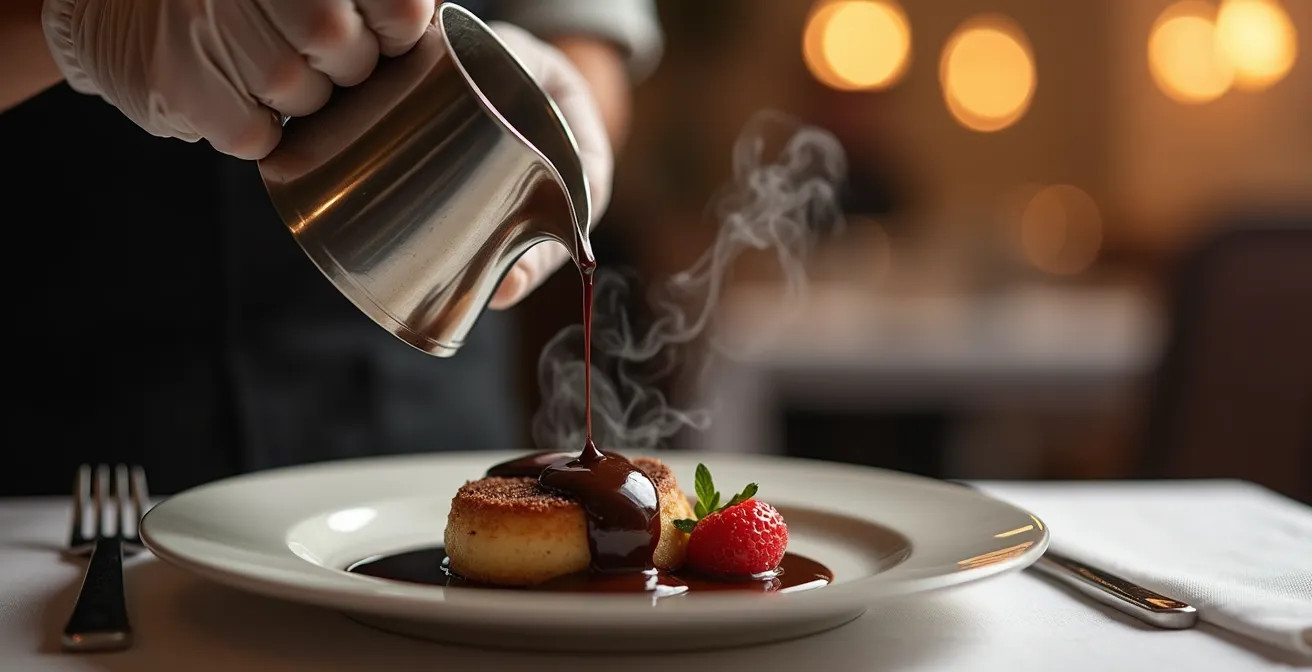
As seen here, the simple act of pouring sauce becomes a focal point. It’s an intimate, engaging moment that adds significant value far beyond the cost of the ingredients. This is the essence of turning service into a profitable experience.
Templates and Guides: How to Ensure Every Slice Is Identical?
Creativity and theatricality justify the price, but consistency delivers the promise every single time. A guest who sees a stunning dessert photo on social media expects to receive the exact same dish. Any deviation erodes trust and devalues the experience. Therefore, the art of high-end plating must be supported by the science of replication. This is where Standard Operating Procedures (SOPs) become a restaurateur’s most valuable tool for profit engineering.
Achieving identical plates across hundreds of services, executed by different members of your team, is impossible without a system. This system relies on physical guides and clear documentation to remove guesswork and variability. It’s not about stifling creativity; it’s about making excellence scalable. The goal is to create a plating process that is as reliable as an assembly line, but with the finish of an artisan.
To implement this, successful pastry departments use a variety of tools and methods:
- Acetate Stencils: Custom-cut templates ensure that every sauce swoosh, caramel drizzle, or cocoa powder pattern is identical in shape and placement.
- Ring Molds: Using various sized metal rings as guides for placing crumbles, gels, or mousses ensures precise and consistent positioning of garnishes.
- Plating Maps: Detailed diagrams, or “plate blueprints,” are drawn with exact measurements and positions for each component. These are posted in the pastry station for easy reference.
- Portion Scoops: Specific sized scoops are designated for elements like ice cream, sorbet, or quenelles, ensuring every guest receives the same amount.
- Visual SOPs: A binder or digital file with step-by-step photos of the plating process is the most effective training tool. It leaves no room for misinterpretation. During training, clear acetate guides can even be placed under glass plates to help staff master the layout.
This systematic approach ensures that the $12 cake you designed is the $12 cake every customer receives. It protects your brand’s reputation and the perceived value you’ve worked so hard to build.
The Cloche Trick: Keeping Pre-Cut Slices Moist During Service
The final moments before a dessert reaches the guest are critical. A pre-cut slice of cake can quickly dry out under heat lamps or in a busy kitchen. The cloche, or glass dome, is a classic tool that solves this practical problem while adding another layer of sensory experience and drama. It acts as a miniature, personal humidor for the dessert, preserving moisture and ensuring the cake arrives at the table in perfect condition.
However, its function goes far beyond simple preservation. The reveal—the moment the server lifts the cloche—is a powerful piece of tableside theater. It creates a moment of suspense and surprise, focusing all attention on the dish. This act of unveiling elevates the dessert, making it feel more significant and luxurious. As a Restaurant Industry Report on 2025 trends notes, this type of service adds immense value.
At the same time, these live interactions justify higher menu prices and elevate guest satisfaction in a way that even automation cannot replicate.
– Restaurant Industry Report, Fine Dining Restaurant Statistics 2025
The cloche can also be used to introduce an aromatic element. A small drop of a complementary extract, a sprig of a fresh herb, or even a puff of aromatic smoke captured under the dome creates a “scent-scape” that is released upon unveiling. This engages the sense of smell before the first bite is even taken, multiplying the sensory impact and cementing the experience in the guest’s memory. The cloche transforms a simple delivery into a grand presentation.
Your Action Plan: Mastering the Cloche Presentation
- Control Temperature: Pre-chill glass cloches in a refrigerator to create a dramatic temperature contrast and a subtle fog effect upon reveal, especially with warm components.
- Introduce Aromatics: Before covering, place a single drop of vanilla extract or a lightly bruised mint leaf on the rim of the plate to create an aromatic burst upon lifting the cloche.
- Incorporate Smoke: For a high-impact presentation, use a smoking gun with a fruitwood like apple or cherry for 2-3 seconds under the cloche before sending it to the table.
- Train the Reveal: The presentation is a skill. Train staff to lift the cloche with a slight tilt away from the guest, allowing the aroma to drift towards them for maximum effect.
- Time the Execution: Ensure the cloche-covered dessert is presented within two minutes of leaving the kitchen to maintain the integrity of any smoke or temperature effects.
Port vs. Banyuls: Which Wine Sells the Slice Best?
The final pillar of profit engineering is the upsell. A $12 slice of cake is good; a $12 slice of cake sold with a $15 glass of perfectly paired dessert wine is a major win for your bottom line. Strategic pairing is not just about taste; it’s about extending the guest experience and increasing the average check size. In fact, sales data reveals a $5.50 higher median spend when a dessert is purchased, and a beverage pairing can push that even higher.
Offering a thoughtful pairing transforms the server from an order-taker into a knowledgeable guide. Instead of asking “Anything else?”, they can confidently suggest, “Our pastry chef recommends a glass of Banyuls with this chocolate cake; its notes of black cherry and licorice beautifully complement the dark chocolate.” This proactive suggestion feels like expert advice, not a sales pitch, and many guests will gladly accept.
The choice of wine itself can be a strategic decision. While a Ruby Port is a classic and safe choice for dark chocolate, offering something less common like a French Banyuls or even an aged Tequila can spark a conversation, making the pairing more memorable and justifying a higher price. The key is to offer a small, curated selection that complements your desserts and caters to different guest preferences, from traditional to adventurous.
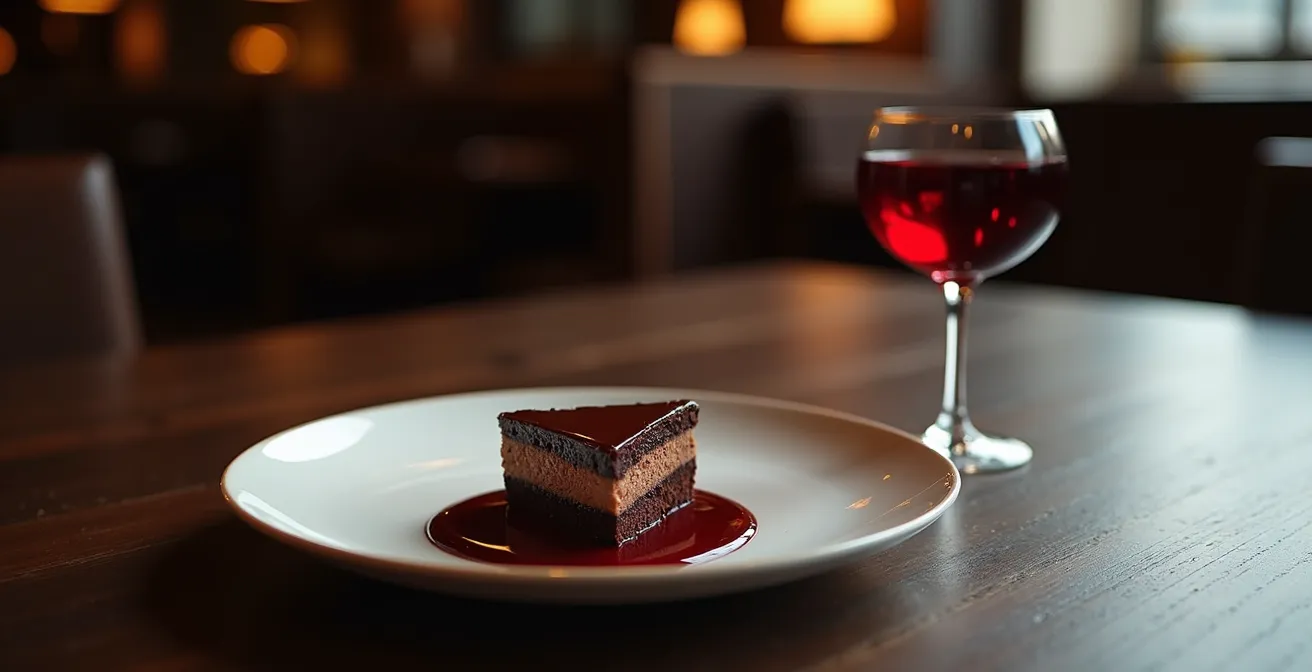
The following table breaks down common pairing options, their typical price points, and the type of guest they might appeal to. This allows you to build a pairing menu that maximizes both flavor synergy and profitability.
| Wine Type | Price Point | Chocolate Match | Guest Appeal |
|---|---|---|---|
| Ruby Port | $8-12/glass | Dark chocolate | Traditional, familiar |
| Tawny Port | $10-15/glass | Milk chocolate | Sophisticated, nutty notes |
| Banyuls | $12-18/glass | Single-origin dark | Unique, conversation starter |
| Late Harvest | $10-14/glass | White chocolate | Sweeter palate friendly |
| Aged Tequila | $14-20/glass | Mexican chocolate | Trendy, unexpected |
How to Achieve Mirror-Like Shine on Your Molded Bonbons?
In the architecture of a premium dessert plate, every component matters. While the cake slice is the star, the supporting cast of garnishes can dramatically elevate the overall perception of value. A small, perfectly crafted garnish can act like a jewel, signaling meticulous craftsmanship and justifying the premium price. A molded bonbon with a flawless, mirror-like shine is one such element that screams luxury and technical skill.
Achieving this effect is a matter of precise temperature control and technique. The mirror glaze itself must be prepared and used at a very specific temperature, typically around 35°C (95°F), requiring a digital thermometer for accuracy. The glaze is then applied to a completely frozen component; the temperature shock is what creates the instant set and high shine. This technique is best used on small, smooth-surfaced items like a miniature mousse, a quenelle, or a bonbon that will sit alongside the main cake slice. Trying to glaze an entire slice of a traditional layered cake is often impractical and can look messy.
Advanced Finishing: The Cocoa Butter “Velvet” Technique
For an alternative but equally sophisticated finish, many professional pastry chefs use a cocoa butter spray gun. This technique involves mixing colored cocoa butter with chocolate in a 1:1 ratio, heating it to 40°C, and spraying it onto a frozen dessert surface. The result is a stunning, matte “velvet” texture that photographs beautifully and provides a textural contrast to glossy elements on the plate. This demonstrates that mastery of texture, whether glossy or matte, is a key differentiator.
A single, brightly colored, mirror-glazed bonbon placed strategically on the plate adds a pop of color and a touch of modern patisserie flair. It tells the customer that the plate was composed by a chef with a high level of skill, reinforcing the idea that this is no ordinary dessert. It’s these small, masterfully executed details that accumulate to build a powerful argument for a $12 price tag.
How to Pair Single Origin Coffee with Matching Chocolate Terroirs?
Just as wine can elevate a dessert, a well-chosen coffee pairing offers another significant opportunity for upselling and enhancing the guest experience. However, simply offering “coffee” is a missed opportunity. The concept of terroir—the unique environmental factors that give agricultural products like grapes, cocoa beans, and coffee beans their distinct flavor profiles—provides a sophisticated framework for creating truly exceptional pairings.
Pairing a single-origin chocolate dessert with a coffee from a complementary terroir creates a narrative of place and flavor. It’s a conversation starter and an educational moment for the guest. For example, the bright, fruity, and acidic notes of a 70% Madagascar chocolate are beautifully echoed by the blueberry and wine-like notes of an Ethiopian Yirgacheffe coffee. This synergy creates a flavor experience that is far greater than the sum of its parts.
Training your staff to explain these pairings is crucial. A server who can articulate why a nutty Brazilian Santos coffee is the perfect match for a rich Venezuelan chocolate dessert is providing a high-value service. This positions your restaurant as a destination for connoisseurs and justifies premium pricing for both the dessert and the beverage. The following table provides a starting point for exploring these complex and rewarding pairings.
| Coffee Origin | Flavor Profile | Chocolate Match | Tasting Notes |
|---|---|---|---|
| Ethiopian Yirgacheffe | Blueberry, wine-like | Madagascar 70% | Fruity, bright acidity |
| Colombian Geisha | Floral, jasmine | Ecuador 65% | Delicate, complex |
| Brazilian Santos | Nutty, chocolate | Venezuelan 72% | Rich, balanced |
| Kenyan AA | Black currant, bold | Ghana 80% | Intense, wine-forward |
| Hawaiian Kona | Smooth, mild | Peru 60% | Approachable, crowd-pleasing |
By curating a small but thoughtful selection of single-origin coffees and integrating them into your dessert program, you open up a new revenue stream and add a final layer of sophistication to your Perceived Value Architecture.
Key Takeaways
- Visuals are paramount: Use plating principles like the Rule of Thirds and negative space to create ‘Instagrammable’ desserts.
- Theatrics add value: Incorporate tableside service, cloche reveals, and aromatic elements to turn dessert into a memorable performance.
- Consistency is non-negotiable: Implement systems like templates and visual SOPs to ensure every plate meets the same high standard.
How to Build a 3-Tier Chocolate Cake That Survives Transport?
The final, and perhaps most overlooked, aspect of dessert profit engineering is structural integrity. All the visual artistry and tableside theatrics in the world are meaningless if the cake slice collapses, leans, or smears on its journey from the kitchen to the table. In the context of a single plated slice, “surviving transport” refers to maintaining a pristine, sharp, and stable form from the moment it is cut until it is presented to the guest.
A perfectly vertical slice with clean, defined layers communicates precision and quality. This stability begins with the construction of the cake itself. Using stable fillings like Swiss meringue buttercream instead of soft whipped cream, and freezing layers before assembly, helps create a solid foundation. When it’s time to slice, a chilled cake and a hot, clean knife are essential for sharp edges. For delicate layered structures, inserting thin, hidden sheets of chocolate between layers can provide crucial internal support.
Alternatively, a “deconstructed” presentation offers a creative solution to structural challenges. By plating the individual components—layers of cake, dollops of filling, crumbles, and sauces—artfully around the plate, you can deliver all the flavors of a multi-tier cake without the risk of it collapsing. This modern approach showcases each element and can look incredibly sophisticated, turning a potential problem into an artistic statement.
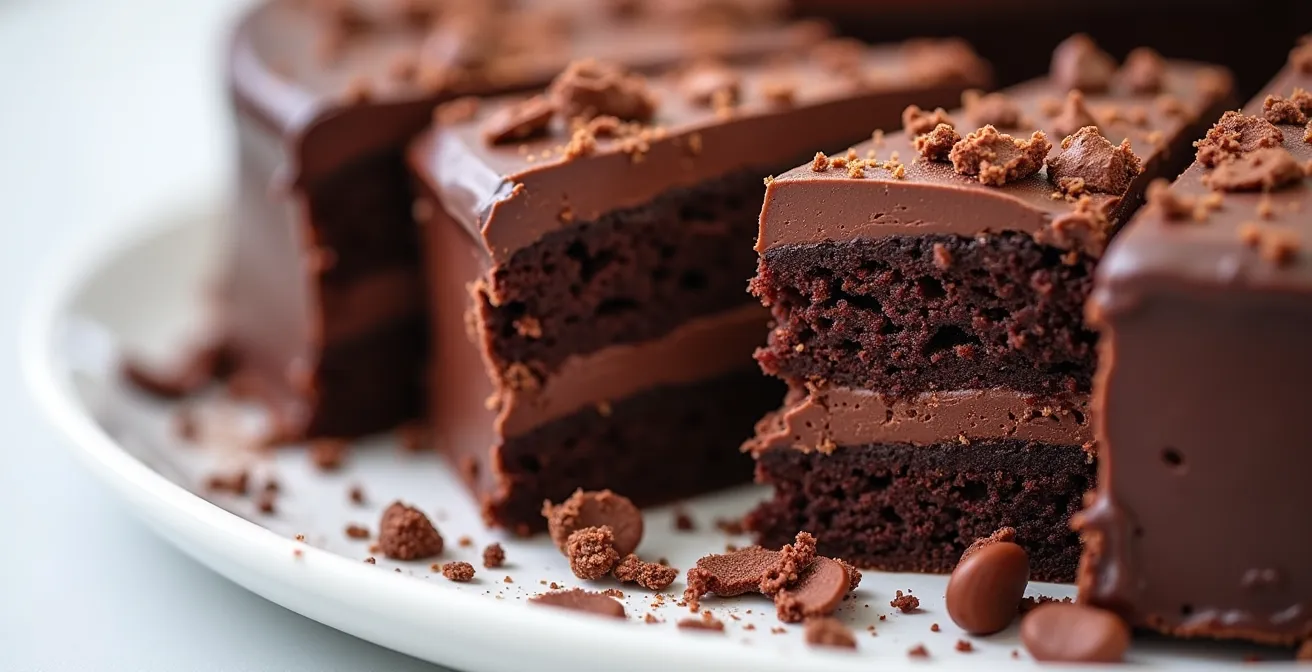
Whether you opt for a classic, pristine slice or a creative deconstructed version, the goal remains the same: to deliver a plate that looks intentional, clean, and professionally executed. This attention to structural detail is the silent foundation upon which the entire perceived value of your $12 dessert rests.
Ultimately, transforming a simple slice of cake into a high-margin menu item is an exercise in deliberate design. By architecting an experience that engages the senses, tells a story, and delivers on its promise with flawless execution, you can command a premium price that guests are not only willing but happy to pay. Start implementing these strategies today to turn your dessert menu into a powerful profit center.