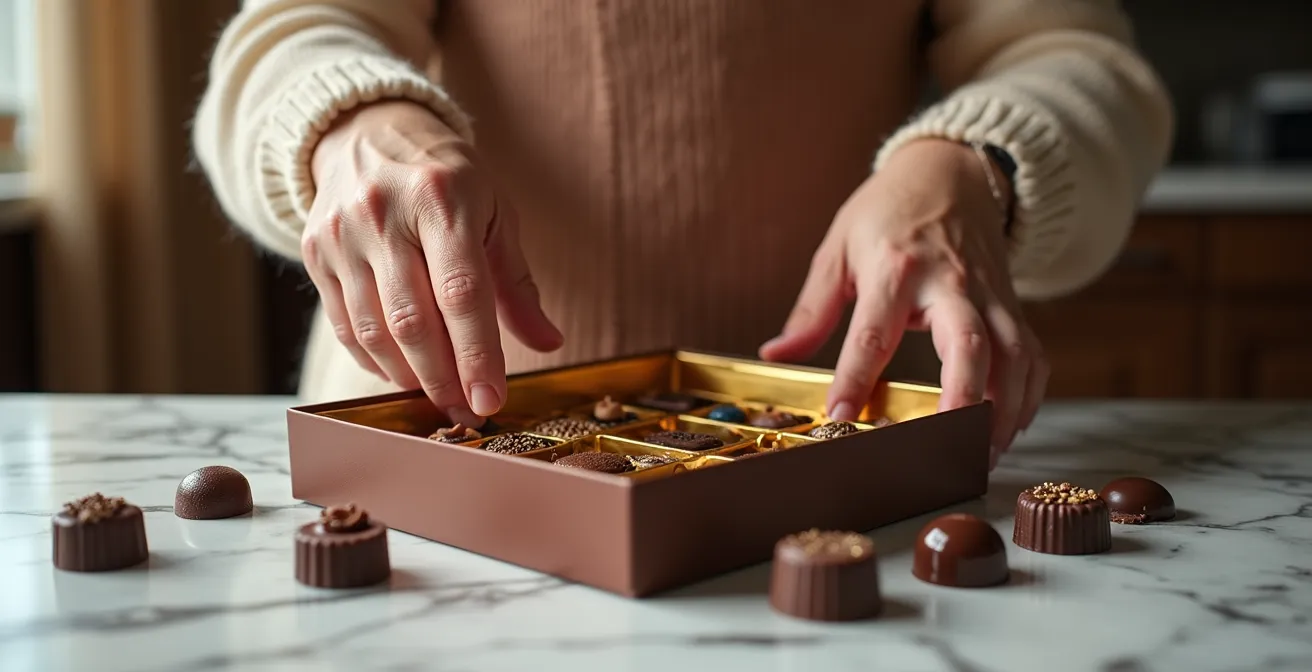
The secret to a universally adored chocolate box isn’t random variety, but a carefully constructed flavor narrative.
- Balance nostalgic classics like pralines (70% of the selection) with adventurous, conversation-starting ganaches (30%).
- Isolate volatile flavors, such as alcohol-infused bonbons, from delicate tea or floral chocolates to prevent scent contamination.
Recommendation: Begin by mapping a tasting journey for the recipient, starting with the mildest white or milk chocolates and progressing to the most intense dark varieties.
Choosing the perfect gift is an art, and nowhere is this truer than in the world of fine chocolate. The default approach—grabbing a pre-packaged assortment—often leads to a collection where half the pieces are left uneaten, a silent testament to mismatched tastes. We are often told to simply “include a mix of dark, milk, and white,” a piece of advice so generic it fails to capture the nuance required for a truly memorable present. This method overlooks the silent dialogue between flavors, textures, and even the order in which they are experienced.
But what if the key to a flawless chocolate box wasn’t just about the ‘what’, but the ‘how’ and the ‘why’? What if, instead of merely filling a box, you were designing an experience? This is the principle of sensory architecture: the intentional curation of a collection that tells a story, guiding the recipient’s palate on a deliberate journey. It transforms a simple box of chocolates from a commodity into a bespoke, thoughtful gesture that resonates across generations, satisfying both the traditionalist who cherishes a classic praline and the modernist eager for a yuzu-infused ganache.
This guide will move beyond the platitudes of gift-giving. We will explore the sophisticated strategies used by master chocolatiers to build a cohesive and delightful experience. We will deconstruct the balance of texture and flavor, map a tasting journey, navigate the classic versus exotic debate, and even delve into the science of storage to ensure your gift arrives in its most perfect state. Prepare to elevate your gifting from a simple selection to an act of true curation intelligence.
This article provides a detailed roadmap for assembling a chocolate collection that impresses and delights. The following sections break down the essential elements of this craft, from the foundational importance of texture to the finishing touches that signal true expertise.
Summary: A Concierge’s Guide to Curating the Perfect Chocolate Box
- Why Texture Variety Is as Important as Flavor in a Gift Box?
- How to Build a Tasting Journey from Mild to Intense Confections?
- Classic Praline vs. Exotic Ganache: Which One Should You Prioritize?
- The Storage Risk: Putting Alcohol Bonbons Next to Tea-Infused Ones
- When is the Optimal “Best Before” Date for a Mixed Box?
- How to Balance Nuts and Fruit Ratios on Mendiant Discs?
- Why Do Heart-Shaped Chocolates Sell 5x Better in February?
- How to Create Professional Molded Easter Eggs at Home?
Why Texture Variety Is as Important as Flavor in a Gift Box?
When curating a chocolate box, flavor is the obvious star. We fixate on cacao percentages and flavor infusions, but in doing so, we often neglect its silent partner: texture. A truly exceptional chocolate experience is a duet between taste and mouthfeel. A box filled only with smooth ganaches, no matter how varied their flavors, becomes monotonous. The palate craves contrast—the crisp snap of a thin shell, the creamy melt of a praline, the slight grain of a rustic truffle, and the satisfying chew of a caramel.
This is the foundation of sensory architecture. Top chocolatiers don’t just create flavors; they design a complete sensory language. As pioneering work from chocolatiers like Barry Callebaut has shown, a comprehensive chocolate experience can be broken down into dozens of descriptors. These include not only basic tastes but also a wide array of aromas, mouthfeel sensations, and textures. The goal is to build a collection where each piece offers a new discovery, not just in flavor but in its physical presence. A crunchy feuilletine base can elevate a simple hazelnut praline, while a liquid center can turn a standard bonbon into a delightful surprise.
Thinking about texture forces a more holistic approach to curation. It prompts questions like: Does the box have something crunchy? Something silky? Something chewy? This textural diversity is what keeps the recipient engaged, making the act of choosing the next piece an exploration. It is the difference between a flat, one-dimensional gift and a dynamic, multi-layered experience that delights and satisfies on every level. Ultimately, a variety of textures ensures that the gift feels generous and thoughtfully composed, showcasing a deeper understanding of what makes chocolate truly pleasurable.
How to Build a Tasting Journey from Mild to Intense Confections?
A masterfully curated chocolate box is not a random assortment; it is a narrative. The most crucial element of this story is the order of tasting. Presenting chocolates without a clear path is like handing someone a novel with the chapters shuffled. The experience becomes confusing, and delicate flavors are inevitably overpowered by more robust ones. The key is to construct a flavor narrative that guides the palate, typically from the most delicate and mild confections to the most intense and complex.
This journey usually begins with white chocolates, whose subtle notes of vanilla, milk, and caramel are easily overwhelmed. From there, the path progresses to high-quality milk chocolates, which can showcase nutty or malty profiles. Only after the palate is calibrated should you introduce the dark chocolates. Here, too, there is a progression: start with fruit-forward dark chocolates (around 60-70% cacao) before moving to the earthy, potent, and often challenging single-origin or high-cacao (75%+) pieces. This gradual intensification allows the unique character of each chocolate to be fully appreciated without being ‘bullied’ by the one that came before it.
This principle of a tasting journey is the core of sensory architecture, ensuring each piece is savored at its best. Arranging the chocolates in the box to visually represent this progression—from light to dark—is a sophisticated touch that communicates your intention to the recipient.
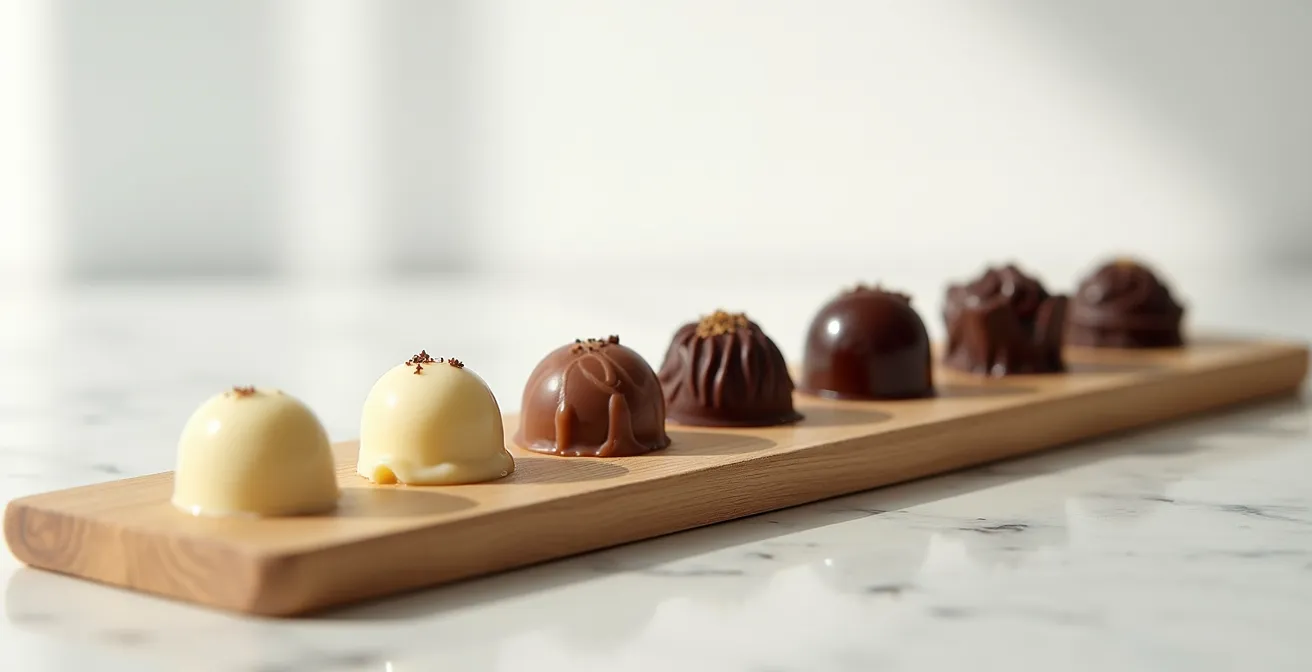
As seen in this arrangement, a visual gradient from left to right instinctively guides the taster. This not only enhances the experience but also elevates the gift itself, transforming it from a mere collection into an elegant, guided tasting ceremony. It shows you haven’t just chosen chocolates; you’ve orchestrated an event.
Your Action Plan: Building the Flavor Arc
- Start with delicate white or floral-infused chocolates (30-35% cacao) to set a gentle baseline.
- Progress to nutty or classic milk chocolates (40-50% cacao) as the next step in intensity.
- Introduce fruit-forward dark chocolates (60-70% cacao) to begin exploring more complex notes.
- Peak with high-cacao (75-85%) or single-origin pieces that offer the most intense and lingering flavors.
- End with a memorable ‘signature’ piece that might combine multiple elements, leaving a lasting impression.
Classic Praline vs. Exotic Ganache: Which One Should You Prioritize?
One of the greatest challenges in curating a box for a multi-generational audience is bridging the gap between comfort and discovery. Some recipients find ultimate delight in the nostalgic, nutty sweetness of a classic hazelnut praline, while others seek the thrill of a ganache infused with yuzu, cardamom, or matcha. Prioritizing one over the other risks alienating a portion of your audience. The solution lies not in choosing a side, but in achieving a strategic balance.
The most effective strategy is the 70/30 Curation Rule. This principle dictates that 70% of your selection should be dedicated to universally beloved classics. These are the anchors of your collection: smooth pralines, soft caramels, and simple, high-quality truffles. They provide a sense of comfort, familiarity, and guaranteed satisfaction. The remaining 30% is reserved for the “conversation starters”—the exotic, innovative, or unexpected flavors. These are the pieces that spark curiosity, create memorable moments, and cater to the modern, adventurous palate.
This ratio provides a perfect equilibrium. The majority of the box feels safe and indulgent, while the minority adds a touch of excitement and sophistication. For a gift intended for a family or an office, this balance is crucial. It ensures there is something for the traditionalist (often from the Boomer or Gen X demographic) and something to intrigue the explorer (typically Millennials and Gen Z). A comparative analysis of chocolate preferences confirms this generational divide, highlighting the universal appeal of classics versus the polarizing nature of novelty.
| Aspect | Classic Pralines | Exotic Ganaches |
|---|---|---|
| Primary Appeal | Nostalgia & Comfort | Novelty & Discovery |
| Target Generation | Boomers, Gen X | Millennials, Gen Z |
| Flavor Profile | Hazelnut, Almond, Caramel | Yuzu, Matcha, Cardamom |
| Risk Level | Low – Universally Accepted | High – Polarizing |
| Recommended Mix | 70% of Box | 30% of Box |
By adhering to this 70/30 split, you are not just mixing chocolates; you are engaging in smart, empathetic curation that acknowledges and respects the full spectrum of preferences. It is a strategy that guarantees your gift will be a resounding success, with every single piece finding its happy recipient.
The Storage Risk: Putting Alcohol Bonbons Next to Tea-Infused Ones
A beautifully curated chocolate box can be undone by one simple mistake: improper placement. Chocolates are not inert objects; they are sensitive, and their flavors can migrate. The most significant risk comes from placing highly aromatic or volatile pieces, like those infused with alcohol, directly next to delicate ones, such as tea or floral ganaches. The cocoa butter in chocolate is an excellent fat, and fats are notoriously good at absorbing ambient aromas.
The science is clear: research indicates that chocolate’s fat content, typically ranging from 30-40%, acts like a sponge for volatile compounds. When a whiskey truffle sits beside a jasmine tea bonbon, the potent alcohol vapors can easily permeate the delicate floral notes, resulting in a muddled, unpleasant flavor for both. The jasmine chocolate may end up with a harsh, alcoholic edge, while the whiskey truffle loses its distinct character. This is the ultimate failure in curation—when the components of a gift actively degrade one another.
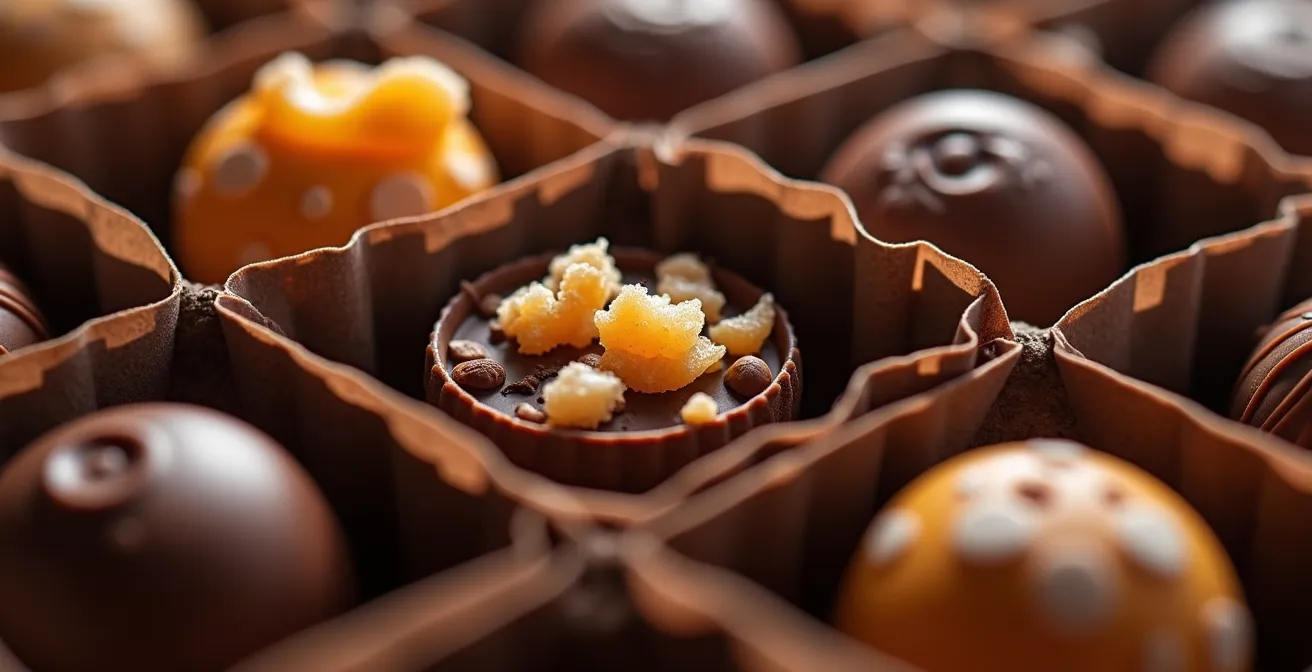
The solution is strategic compartmentalization. A high-end chocolate box should use physical dividers to create “flavor zones,” isolating strong personalities from their more subtle neighbors. This separation is non-negotiable for maintaining the integrity of each piece. It is a mark of professionalism and attention to detail that distinguishes a thoughtfully assembled gift from a careless jumble.
Case Study: M.Cacao’s Expressio Box Strategy
The M.Cacao Expressio chocolate box exemplifies this principle perfectly. The brand organizes its confections into themed sections, creating a dedicated ‘Spirits & Liqueurs Section’ physically separated from the ‘Botanical Infusions Corner’. This intelligent design prevents the volatile alcohol compounds from interfering with the delicate tea and coffee flavors, ensuring each chocolate is experienced exactly as the chocolatier intended and enhancing the overall narrative of the gift.
When is the Optimal “Best Before” Date for a Mixed Box?
The “best before” date on a box of chocolates is often misunderstood. It is not a strict expiration date, but rather a guide to the period of peak flavor and texture. For a mixed box containing a variety of fillings, this date is determined by its most perishable ingredient. A failure to understand this can result in a gift that, while perfectly safe to eat, has passed its prime, with textures that have degraded and flavors that have faded. As a curator, your responsibility is to ensure the recipient enjoys the collection at its absolute best.
There is a clear hierarchy of freshness in the world of filled chocolates. The most delicate are fresh cream ganaches, which are at their peak within one to two weeks. Their high moisture content makes them luxurious but also susceptible to changes in texture and flavor. Butter ganaches offer a slightly longer window, typically three to four weeks. Pralines and caramels, with their lower water activity, are more stable and can maintain their quality for up to two months. Finally, solid chocolates and mendiants are the most robust, often remaining excellent for six months or more.
When curating a mixed box, you must be guided by the “weakest link.” If your selection includes even one fresh cream ganache, the entire box should be gifted and consumed promptly. The optimal “best before” date for such a box should be set at no more than two weeks out. For a more stable collection focusing on pralines and caramels, a one-month window is a safe and reliable standard. A thoughtful touch is to include a small note or even a “Eat Me First” indicator for the most delicate pieces, guiding the recipient to enjoy them while they are at their peak. This small gesture demonstrates a profound level of care and expertise.
How to Balance Nuts and Fruit Ratios on Mendiant Discs?
Mendiants—those elegant chocolate discs studded with nuts and dried fruits—are a classic component of any fine chocolate assortment. While they appear simple, their composition is a delicate balancing act. A poorly balanced mendiant can be overly sweet, texturally monotonous, or visually unappealing. The key to a perfect mendiant lies in the strategic ratio of nuts to fruit, which should be tailored to the desired flavor profile and target audience.
There is no single “correct” ratio; rather, the balance should be a conscious choice. For a traditional, crowd-pleasing mendiant, a 60% nut to 40% fruit ratio is ideal. This creates a satisfyingly crunchy, nutty profile with just enough sweetness from the fruit. For a more modern, tart, and complex experience, reversing the ratio to 40% nuts and 60% fruit (using sour cherries or cranberries) caters to a palate that enjoys acidity and contrast. This approach is often more appealing to younger, more adventurous consumers.
Beyond flavor, visual balance is paramount. A successful artisanal technique is to apply the ‘Golden Ratio’ of 1:3 in visual design: one large “statement” piece, like a whole walnut or a large dried apricot, complemented by three smaller accent pieces, such as pistachios or cocoa nibs. This creates a composition that is both harmonious and dynamic. The table below illustrates how these ratios can be adjusted for different profiles.
| Profile Type | Nut Ratio | Fruit Ratio | Visual Balance | Target Audience |
|---|---|---|---|---|
| Sweet & Nutty | 60% | 40% (sweet fruits) | 1 large : 3 small pieces | Traditionalists |
| Tart & Complex | 40% | 60% (tart fruits) | Asymmetrical placement | Modern palates |
| Low-Sugar Health | 70% | 30% | Minimalist design | Millennials/Gen Z |
Mastering the art of the mendiant is a microcosm of curating a chocolate box. It requires a thoughtful consideration of flavor, texture, and visual appeal, all tailored to create a specific experience for the recipient. It is a detail that signals true craftsmanship.
Why Do Heart-Shaped Chocolates Sell 5x Better in February?
The shape of a chocolate is a powerful, non-verbal communicator. While the astronomical success of heart-shaped chocolates around Valentine’s Day seems obvious, it underscores a deeper principle of curation: shape carries symbolic weight and should be aligned with the occasion and the message you wish to convey. Giving a box of heart-shaped chocolates for a corporate gift could send a confusing, inappropriate message, just as a box of stark, rectangular chocolates might feel cold for an anniversary.
Each shape evokes a different set of psychological associations. Hearts are the universal symbol of love and romance, making them perfect for Valentine’s Day or anniversaries. Circles and ovals often represent unity, harmony, and eternity, making them an excellent choice for family gatherings or weddings. Squares and rectangles project stability, reliability, and formality, which is why they are a go-to for corporate gifting. Abstract or asymmetrical shapes signal modernity, creativity, and a break from tradition, appealing to artistic individuals or those in creative industries.
As a curator, your role is to select shapes that reinforce the intent of your gift. This goes beyond simple holiday tropes. For a gift meant to be comforting, rounded and softer shapes are more effective. For a gift intended to feel sophisticated and minimalist, sharp geometric forms work best. Choosing the right shape is a subtle but powerful tool in your sensory architecture toolkit. It ensures that the very first visual impression of the gift is in perfect harmony with the sentiment behind it, creating a cohesive and emotionally resonant experience before the first piece is even tasted.
Key Takeaways
- The Art of Curation: A great chocolate box is a “sensory architecture,” not a random mix, built on a narrative journey from mild to intense flavors.
- The 70/30 Rule: Ensure broad appeal by dedicating 70% of the box to classic, comforting flavors (pralines, caramels) and 30% to adventurous, novel tastes (exotic ganaches).
- Flavor Integrity: Always isolate highly aromatic chocolates (like alcohol-infused) from delicate ones (like floral or tea-infused) using dividers to prevent flavor contamination.
How to Create Professional Molded Easter Eggs at Home?
The molded Easter egg represents a pinnacle of chocolate artistry, but its professional execution is often seen as out of reach for the home curator. However, with the right technique, it’s possible to elevate a simple hollow egg into a sophisticated “box in disguise.” This approach transforms the egg from a single-note treat into a multi-layered discovery experience, embodying the ultimate expression of curation intelligence.
The foundation of any professional molded piece is perfectly tempered chocolate. This process of heating and cooling creates the right crystal structure in the cocoa butter, which melts at approximately 36°C, ensuring the final product has a glossy sheen, a satisfying snap, and a smooth melt-in-the-mouth feel. Without proper tempering, the chocolate will be dull, soft, and potentially grainy. This technical step is non-negotiable for a professional result.
Once the shell is tempered and molded, the true artistry begins. Advanced chocolatiers treat the inside of the egg as a canvas. Instead of leaving it hollow, they build in layers of texture and flavor. A thin layer of soft caramel can be painted on the inside, or a crunchy layer of feuilletine (crushed crêpe pieces) can be added before the two halves of the egg are sealed. The hollow center then becomes a secret chamber, perfect for hiding a small assortment of mini-truffles, dragees, or other tiny confections. This “egg-within-an-egg” concept creates a moment of surprise and delight upon breaking the shell, transforming a traditional holiday item into a memorable, interactive experience.
By applying these principles of sensory architecture, from balancing textures to orchestrating a flavor narrative, you can now curate a chocolate box that is not merely a gift, but a thoughtful and unforgettable experience. Begin today by envisioning the story you want your next gift to tell.