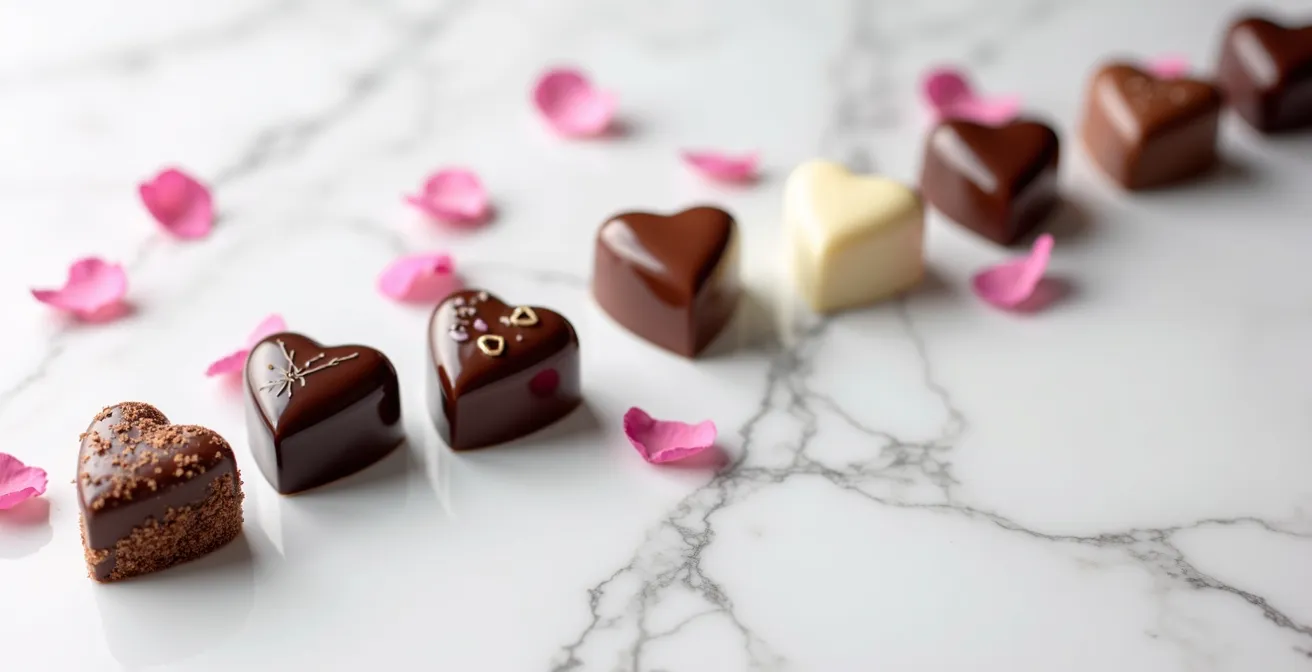
The dominance of heart-shaped chocolate isn’t just tradition; it’s a masterclass in consumer psychology that artisans can leverage for premium pricing.
- Scientific research shows that multi-sensory packaging can increase a consumer’s willingness to pay by over 500% during the Valentine’s season.
- Flavor storytelling, especially within a “sharing box” designed for two, creates a deeper emotional connection and enhances the perceived value of the product.
Recommendation: Focus on orchestrating a multi-sensory experience—from unboxing to the final bite—that fulfills the psychological promise made by the iconic heart shape.
For an artisan chocolatier, the approach of February brings a singular, recurring question: how to capitalize on the Valentine’s Day rush? The market is flooded with options, yet one shape consistently reigns supreme. The heart. It’s not a minor preference; it’s a market-defining phenomenon. In fact, recent market data reveals that 10.1% of Valentine’s Day candy sales are heart-shaped boxes, a figure that only hints at the shape’s total dominance across all chocolate forms. The common explanation is simple: the heart is a symbol of love. But for a business owner, this explanation is insufficient. It doesn’t explain the “why” behind the purchase or provide a strategy for growth.
The truth is far more complex and commercially exciting. The heart shape is not merely a symbol; it’s a powerful cognitive shortcut that primes the consumer’s brain, setting expectations for romance, luxury, and a shared emotional experience. Relying on the shape alone is a missed opportunity. The most successful chocolatiers understand that their job is not just to sell a product, but to orchestrate an entire sensory journey that begins the moment a customer sees the box and culminates in a memorable taste experience. This is about psychological fulfillment.
This article deconstructs the marketing and psychology behind this iconic shape. We will move beyond the obvious and delve into actionable strategies. We’ll explore how to leverage flavor psychology, design packaging that screams “premium,” and manage logistics to ensure the romantic moment is delivered perfectly. It’s time to unlock the full commercial potential of the heart.
To help you navigate this deep dive into the business of romantic chocolate, we’ve structured this guide around the key questions every artisan faces. The following summary outlines the strategic journey we are about to embark on.
Summary: Unlocking the Secrets of Valentine’s Chocolate Sales
- Chili and Chocolate: Does the Aphrodisiac Myth Really Work?
- How to Create a “Sharing Box” for Two with Complementary Flavors?
- Edible Ink vs. Piping: Which Method Writers Better Love Notes?
- The Packaging Mistake That Makes Premium Chocolate Look Cheap
- When to Stop Taking Orders to Guarantee Valentine Delivery?
- How to Create Professional Molded Easter Eggs at Home?
- How to Curate a Chocolate Box That Pleases Every Generation?
- How to Package Wedding Favors So They Don’t Melt in Cars?
Chili and Chocolate: Does the Aphrodisiac Myth Really Work?
The link between certain foods and romance is ancient, with chili and chocolate often at the forefront of this culinary mythology. From a purely scientific standpoint, the aphrodisiac qualities of these ingredients are largely anecdotal. However, from a consumer psychology perspective, the “myth” is incredibly effective. The power doesn’t lie in a chemical reaction, but in the psychological priming and the sensory experience it creates. Introducing an element like chili into chocolate does something crucial: it creates novelty and a memorable sensation.
The slight burn of chili, contrasted with the rich sweetness of chocolate, triggers a heightened state of awareness. It’s an experience that demands to be discussed and shared. For a couple, this transforms the simple act of eating chocolate into a small adventure, a shared moment of discovery. This is “experience orchestration” at its finest. The goal isn’t to create a literal aphrodisiac, but to craft a product that feels special, daring, and experiential. The story and the sensation you sell are more powerful than any unproven biochemical effect.
Therefore, the question for an artisan is not “Is it a real aphrodisiac?” but “Does this flavor combination create a compelling narrative?” Using ingredients with a romantic mystique, like chili, saffron, or rose, taps into a pre-existing cultural narrative. You are leveraging a story that is already in the consumer’s mind, making your product feel more intentional and emotionally resonant. The myth works because, in marketing, perception and shared experience are reality.
How to Create a “Sharing Box” for Two with Complementary Flavors?
A Valentine’s chocolate box is rarely consumed alone. It is a tool for connection, a centerpiece for a shared moment. Designing a “Sharing Box” is therefore not about simply filling a container, but about curating an experience. The key is to think in pairs and progression, creating a narrative journey in flavor that a couple can explore together. This means moving beyond a random assortment and designing a deliberate sequence of tastes and textures.
The most effective sharing boxes use complementary and escalating flavors. Imagine a box split into two halves, each a mirror of the other, allowing both partners to taste the same thing at the same time. The journey could begin with lighter, sweeter notes—perhaps a white chocolate with strawberry—and progress towards more complex, intense flavors like a dark chocolate ganache with sea salt. This creates a natural conversation starter and a more engaging experience than a standard box. The goal is sensory fulfillment for two.
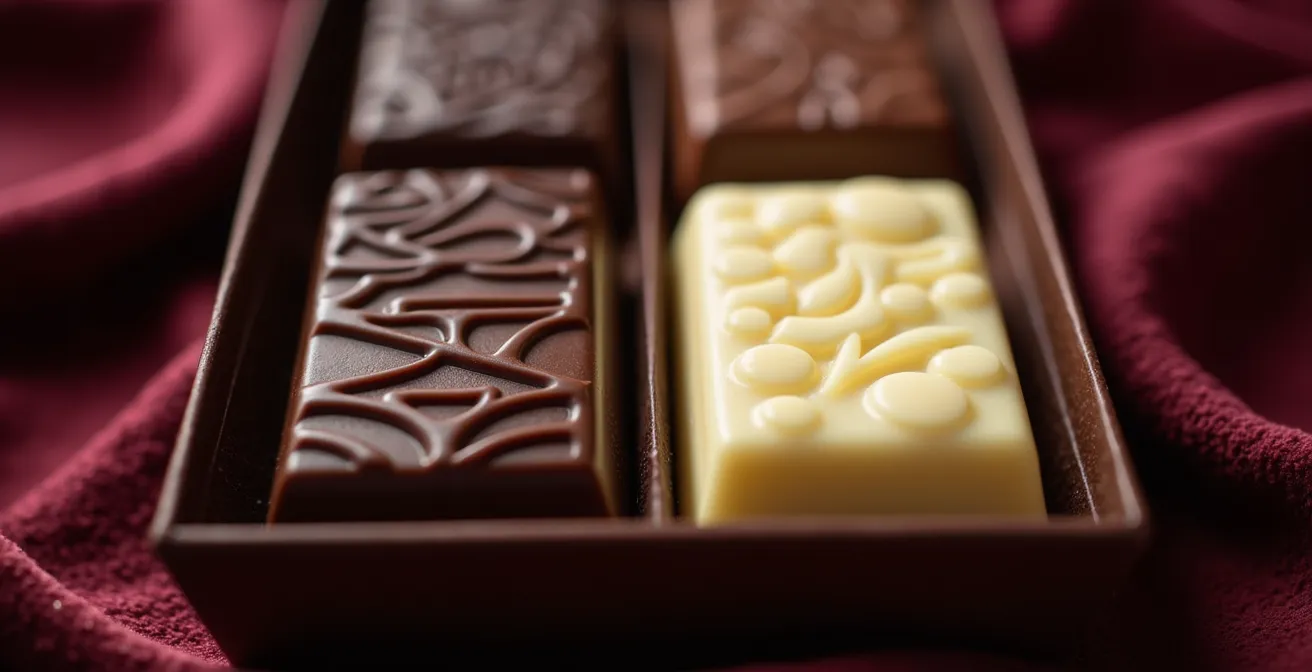
This concept of a flavor journey transforms your product from a simple confection into an activity. You are not just selling chocolate; you are selling a 15-minute date night. This elevates the perceived value immensely and provides a powerful marketing story. You can even include a small tasting card that guides the couple through the experience, suggesting which pieces to try in what order and explaining the flavor notes, much like a wine tasting.
Your Action Plan: Designing a Narrative “Sharing Box”
- Establish the Opening Act: Start with light milk chocolate pralines to represent the sweetness of a ‘first meeting’.
- Build the Connection: Progress to hazelnut and caramel combinations, symbolizing a deepening and richer connection.
- Introduce Dynamic Contrast: Include contrasting textures, such as a smooth ganache paired with a crunchy praline or nut inclusion, to represent the excitement in a relationship.
- Encourage Interaction: Design the box with an odd number of premium, centerpiece chocolates (e.g., 11 or 13) to playfully encourage negotiation and sharing.
- Provide a Grand Finale: Finish the journey with an intense dark chocolate (70% or higher cacao content) to represent deep, mature love.
Edible Ink vs. Piping: Which Method Writers Better Love Notes?
When it comes to personalizing chocolates with a message, the choice between edible ink and traditional piping is more than a technical one—it’s a crucial branding decision. The “better” method depends entirely on the story you want to tell about your brand and the value you want the customer to perceive. This choice directly impacts the perceived effort and artisanal quality of your product.
Traditional piping, done by hand with tempered chocolate or royal icing, is inherently imperfect. These slight variations signal craftsmanship and human touch. For a brand built on artisanal quality, heritage, or bespoke luxury, piping is almost always the superior choice. It communicates that each piece is unique and made with personal attention. This perceived effort justifies a premium price point. A hand-piped “I Love You” feels more personal and heartfelt than a perfectly printed one, even if the message is identical.
Conversely, edible ink printers offer flawless precision, consistency, and scalability. This method is ideal for brands that value a modern, clean, and graphic aesthetic. It allows for complex designs, logos, or perfectly legible fonts that are impossible to achieve with piping. While it may feel less “artisanal,” it conveys a sense of professionalism and high-tech quality. The decision boils down to your core brand identity: are you selling the romance of handcrafted charm or the sophistication of modern precision? Mismatching the method to your brand message can devalue the customer’s perception of your work.
The Packaging Mistake That Makes Premium Chocolate Look Cheap
The single greatest packaging mistake an artisan can make is a mismatch between sensory cues and product quality. A customer “tastes” the chocolate with their eyes and hands long before it reaches their mouth. If you place a high-quality, artisanal chocolate in a flimsy, generic, or poorly designed box, you have already devalued it. The packaging is not a container; it is the first chapter of the product’s story and a primary driver of perceived value.
As marketing experts from Market Research Intellect note, color and material choices are critical: “elegant gold or silver foil wrappers suggest luxury, while vibrant, playful designs are associated with fun and excitement.” The mistake is using cues that contradict your price point. A premium dark chocolate should be wrapped in packaging that feels substantial, perhaps with textured paper, matte finishes, and subtle embossing. This tactile experience primes the customer to expect a sophisticated flavor. Indeed, scientific research into multisensory packaging is clear: texture and visual complexity dramatically influence how we perceive quality. One study found that embossed patterns and a “stepwise” unboxing process could increase willingness to pay by up to 512% during the Valentine’s season.
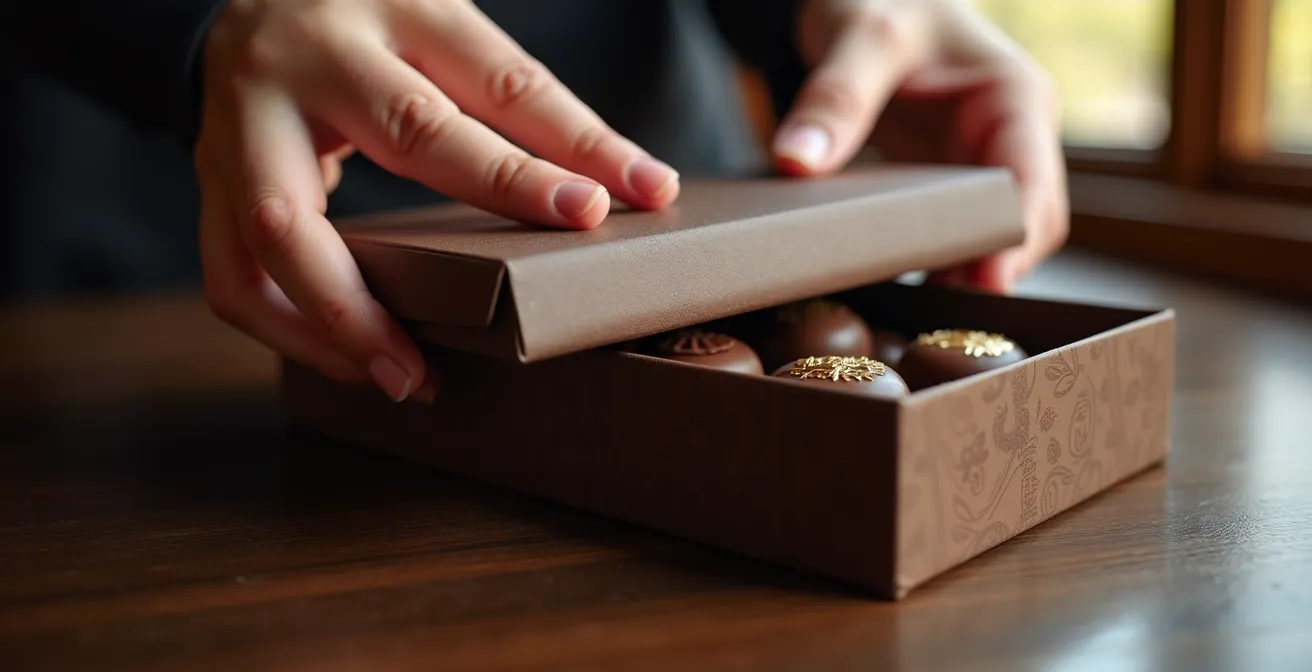
This demonstrates that investing in premium packaging is not an expense; it is a direct investment in your pricing power and brand equity. This is a significant factor in a rapidly growing market, where market research forecasts indicate a projected size of $40.60 billion for premium chocolate by 2030. Avoid flimsy materials, generic clip art, and overly bright, chaotic designs unless your brand is specifically targeted at a young, novelty-seeking audience. For premium romantic chocolate, the packaging must whisper luxury, not shout for attention.
When to Stop Taking Orders to Guarantee Valentine Delivery?
For an online chocolate business, the Valentine’s Day cutoff date is one of the most critical decisions of the year. Set it too early, and you lose out on valuable last-minute sales. Set it too late, and you risk a logistical nightmare of angry customers whose romantic gestures arrive on February 15th. The key to this decision lies in understanding customer behavior and communicating with absolute clarity. This isn’t just a shipping calculation; it’s customer experience management.
The data on when consumers plan their purchases is your most valuable tool. For instance, crucial industry research from Mars Wrigley found that, on average, consumers begin their Valentine’s Day planning and purchasing 5.2 weeks in advance of the holiday. More importantly, the key demographics of Millennials and Gen Z—often the target for artisanal and unique products—plan even earlier, at an average of 6.8 weeks out. This tells you that the bulk of your core, planful customers will have ordered well in advance.
Your strategy should be multi-phased. First, use this data to work backward from February 14th, factoring in your production time, carrier shipping estimates (plus a buffer for delays), and order processing time. This gives you a “guaranteed delivery” cutoff date. This date must be communicated prominently across your website, product pages, and social media weeks in advance. Second, after this date passes, you can switch to a “post-Valentine’s” messaging or offer options for local pickup if available. Clearly state, “Orders placed now will arrive after Feb 14th.” This transparency manages expectations and prevents disappointment, which is crucial for maintaining brand trust during a highly emotional purchasing season.
How to Create Professional Molded Easter Eggs at Home?
While this article focuses on Valentine’s Day, the underlying skills of a master chocolatier are universal. The techniques that create a glossy, perfect Easter egg are the exact same ones required for a flawless Valentine’s bonbon. The single most important skill is tempering chocolate. Tempering is the process of heating and cooling chocolate to specific temperatures to encourage the formation of stable cocoa butter crystals. It’s the science behind the magic.
Why is it so critical? Properly tempered chocolate has a beautiful, glossy sheen, a firm “snap” when broken, and a smooth mouthfeel. It is also more resistant to bloom (the chalky white or grey streaks that can appear on poorly handled chocolate). For a premium product, this is non-negotiable. An imperfect finish communicates a lack of professionalism and undermines the perceived value of your work, no matter how good the ingredients are. The visual appeal of that high gloss is a primary indicator of quality to the consumer.
Mastering tempering is foundational to all seasonal chocolate work. Whether you are creating large-scale Easter displays or delicate, heart-shaped molded chocolates for Valentine’s Day, the core process remains the same. Understanding the precise temperature points for dark, milk, and white chocolate, and learning techniques like seeding with stable crystals, is what separates an amateur from an artisan. It is a technical skill that directly translates into the visual and textural quality that commands a premium price.
How to Curate a Chocolate Box That Pleases Every Generation?
While Valentine’s Day purchases are often made by younger individuals (Millennials and Gen Z), the gift itself might be for parents or grandparents, or intended to be shared at a family gathering. Curating a box with multi-generational appeal can broaden your market significantly. The key is to understand that each generation has developed a distinct “palate profile” based on the confections they grew up with. Balancing nostalgia with novelty is the art of creating a universally pleasing assortment.
A successful multi-generational box is a study in strategic inclusion. It should act as a “greatest hits” of flavor and texture. This means including timeless classics that appeal to Baby Boomers, like smooth caramels and fruit cremes, alongside the high-quality dark chocolate and nutty combinations favored by Gen X. To capture the interest of Millennials and Gen Z, you must then layer in more artisanal and innovative elements. This could be a piece with a unique flavor combination or one that highlights ethical sourcing—a key driver for younger consumers.
The following data provides a clear roadmap for how to balance your assortment. By including elements that appeal to each group, you create a box where everyone can find a favorite, making your product the perfect choice for a wider range of gifting occasions.
This table, based on extensive consumer research, breaks down the distinct preferences that can guide your curation strategy. As shown by a recent analysis of the confectionery market, understanding these nuances is key to capturing a larger share of sales.
| Generation | Preferred Flavors | Key Purchase Drivers | Average Spend |
|---|---|---|---|
| Baby Boomers | Classic caramels, fruit cremes | Nostalgia, tradition | $45-60 |
| Gen X | Dark chocolate, nuts | Quality, brand trust | $55-75 |
| Millennials | Artisanal, unique combinations | Sustainability, ethics | $65-85 |
| Gen Z | Matcha, chili, experimental | Innovation, social media | $40-55 |
Key Takeaways
- The heart shape acts as a powerful psychological shortcut, priming consumers for a premium, romantic experience.
- Packaging is not a cost but an investment. Multi-sensory packaging can increase a customer’s willingness to pay by over 500%.
- Successful seasonal sales depend on “experience orchestration”—crafting a narrative from the unboxing to the final flavor.
How to Package Wedding Favors So They Don’t Melt in Cars?
The final, and often overlooked, challenge for an artisan chocolatier is ensuring the product survives the “last mile.” For Valentine’s gifts or wedding favors, this often means surviving in a hot car or a warm venue. A melted chocolate is more than a mess; it’s a failed experience and a reflection on your brand’s professionalism. Ensuring your creation arrives intact is the ultimate demonstration of quality control.
The solution lies in innovative packaging technology designed to combat temperature fluctuations. Gone are the days of simply hoping for the best. The industry has developed remarkable solutions that were once only available for high-end pharmaceutical shipping. This represents the final stage of experience orchestration: guaranteeing the perfect moment of consumption, regardless of the environment.
Fortunately, recent material science advancements offer powerful tools. As detailed in market analyses, innovations now include high-performance options for artisans. These include biodegradable insulating films and smart pouches containing phase-change materials. These materials can absorb and release thermal energy to maintain a stable internal temperature for up to six hours. Adopting these technologies sends a powerful message: you care about the customer’s experience from start to finish. It’s a premium service that justifies a premium price and protects the romantic moment you’ve worked so hard to create.
Ultimately, a deep understanding of consumer psychology, combined with meticulous craftsmanship and strategic planning, is what transforms an artisan into a market leader. Now is the time to apply these principles and elevate your next seasonal collection from a simple product to an unforgettable experience.