Blog
The world of chocolate has evolved far beyond simple confectionery. What was once the domain of large industrial manufacturers has transformed into a rich landscape of artisan producers, educated consumers, and innovative techniques that honor both tradition and experimentation. Whether you’re curious about how cacao beans become the bars you love, eager to develop a more refined palate, or considering chocolate-making as a craft or career, understanding the fundamental aspects of this field opens doors to deeper appreciation and skill.
This comprehensive resource explores the essential pillars of chocolate knowledge: the journey from bean to finished product, the art of analytical tasting, the professional expertise required for mastery, the practical foundations for home chocolate-making, the unique value of handcrafted creations, and the exciting innovations shaping the future. Each of these areas connects to form a complete picture of contemporary chocolate craft, giving you the context and confidence to pursue whichever aspect resonates most with your interests.
The Bean-to-Bar Journey: Logistics, Craft, and Human Stories
The bean-to-bar movement represents a fundamental shift in how chocolate is produced and valued. Unlike conventional chocolate manufacturing where large companies purchase pre-processed cocoa mass, bean-to-bar makers control every step from sourcing raw cacao beans to crafting the final bar.
Understanding the Bean-to-Bar Philosophy
This approach emerged from a desire for transparency, quality, and direct relationships with farmers. Bean-to-bar makers typically work with single-origin cacao, allowing the unique terroir of each growing region to shine through in the finished chocolate. Think of it like the difference between mass-produced wine and craft vintages from specific vineyards—the latter tells a story of place, people, and process.
The Mechanical Transformation Process
Transforming fermented, dried cacao beans into smooth chocolate involves several precise stages:
- Sorting and roasting: Beans are inspected for defects and roasted to develop flavor compounds, much like coffee roasting
- Winnowing: Removing the outer shell to leave only the cacao nibs
- Grinding and refining: Breaking down nibs into a liquid cocoa mass, then refining to achieve desired particle size
- Conching: Extended mixing that develops flavor and texture through aeration and heat
- Tempering and molding: Precise temperature manipulation to create stable crystal structure for glossy, snappy chocolate
Navigating Supply Chain Challenges
The journey from origin to production facility involves significant logistical complexity. Cacao farming regions are often remote, requiring careful planning for transportation under controlled conditions. Climate variations, political instability, and fair pricing negotiations all impact sourcing. Successful bean-to-bar makers invest considerable time building direct relationships with farmer cooperatives, ensuring both quality consistency and ethical practices. This attention to sourcing optimization distinguishes artisan producers from those prioritizing only cost efficiency.
Developing Your Chocolate Palate: The Art of Analytical Tasting
Just as wine enthusiasts train their senses to identify subtle notes and quality markers, chocolate lovers can develop sophisticated tasting skills that transform eating into a rich sensory experience.
How Taste Perception Actually Works
Understanding the physiology of taste helps you become a better taster. Your tongue identifies five basic tastes—sweet, bitter, salty, sour, and umami—while your nose detects thousands of aromatic compounds. The retronasal passage, which connects your mouth to your nasal cavity, allows flavors to reach olfactory receptors as you chew and swallow. This is why chocolate tastes different when you have a cold: you’re missing the aromatic dimension that provides most of the complexity.
Using Flavor Frameworks and Vocabulary
The flavor wheel is an invaluable tool for identifying and describing what you taste. It organizes chocolate flavors into categories: fruity (berry, citrus, dried fruit), nutty (almond, hazelnut), earthy (mushroom, wood), floral (jasmine, rose), and spicy (cinnamon, pepper), among others. Start with broad categories, then narrow to specific descriptors as your palate develops.
Distinguishing between initial impressions (top notes that appear immediately) and lingering flavors (finish notes that persist) adds another dimension to your assessment. A high-quality dark chocolate might open with bright fruit acidity, transition through creamy sweetness, and finish with pleasant bitterness and subtle spice.
Structuring a Tasting Session
Professional tasters follow specific protocols to maintain sensory accuracy:
- Start with milder chocolates (lower cacao percentage or milk chocolate) before progressing to intense dark varieties
- Cleanse your palate between samples with water or plain crackers, avoiding strong flavors like coffee that mask subtle notes
- Limit sessions to 5-7 samples to prevent palate fatigue, the phenomenon where your taste receptors become overwhelmed and unable to distinguish differences
- Taste at room temperature in a neutral environment, avoiding strong odors or distractions
Professional Mastery: Skills, Training, and Career Paths
Behind every exceptional chocolate creation stands a skilled artisan who has invested years in developing technical expertise, creative vision, and business acumen. Understanding what separates true masters from mere enthusiasts can guide your own learning journey.
The Importance of Formal Education and Mentorship
While passion drives many into chocolate work, structured training accelerates skill development and prevents costly mistakes. Professional programs teach not only techniques but also the scientific principles underlying chocolate behavior—crystallization chemistry, emulsion stability, and flavor development during processing. Apprenticing with established chocolatiers provides invaluable hands-on experience and exposes you to problem-solving approaches that no textbook can fully convey.
The Daily Reality of Professional Chocolate Work
The romantic image of chocolate-making often clashes with the demanding reality. Professional chocolatiers typically start their days very early, working in temperature-controlled environments that can be physically taxing. The work requires standing for extended periods, lifting heavy equipment, and maintaining intense focus during delicate tempering and molding processes. Beyond production, successful professionals manage inventory, develop new recipes, handle customer relationships, and navigate food safety regulations—a diverse skill set that extends far beyond merely working with chocolate.
Recognizing Authentic Expertise
The popularity of artisan chocolate has unfortunately attracted self-proclaimed experts whose knowledge lacks depth. Genuine masters demonstrate their expertise through consistent technical execution, the ability to troubleshoot problems by understanding root causes rather than following recipes blindly, and honest acknowledgment of what they don’t know. Be wary of those who claim proprietary “secrets” or dismiss scientific principles in favor of mystical approaches—chocolate responds to physics and chemistry, not magic.
Mastering the Fundamentals: Essential Skills for Home Chocolate-Making
Whether you aspire to professional work or simply want to create impressive homemade treats, building a solid foundation in chocolate basics is essential. This requires more than good ingredients—it demands organization, appropriate tools, and systematic approach to recipe execution.
Setting Up an Efficient Workspace
Chocolate work requires mise en place—the professional kitchen principle of having everything in its place before you begin. Designate a clean, cool area away from moisture and strong odors. Organize your space with tools within easy reach, ingredients pre-measured, and molds or frames prepared. This preparation prevents the panic of searching for a thermometer while your chocolate passes its ideal working temperature.
Investing in the Right Equipment
You don’t need industrial machinery to start, but certain tools make success far more likely:
- Accurate thermometer: Digital thermometers with quick response times are essential for tempering
- Heat-proof bowls and spatulas: Silicone spatulas and glass or stainless steel bowls ensure even heating and easy cleaning
- Molds and frames: Food-grade polycarbonate molds produce professional-looking results and release cleanly
- Scale: Weight-based measurements provide consistency that volume measurements cannot match
Recipe Standardization and Troubleshooting
Professional results require standardized formulas that you can replicate reliably. Record exact weights, temperatures, and timing for each successful batch. When problems occur—bloom on finished chocolates, grainy ganache, or soft centers—systematic troubleshooting identifies the cause. Was your chocolate out of temper? Did moisture contaminate your batch? Understanding why failures happen transforms frustrating mistakes into valuable learning experiences.
Why Homemade Chocolate Matters: Economic and Emotional Value
Creating chocolate at home offers rewards that extend beyond the finished product. Understanding both the practical economics and the intangible benefits helps you appreciate the true value of handcrafted chocolate.
The Real Cost Calculation
At first glance, homemade chocolates might seem expensive when you calculate ingredient costs. Quality couverture chocolate, fresh cream, specialty flavorings, and decorative elements add up quickly. However, comparing homemade chocolates to equivalent artisan products reveals surprising value. A batch of handmade truffles using premium ingredients typically costs 40-60% less than purchasing similar quality from boutique chocolatiers, especially when you account for the larger quantities you can produce.
Quality Control and Ingredient Selection
Perhaps the most compelling advantage is complete ingredient control. You choose exactly what goes into your chocolates—no unexpected additives, preservatives, or allergens. This matters tremendously for those with dietary restrictions or sensitivities, and for anyone who values transparency about what they consume. You can adjust sweetness levels, select single-origin chocolate aligned with your ethical values, and incorporate organic or locally-sourced ingredients.
The Gift of Personalization
Handmade chocolates carry emotional weight that purchased items cannot match. Creating custom flavor combinations tailored to a recipient’s preferences, packaging them thoughtfully, and presenting them as gifts demonstrates care and effort that resonates deeply. The ability to personalize for occasions—incorporating someone’s favorite spices, matching color schemes to celebrations, or creating custom molds—adds layers of meaning impossible to achieve with commercial products.
The Future of Chocolate: Innovation, Health, and Experience
The chocolate industry is experiencing rapid evolution driven by health consciousness, technological advancement, and changing consumer expectations. Understanding emerging trends positions you at the forefront of this dynamic field.
Novel Ingredients and Sugar Reduction
Health-conscious consumers are driving demand for chocolates with reduced sugar content without sacrificing flavor. Chocolatiers are experimenting with alternative sweeteners like coconut sugar, date syrup, and monk fruit, each bringing unique flavor profiles and functional properties. Some producers are exploring whole fruit chocolate—a revolutionary approach that incorporates the entire cacao fruit, including the typically discarded pulp, creating naturally sweeter chocolate with enhanced nutritional value and reduced waste.
Technology Meets Tradition
Advanced manufacturing techniques are expanding creative possibilities. Parametric mold design using 3D modeling software allows for complex geometric shapes previously impossible to produce. 3D chocolate printing enables customization at unprecedented levels, from personalized messages to intricate architectural structures. These technologies democratize advanced techniques that once required expensive specialized equipment.
Reimagining Customer Experience
Forward-thinking chocolate makers are moving beyond product alone to create immersive experiences. Interactive tasting workshops, virtual tours of cacao origins, augmented reality packaging that tells farmer stories, and subscription models offering curated selections all deepen customer engagement. The most successful innovations don’t just showcase technology—they use it to build meaningful connections between makers, cacao farmers, and consumers, creating a more transparent and engaging chocolate culture.
The journey through chocolate mastery encompasses diverse skills and knowledge areas, from technical production processes to sensory development, professional expertise to innovative trends. Each element enriches your understanding and capability, whether you approach chocolate as a passionate hobbyist, aspiring professional, or curious consumer. The beauty of this craft lies in its accessibility—every level of engagement offers rewards, and there’s always more to discover as techniques evolve and your palate develops.

How Is 3D Printing Changing the Geometry of Chocolate Design?
3D printing is redefining chocolate not as a confection, but as a programmable material where geometry directly engineers the sensory experience. It enables the design of internal structures that control texture, melt-rate, and the sequential release of flavors. It unlocks…
Read more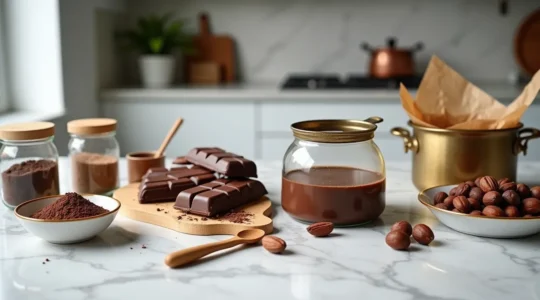
Is Making Your Own Chocolate Actually Cheaper Than Buying It?
Making your own chocolate is not a cost-saving measure; it’s a value-investing strategy where the financial outlay is often higher, but the total return on investment (ROI) is vastly superior. The initial equipment investment and the rising cost of quality…
Read more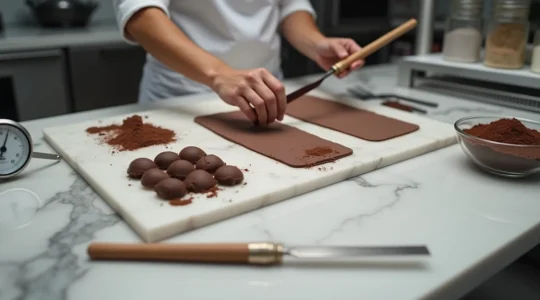
How to Transition from Home Baker to Semi-Pro Chocolatier?
The leap from home baking to semi-professional chocolaterie is a shift in mindset, not a collection of new recipes. Success in chocolate work is dictated by mastering the scientific principles of temperature, measurement, and crystallization. Discipline, exemplified by mise-en-place and…
Read more
What Does It *Really* Take to Become a Master Chocolatier?
Contrary to the romantic notion that passion for chocolate is enough, becoming a true master is less about the art and more about the brutal transition from artist to entrepreneur. Success isn’t found in a perfect bonbon recipe, but in…
Read more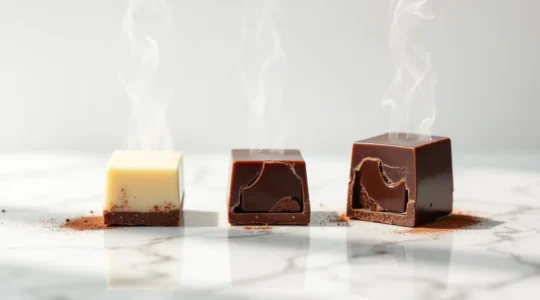
How to Identify the Primary Aromatic Families in Fine Chocolate?
Contrary to popular belief, tasting fine chocolate isn’t a natural talent but a learned skill rooted in science. Your personal memories and nostalgia chemically prime your brain, directly altering how you perceive flavor. The true character of chocolate is unlocked…
Read more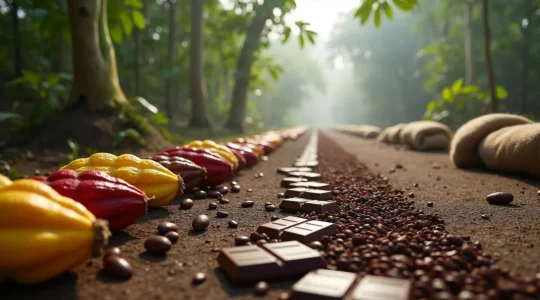
What Really Happens During the 30-Day Journey from Tree to Bar?
Making bean-to-bar chocolate is less a recipe and more a series of critical decisions where a single misstep in the 30-day journey can ruin everything. The maker’s total control over roasting and grinding is what unlocks the unique flavor profile…
Read more