Forget ‘like with like’—the secret to elite coffee and chocolate pairing isn’t matching flavors, it’s managing chemical reactions.
- Acidity, not flavor, is the main cause of clashes. Control it with temperature and roasting knowledge.
- Shared terroir creates biochemical synergy, making pairings from the same region naturally harmonious.
Recommendation: Start by analyzing the roasting profile and acidity of both your coffee and chocolate before even considering the tasting notes.
The classic coffee-and-chocolate pairing, the beloved “moka” flavor profile, is both a promise and a pitfall for any serious coffee shop owner. While it’s a combination customers universally understand, executing it at a high level reveals a world of complexity. You’ve likely experienced it: a beautiful single-origin espresso, bright and nuanced, suddenly turns harsh and sour when tasted alongside an expensive dark chocolate. The default advice is often to “pair like with like,” matching a fruity coffee with a fruity chocolate. But this simplistic approach frequently fails, leading to frustrating flavor clashes rather than a harmonious experience.
The problem is that we’ve been focusing on the wrong thing. True mastery of this pairing doesn’t come from a simple matching of tasting notes. It comes from understanding the underlying chemistry—the molecular dance between fats, acids, tannins, and volatile aromatic compounds. It’s about moving beyond the surface-level flavors to manipulate the variables of roasting, temperature, and texture. This is where the expertise of a Q-Grader and chocolatier becomes a competitive advantage.
Instead of merely avoiding disaster, what if you could engineer synergy? The key lies in understanding why pairings fail. The clash between an acidic light-roast coffee and an equally acidic cacao isn’t a flaw; it’s a predictable chemical reaction. By treating coffee and chocolate as two complex ingredients with distinct origins, processing methods, and chemical makeups, we can move from simple pairing to deliberate composition. This guide will deconstruct the science behind the synergy, giving you the technical framework to create sophisticated pairings that not only taste incredible but also tell a compelling story of terroir and craft.
In this article, we will dissect the common failure points in coffee and chocolate pairings and provide a technical framework for creating truly exceptional experiences. We’ll explore everything from infusion techniques for ganache to the critical role of roasting temperatures and the precise sequence of tasting.
Table of Contents: A Deep Dive into Coffee and Chocolate Terroir Pairings
- Why Do Espresso and Dark Chocolate Sometimes Clash?
- Whole Bean vs. Ground: How to Infuse Ganache Without Grittiness?
- Layering Flavors: How to Keep Coffee and Chocolate Distinct?
- The Roasting Mistake: Pairing Light Roast Coffee with Acidic Cocoa
- Sip then Bite vs. Bite then Sip: Does It Matter?
- How to Identify the 3 Primary Aromatic Families in Fine Chocolate?
- How Does Roasting Temperature Define the Final Chocolate Note?
- Which Chocolate Pairings Elevate Your 3 PM Coffee Break?
Why Do Espresso and Dark Chocolate Sometimes Clash?
The most common reason for a clash between a high-quality espresso and dark chocolate is a competition of acids and bitterness. Both coffee and cacao are inherently acidic and contain bitter compounds like tannins and alkaloids. When a coffee with high, bright acidity (typical of a light-roast, high-altitude single origin) is paired with a dark chocolate that also possesses sharp, fruity acidity (like one from Madagascar), the result is not harmony but an acidic overload. The palate perceives this as sour, astringent, and unpleasant. Instead of complementing each other, the two profiles engage in a molecular fight for dominance, masking the nuanced volatile compounds you’re trying to showcase.
The solution often lies not in flavor matching but in finding a shared origin. This is the principle of terroir synergy. Coffee and cacao grown in the same region, under similar climate conditions and soil types, often develop complementary biochemical profiles. They share a “flavor DNA” that goes deeper than simple tasting notes, creating a natural harmony.
Case Study: The Onyx Coffee Lab Terroir Project
Onyx Coffee Lab’s Terroir Project provides a powerful real-world example of this principle. By deliberately sourcing coffee and cacao from the same micro-regions, they discovered a natural synergy. Instead of treating the coffee as a secondary “flavoring” for the chocolate, they selected beans for their complementary profiles rooted in a shared environment. This approach proved that when both ingredients originate from the same terroir, with similar intercropping and processing climates, their flavors integrate seamlessly rather than competing.
Beyond terroir, temperature is your most powerful tool to mitigate clashes. Serving coffee slightly cooler, around 44-50°C, is a critical adjustment. At this temperature, the perception of bitterness recedes while sweetness becomes more prominent. This creates a much more favorable condition for pairing with dark chocolate, allowing their respective sweet notes to harmonize rather than their acids to collide. This simple thermal dynamic shift can transform a harsh pairing into a balanced one.
Your Action Plan: Auditing a Potential Pairing Clash
- Origin Check: Are the coffee and cacao from vastly different terroirs (e.g., a bright Ethiopian coffee with an earthy Sumatran chocolate)? Identify the potential for an acidic or structural mismatch.
- Acidity Assessment: Taste each component separately. Is the coffee’s acidity sharp and citric, or mellow and malic? Does the chocolate have a pronounced berry-like acidity? Document the intensity and type of acidity for both.
- Temperature Control: Test the pairing with the coffee at its standard serving temperature, then cool it to the 44-50°C range. Note the change in perceived balance and sweetness.
- Tasting Sequence Test: Perform the pairing using the “Sip then Bite” method, then reverse it to “Bite then Sip.” Observe how the sequence alters which component’s characteristics dominate.
- Identify the Missing Link: If the pairing feels unbalanced, determine what is missing. Is it a lack of sweetness, an overload of acidity, or a textural disconnect? This informs your next corrective action, such as introducing a third element or changing the chocolate percentage.
Whole Bean vs. Ground: How to Infuse Ganache Without Grittiness?
Creating a coffee-infused ganache that is silky smooth, not gritty, is a technical challenge that separates the amateur from the professional. The core issue lies in particle size and extraction method. Using pre-ground coffee is the most common mistake. No matter how finely it is sieved, microscopic coffee particles will remain suspended in the cream, resulting in a sandy, unpleasant mouthfeel that ruins the luxurious texture of the ganache. The goal is to extract the volatile aromatic compounds (the flavor) without transferring the physical solids.
The superior method is a whole bean infusion. This technique involves steeping whole roasted coffee beans directly in the cream. Because the beans remain intact, there are no fine particles to create grittiness. The choice then becomes one of temperature and time, which dictates the final flavor profile you extract. A cold infusion will yield a different result than a hot one.
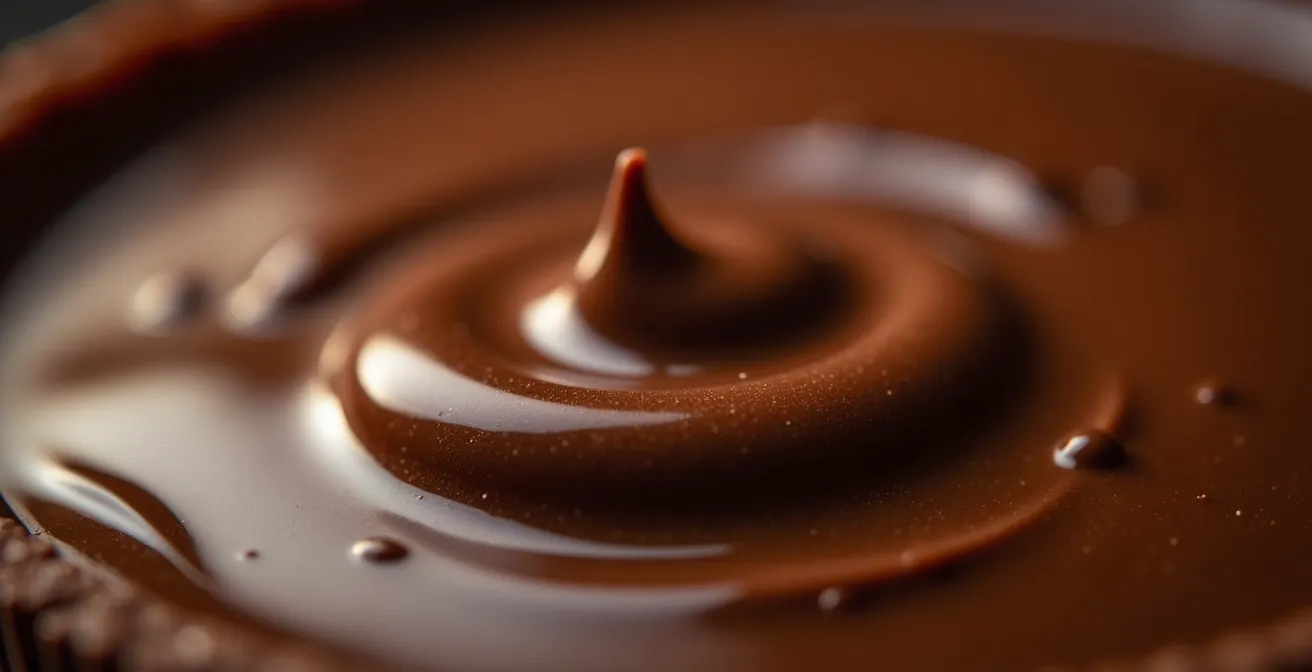
This macro-level photograph showcases the ideal result: a perfectly smooth, glossy ganache where the coffee flavor is integrated at a molecular level. The tiny droplets you see are not solids, but coffee oils that have been successfully emulsified into the chocolate, a sign of a flawless, grit-free infusion.
For a truly sophisticated ganache, a whole bean cold infusion is the gold standard. While it requires patience, the result is unparalleled in complexity. The slow, gentle extraction pulls out the most delicate floral and fruity notes from the coffee, preserving the bright aromatics that are often destroyed by heat. A hot infusion with ground beans, by contrast, is a cruder, faster method that primarily extracts the robust, roasty, and more bitter compounds.
| Method | Temperature | Time | Result |
|---|---|---|---|
| Whole Bean Cold Infusion | Room temp (18-22°C) | 12-24 hours | Delicate, complex aromatics with bright, floral flavours or fruity notes |
| Ground Bean Hot Infusion | 180°C for light roasts | 5-10 min | Robust, roasty notes |
| Cocoa Bean Reference | 120-160°C | Longer than coffee | Lower temperature preserves delicate flavors |
Layering Flavors: How to Keep Coffee and Chocolate Distinct?
A successful pairing is not about creating a single, monolithic “moka” flavor. It’s about a conversation between two distinct ingredients, where each one has a chance to speak. The goal is to layer the flavors so that the palate can identify the unique characteristics of both the coffee and the chocolate. If one overwhelms the other, the pairing has failed. The most common principle for achieving this is to match intensity.
As experts from the COCO Chocolatier Pairing Guide point out, this is a fundamental starting point. They advise that likeness is a sound approach:
Likeness is the best approach when pairing chocolate with coffee. Combining a rich, intense chocolate with a milky-mild coffee will lead to flavour disparity, with one half overwhelming the other. The same goes for partnering punchy coffees with delicate chocolate: their flavours will compete rather than complement.
– Two Chimps Coffee, COCO Chocolatier Pairing Guide
However, intensity matching is only half the battle. The other critical factor is temperature differential. The human palate’s sensitivity to different flavors is highly dependent on temperature. Serving chocolate at its optimal tasting temperature allows its fats to melt perfectly, releasing its full spectrum of volatile compounds. According to Michelin’s expert guidance, serving chocolate at around 18°C (64°F) is ideal for this purpose. When you introduce hot coffee, the drastic temperature difference creates a dynamic sensory experience. The cool, melting chocolate coats the tongue, and the subsequent wave of hot coffee “unlocks” a new layer of aromatics from both components, allowing them to be perceived sequentially rather than all at once.
This technique prevents the flavors from becoming a muddled mess. By allowing the chocolate to begin melting on the tongue before sipping the coffee, you create a distinct “first act” for the chocolate. The coffee then enters as the “second act,” interacting with the already-present chocolate notes. This deliberate sequencing ensures that both profiles remain identifiable and distinct, turning the tasting into a structured experience rather than a chaotic collision of flavors.
The Roasting Mistake: Pairing Light Roast Coffee with Acidic Cocoa
One of the most common and jarring mistakes in craft pairing is matching a light roast coffee with a high-acidity chocolate. This error stems from a misunderstanding of roasting chemistry. Light roast coffees are celebrated for preserving the bean’s origin characteristics, which often include high levels of chlorogenic and citric acids. This is because, as a deep dive into roasting science explains, light roasts are stopped just after the first crack, at temperatures between 180°C and 205°C. This process intentionally retains the bean’s natural brightness, which can manifest as floral, fruity, and vibrant notes.
The problem arises when this high-acid coffee is paired with a chocolate that is also defined by its acidity. For example, a single-origin chocolate from Madagascar is prized for its sharp, citrusy, red-berry-like flavors, a direct result of its terroir and fermentation process. When you combine these two, you aren’t creating a “fruity” pairing; you’re compounding acidity. The result is a sharp, sour, and often thin-tasting experience where the two profiles clash instead of complementing each other. The more balanced approach is to use a medium roast coffee, roasted to 210°C-220°C, which has had some of its acidity tempered by the Maillard reaction and caramelization, introducing deeper notes of sweetness and body that can stand up to and balance the chocolate’s acidity.
However, if you are committed to using a light roast, all is not lost. There are “redemption strategies” to salvage the pairing. It requires introducing a third element to provide a missing structural component—a “bass note” to ground the two high-acid “treble notes.”
- Introduce a Maillard-Rich Element: The key is to add a component rich in the flavors developed during browning reactions. A piece of brown butter shortbread, a caramelized pecan, or even a toasted brioche can provide the missing nutty, toasty, and caramel notes. This third element acts as a bridge, filling the gap in the mid-palate and creating a more complete and harmonious triad.
- Adjust Coffee Temperature: As a secondary tactic, serving the light roast coffee at a cooler temperature can help. Lowering the temperature slightly reduces the perceived intensity of its acidity, making it less likely to clash aggressively with the chocolate.
- Execute a Perfect Balance: In rare cases, a high-acid pairing can work. An Ethiopian coffee with a Madagascar chocolate can create a vibrant harmony, but only if the specific fruity notes are perfectly complementary (e.g., stone fruit with stone fruit) and the intensity is precisely matched. This is an expert-level move that requires careful selection and testing.
Sip then Bite vs. Bite then Sip: Does It Matter?
The sequence of tasting is not a trivial detail; it fundamentally changes the sensory experience and the analytical data you can gather from a pairing. For a coffee shop owner looking to deconstruct a pairing and train staff, the order of operations is critical. The two primary methods, “Sip then Bite” and “Bite then Sip,” serve different purposes and reveal different aspects of the interaction between coffee and chocolate.
The “Sip then Bite” method is the more casual, integrated approach. You sip the coffee first, coating your palate with its profile, and then introduce the chocolate while the coffee’s notes are still present. This tends to create a more blended, unified flavor experience. However, for analytical purposes, the “Bite then Sip” method is far superior. This is the sequence favored in professional tastings for its ability to deconstruct the pairing.
Case Study: Venchi’s Professional Tasting Sequence
The Italian chocolatier Venchi advocates for the “Bite then Sip” method in their professional pairing guides. Their research shows that eating the chocolate first allows its fats to coat the tongue, releasing its aromatics slowly. When you then sip the coffee, its aroma is perceived more intensely and its flavor becomes more persistent. The melting chocolate also provides a natural sweetness, often eliminating the need for sugar in the coffee. This method allows you to analyze how the coffee cuts through, complements, or clashes with the chocolate’s established flavor and textural profile, providing a clearer understanding of the molecular dance at play.
Ultimately, the choice of sequence depends on your goal. Are you curating a holistic experience for a customer, or are you trying to understand the precise mechanics of a new pairing? The “Bite then Sip” method is your analytical tool. It allows you to establish a baseline with the chocolate and then observe precisely how the coffee interacts with it. This methodical approach is indispensable when developing a new pairing menu or training your team to articulate the nuances of what they are tasting.
How to Identify the 3 Primary Aromatic Families in Fine Chocolate?
Just as with single-origin coffee, fine chocolate’s flavor profile is deeply rooted in its origin. The concept of terroir—the unique combination of soil, climate, altitude, and environment—is the single most important factor in determining the inherent aromatic potential of a cocoa bean. Before you can even begin to pair, you must be able to identify which primary aromatic family a chocolate belongs to. This skill allows you to move from random guessing to strategic, intentional pairing.
As the experts at Hello Chocolate explain, this concept is central to the craft. They emphasize the importance of understanding where the beans come from to predict their flavor:
Just as with wine or coffee, the concept of terroir plays a central role in the world of craft bean-to-bar chocolate. Terroir encompasses the environmental factors—such as soil composition, climate, altitude, and rainfall—that impart distinctive characteristics to agricultural products. In the case of cocoa beans, the terroir of their origin shapes their flavor profile.
– Hello Chocolate, Guide to Single-origin Chocolate
While there are endless nuances, fine chocolate aromas can be broadly categorized into three primary families. Understanding these allows you to apply the “pair like with like” principle at a much more sophisticated level. You’re not just matching “fruitiness”; you’re matching specific terroir signatures.
| Aromatic Family | Terroir Signature | Coffee Pairing Principle |
|---|---|---|
| Fruity & Floral | Often found in beans from Madagascar or Peru, characterized by bright, acidic notes of citrus, red berries, or tropical fruit. These distinctive profiles are a direct expression of their unique terroir. | Pair with coffees that have complementary fruit notes, like a washed Ethiopian Yirgacheffe (lemon, bergamot) or a natural-processed coffee from Central America (strawberry, cherry). |
| Nutty & Caramel | The classic, traditional “chocolatey” profile, often associated with beans from Ghana or Ivory Coast. These flavors are less about bright acidity and more about deep, comforting notes of roasted nuts, toffee, and caramel. | Pair with coffees that share this nutty and sweet profile, such as a classic Brazil (peanut, almond, chocolate) or a well-balanced Colombian coffee with caramel and brown sugar notes. |
| Earthy & Spicy | These chocolates present more savory, complex, and sometimes funky notes. Think of damp earth, tobacco, leather, or baking spices. These profiles are often found in beans from regions like Papua New Guinea or certain Indonesian islands. | Pair with coffees that have a similar deep, earthy character. A wet-hulled Sumatran coffee with its signature notes of cedar, spice, and earth is a classic and powerful match for this family. |
How Does Roasting Temperature Define the Final Chocolate Note?
The roasting process is where a cocoa bean’s potential flavor, dictated by its terroir, is either realized or destroyed. Much like with coffee, roasting is a delicate chemical transformation, but the approach is fundamentally different. Understanding this difference is crucial for any expert looking to pair the two, as it explains why their respective flavor profiles are structured so differently. The primary distinction lies in the roasting temperatures applied.
Cocoa beans are roasted at significantly lower temperatures than coffee beans. This gentle approach is essential to preserve the delicate, nuanced volatile compounds that define fine chocolate. Over-roasting cocoa is the cardinal sin of a chocolatier, as it obliterates the subtle fruity, floral, and spicy notes, replacing them with a one-dimensional, bitter, and burnt flavor. The goal of cocoa roasting is preservation and subtle development.
In stark contrast, coffee roasting often involves higher temperatures and a more aggressive approach to actively create new flavors through the Maillard reaction and caramelization. While a light roast in coffee aims to preserve origin character, medium and dark roasts are designed to break down acids and sugars to develop deeper, richer, and more roasty notes. As scientific research on the topic shows, typical roasting temperatures range from 100-200°C for cocoa versus 180-240°C for coffee. This significant thermal gap is the reason for their different chemical makeups.
This thermal difference has direct implications for pairing:
- Delicacy of Chocolate: The lower roasting temperature means that a fine chocolate’s aromatic profile is more fragile. It can be easily overwhelmed by a powerfully roasty or acidic coffee. This is why matching intensity is so critical.
- Development in Coffee: The higher roasting temperatures in coffee create a wider spectrum of roasty and caramelized flavors that often don’t have a direct equivalent in fine chocolate. This is why a dark roast coffee can pair well with a high-percentage dark chocolate—the chocolate’s intensity comes from its cocoa solids and inherent bitterness, while the coffee’s intensity comes from the roasting process itself.
In essence, chocolate roasting is about letting the terroir speak softly, while coffee roasting can be about giving the bean a new, louder voice. Recognizing this fundamental difference in thermal processing is key to understanding why some pairings feel balanced and others feel like a shouting match.
Key Takeaways
- Temperature is a tool: Serving coffee cooler (~44-50°C) reduces bitterness and elevates sweetness, preventing clashes with dark chocolate.
- Sequence matters: Tasting chocolate first (Bite then Sip) primes the palate and reveals the coffee’s full aromatic persistence, making it the superior analytical method.
- Roasting is the root cause: The clash often begins with mismatched roasting profiles, especially pairing high-acidity light roast coffee with acidic cacao.
Which Chocolate Pairings Elevate Your 3 PM Coffee Break?
The 3 PM coffee break is a daily ritual in many lives, but for a specialty coffee shop, it’s a prime opportunity to elevate a simple pick-me-up into a memorable sensory experience. This is where you can move beyond selling just a coffee and a pastry, and instead offer a curated, intelligent pairing that provides both an energy boost and a moment of mindful indulgence. The key is to have a well-considered “pairing toolkit” ready at hand, designed to meet the specific needs of that afternoon slump.
Both coffee and chocolate are natural sources of energy. Coffee provides an immediate boost due to its higher caffeine content, while chocolate offers a more gradual release. Together, they create a sustained energy lift without the jarring peak and crash of sugar alone. Your role as a curator is to make this functional pairing also a delicious one. This means having a small, versatile selection of single-origin chocolates that can be matched to your daily coffee offerings.
Think of it as your “Under-the-Counter Curation.” A small, well-chosen library of chocolates allows you and your staff to create quick, impressive pairings on the fly. Here’s a practical guide to building that toolkit:
Under-the-Counter Curation Guide for Afternoon Pairings
- Stock Your Core Terroirs: Keep at least three distinct single-origin bars representing the primary aromatic families: a Madagascar bar for its bright, fruity acidity; an Ecuadorian bar for its floral and delicate notes; and a Tanzanian or Ghanaian bar for its classic, earthy, and rich chocolatey profile.
- For the Energy Slump (Matching Intensity): This is the moment for a bold pairing. Match an intense, full-bodied coffee (like a dark roast or a robust espresso blend) with a high-percentage (75%+) dark chocolate. The powerful flavors stand up to each other and provide a satisfying, potent boost.
- For the Mindful Pause (Seeking Balance): For a customer looking to relax and reset, offer a more balanced experience. Pair your medium roast filter coffee of the day with a classic 70% dark chocolate. This is the sweet spot where neither component overwhelms the other, creating a harmonious and comforting moment.
- Tell the Shared Story: Train your staff to articulate the connection. Remind customers that both coffee and cocoa beans are tropical seeds, hand-picked, fermented, and roasted. Explain that a good pairing allows them to “dance,” with the coffee drawing out hidden notes in the chocolate, and the chocolate softening the coffee’s edges.
By transforming the 3 PM coffee break into a guided tasting, you not only increase your average ticket but also solidify your shop’s reputation as a destination for true craft and expertise. It’s a small change in service that demonstrates a deep commitment to quality.
Now that you are equipped with the foundational principles of terroir, roasting, and tasting methodology, the next step is to build your own pairing matrix. Start by cataloging your current coffee offerings and sourcing a few key chocolates from the primary aromatic families. Begin experimenting, take notes, and train your team to articulate the story behind each successful pairing. This is how you transform your coffee shop from a place that simply serves coffee into a destination for sensory exploration.