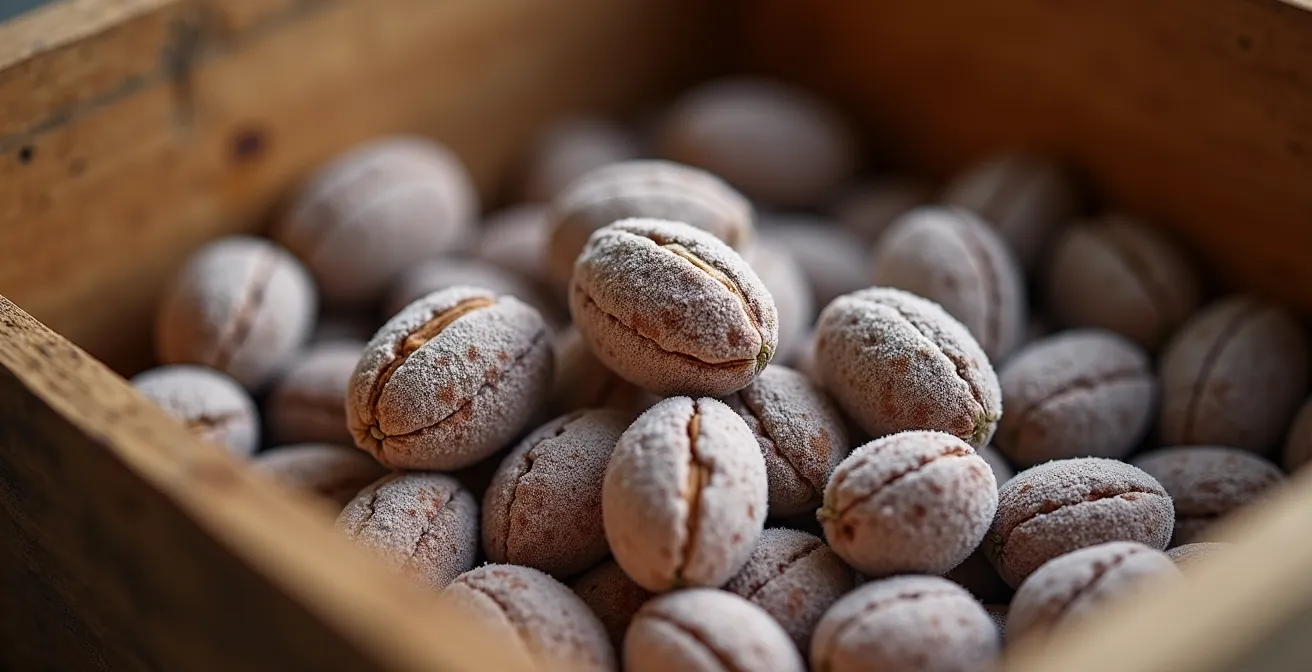
The ultimate flavor of chocolate is not born from the bean or the roast, but forged in a chaotic, 6-day microbial war during fermentation.
- Wild yeasts and bacteria, unique to each farm’s “microbial terroir,” create the essential flavor precursors that roasting later reveals.
- Controlling this ecosystem—managing heat and oxygen—is the true art, determining whether the final product is fruity and complex or sour and flawed.
Recommendation: Instead of focusing only on a bean’s origin, consider the fermentation method (box vs. heap) as a primary indicator of a chocolate’s potential quality and flavor profile.
When you taste a piece of fine chocolate, what are you tasting? The cacao bean’s genetics? The roaster’s skill? While both play a role, the profound complexity—the notes of fruit, flowers, or spice—is primarily an echo of a violent, microscopic battle that took place weeks earlier. The raw, freshly harvested cacao bean is nearly inedible, intensely bitter and astringent. Its transformation into the aromatic precursor of chocolate is not a gentle process; it is the direct result of fermentation, a chaotic and competitive biochemical cascade driven by a succession of wild microbes.
Most discussions of chocolate making mention fermentation as a simple, passive step. The reality is a dynamic and volatile process. It’s an uninoculated, wild fermentation where farmers are not chefs, but ecosystem managers. They create the conditions for a war between different species of yeast and bacteria. The “winners” of this war, and the chemical byproducts they leave behind, directly dictate the potential flavor profile that the roaster can later unlock. Understanding this microbial journey is the key to understanding why two beans from the same region can produce vastly different chocolates.
This article delves into the biochemistry of this critical stage. We will explore how wild microbes create complexity, map the 6-day transformation from bitter to aromatic, and examine how environmental factors and bean genetics alter the outcome. We’ll also see how this delicate process can go wrong and how the final roasting stage is entirely dependent on the quality of the fermentation that precedes it. This is where the soul of chocolate is truly born.
To help you visualize the intricate process behind your favorite treat, the following video offers a glimpse into the large-scale production and packaging of chocolate, where the principles of fermentation are applied industrially.
To navigate the complex science of this transformation, this guide breaks down the key stages and variables that define chocolate’s final flavor. Explore the sections below to understand each critical step, from the microbial battlefield to the final touch of the roaster.
Contents: The Science of Cacao Flavor Creation
- Why Wild Yeasts Create More Complex Flavors Than Controlled Cultures?
- How the 6-Day Fermentation Process Changes Bitter Beans into Aromatic Cocoa?
- Box vs. Heap Fermentation: Which Method Yields Superior Acidity?
- The Vinegar Taste Error: What Happens When Fermentation Goes Wrong?
- How to Adjust Fermentation Time for Criollo vs. Forastero Beans?
- How Does Roasting Temperature Define the Final Chocolate Note?
- Why Does Overheating Chocolate Kill Its Fruity Notes Instantly?
- Why You Lose Delicate Floral Notes if You Roast Above 130°C?
Why Wild Yeasts Create More Complex Flavors Than Controlled Cultures?
The secret to exceptional chocolate flavor lies in its “microbial terroir.” This concept extends beyond the soil and climate to include the unique consortium of wild yeasts and bacteria present in the farm’s environment. When cacao is fermented, it’s a spontaneous process; farmers are harnessing this invisible, local ecosystem to begin the flavor-development journey. This is fundamentally different from controlled processes like brewing beer, where specific, isolated yeast strains are pitched.
Cacao is a wild fermentation—farmers rely on natural microbes in the environment to create unique, local flavors. This phenomenon is known as ‘terroir’: the characteristic flair imparted by a place.
– Scientific American, Chocolate’s Secret Ingredient Is Fermenting Microbes
The diversity of this wild population is its greatest strength. A multitude of different yeast species will compete, each producing a slightly different array of enzymes, alcohols, and esters (fruity compounds). This microbial diversity creates a broad and complex spectrum of flavor precursors. In contrast, while research has demonstrated that a controlled cocktail of just 5 microbial species can mimic the basic process, it can never fully replicate the nuanced, layered complexity generated by the chaotic, competitive environment of a truly wild ferment. The uncontrolled nature of wild fermentation is not a flaw; it is the very source of the most interesting and unique chocolate flavors in the world.
How the 6-Day Fermentation Process Changes Bitter Beans into Aromatic Cocoa?
The transformation of cacao from a bitter seed to a flavorful bean is a meticulously timed, six-day biochemical relay race. This process unfolds in distinct phases, each dominated by a different class of microbe that thrives on the byproducts of the one before it. It begins in an anaerobic (oxygen-free) environment, deep within the wet pulp surrounding the beans.
Days 1-2: The Yeast Phase. Wild yeasts, like Saccharomyces cerevisiae, kickstart the process. They consume the abundant sugars in the pulp, producing ethanol and carbon dioxide. This initial stage generates fruity esters and, crucially, kills the cacao embryo, preventing germination and initiating the breakdown of the bean’s internal cell walls. This releases enzymes that begin to reduce bitterness.
Days 2-4: The Lactic Acid Phase. As the yeasts work, the temperature of the mass rises. This creates the perfect environment for Lactic Acid Bacteria (LAB), such as Lactobacillus species, to take over. They convert remaining sugars into lactic acid, contributing a subtle, yogurt-like tang and further breaking down the pulp.
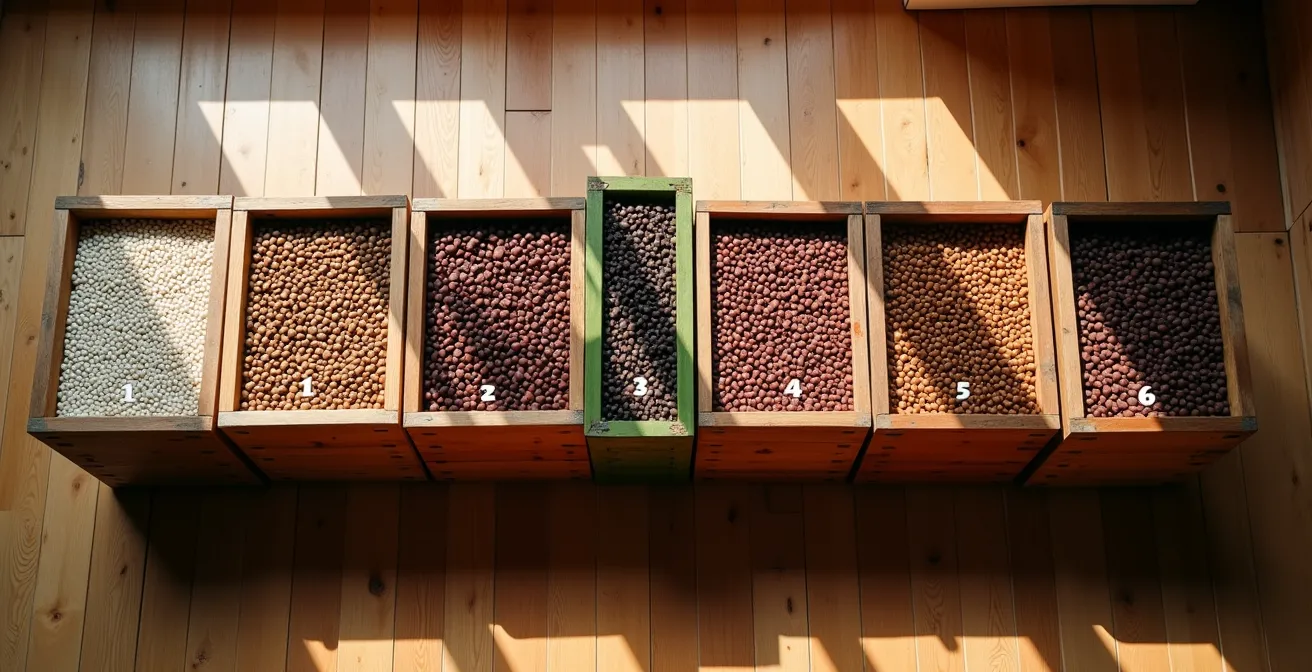
Days 4-6: The Acetic Acid Phase. This is the aerobic (oxygen-rich) stage. Farmers turn the beans, introducing oxygen. This invites Acetic Acid Bacteria (AAB) to dominate. These bacteria convert the ethanol produced by the yeasts into acetic acid—the main component of vinegar. This is a critical step that drives off some harsh flavors, but it must be managed carefully. During this phase, the pile can generate heat up to a 50°C maximum, a temperature that is hostile to most microbes but essential for developing the deep, brown, chocolatey flavor precursors. This entire sequence is a masterclass in microbial succession, with each stage building the chemical foundation for the next.
Box vs. Heap Fermentation: Which Method Yields Superior Acidity?
The environment where fermentation occurs—the “battlefield” for our microbes—has a profound impact on the final flavor profile. The two most common methods are heap and box fermentation, and the choice between them often comes down to a trade-off between control and scale. Each method manages the critical variables of heat and aeration differently, leading to distinct acidic profiles.
Heap fermentation is the traditional method. Cacao beans are piled on the ground, often on a bed of banana leaves, and covered with more leaves. This method is highly variable. The size and shape of the pile affect aeration, and heat can dissipate unevenly, creating temperature gradients throughout the mass. This can lead to a mix of fermentation activities, sometimes resulting in more complex but less consistent flavor, with a blend of acetic and lactic acids.
Box fermentation, by contrast, offers far greater control. The beans are placed in wooden boxes, which can be stacked to create a multi-tiered system. The wood provides excellent insulation, ensuring more stable and consistent heat retention, which is crucial for the later stages of fermentation. Turning the beans is also easier and more uniform, allowing for precise management of aeration. This controlled environment typically favors the development of a cleaner, more pronounced acetic acid character, a hallmark of many fine-flavor chocolates. It’s the preferred method for producers aiming for high quality and consistency.
This table, based on data from applied and environmental microbiology research, summarizes the key differences. As it shows, the choice of method is a strategic decision in ecosystem management that directly influences the final acidity and quality.
| Parameter | Box Fermentation | Heap Fermentation |
|---|---|---|
| Temperature Control | Better insulation, consistent heat | Variable temperature gradients |
| Aeration | Controlled through turning | Less controlled, dependent on pile structure |
| Acidity Profile | Clean acetic acid development | Mixed acetic and lactic acids |
| Capacity | 1,000-2,000 kg | 25-2,500 kg |
| Use Case | Premium fine-flavor cacao | Large volume commercial production |
The Vinegar Taste Error: What Happens When Fermentation Goes Wrong?
The microbial war of fermentation is a delicate balance. When one group of microbes becomes too dominant or when unwanted contaminants invade, the process can go awry, leading to distinct and undesirable off-flavors. The most common error is an overwhelming “vinegar” taste, which is a sign that the final, aerobic stage was mismanaged.
This occurs when Acetic Acid Bacteria (AAB) are allowed to run rampant for too long or with too much oxygen. While a certain amount of acetic acid is essential for developing chocolate flavor, an excess will dominate the profile, masking all the delicate fruity and floral notes created by the yeasts earlier in the process. It’s a classic case of over-fermentation. Other errors can be just as detrimental. Insufficient aeration can prevent the AAB from thriving, allowing other bacteria to produce hammy or putrid notes. Contamination with wild molds can introduce musty flavors, and under-fermentation fails to break down the original bitterness, leaving the beans harsh and astringent.
Effectively managing fermentation means steering the microbial ecosystem away from these pitfalls. A skilled farmer can diagnose these issues by smell and sight, adjusting the turning schedule or pile structure to guide the process back toward a desirable outcome. The following checklist outlines the primary flaws and their microbial causes.
Your Action Plan to Diagnose Fermentation Flaws
- Assess for Vinegar Taste: Smell for sharp, overpowering vinegar notes. This indicates over-fermentation with excess acetic acid production from dominant AAB.
- Check for Putrid Odors: Identify any “hammy” or rotten smells. This signals insufficient aeration, which allowed the wrong anaerobic bacteria to dominate.
- Inspect for Mold: Visually scan the beans for fuzzy, filamentous fungi. A moldy taste is a direct result of contamination during the process.
- Taste for Astringency: Chew a test bean. An excessively bitter or mouth-drying sensation means under-fermentation, leaving polyphenols intact.
- Identify Signs of Putrefaction: Detect smells of decay (ammonia-like). This is a severe failure where proteolytic bacteria have produced compounds like cadaverine and putrescine.
How to Adjust Fermentation Time for Criollo vs. Forastero Beans?
Not all cacao beans are created equal, and their genetic makeup is a critical variable in the fermentation equation. The three main varietals—Criollo, Forastero, and their hybrid, Trinitario—have different physical characteristics that demand different fermentation strategies. The most significant difference lies in the amount and sugar content of the pulp surrounding the bean, which serves as the primary fuel for the microbes.
Criollo beans are the rarest and most prized for their delicate, complex flavors. They have a thin pod, pale-colored beans, and, most importantly, a relatively small amount of pulp. With less sugar available to fuel the microbial activity, their fermentation is shorter and more delicate. According to industry observations, mild Criollo beans typically ferment for only 3 days. Pushing them longer would exhaust the sugar supply and lead to the development of off-flavors.
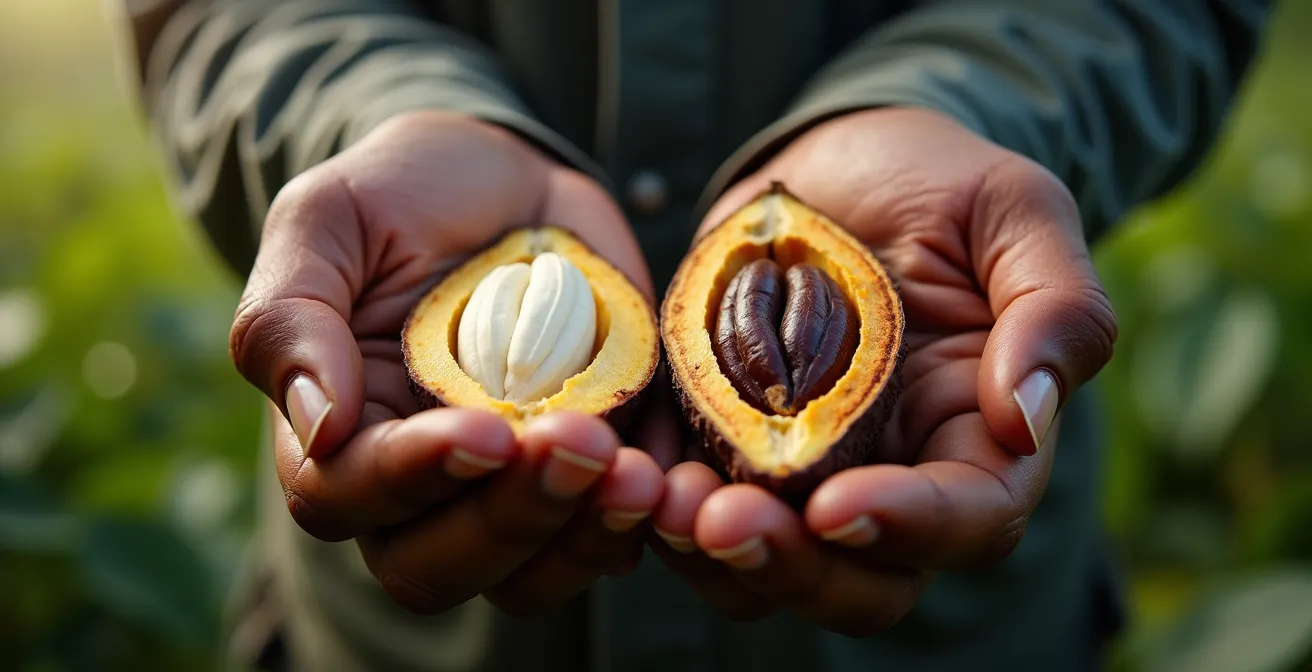
Forastero beans, which make up the vast majority of the world’s cocoa, are the complete opposite. They are robust, have a thick, hardy pod, and are surrounded by a generous, high-sugar pulp. This abundant fuel source can sustain a much longer and more vigorous fermentation. Forastero beans often require 6 to 9 days to fully develop their characteristic deep, chocolatey flavor precursors. Their thick shells also mean they can withstand the higher temperatures and more intense microbial activity of a longer ferment. Trinitario beans, as a hybrid, fall somewhere in between, requiring a fermentation time that is carefully adapted to their specific pulp content and shell thickness, as confirmed by research on Venezuelan cocoa varieties.
How Does Roasting Temperature Define the Final Chocolate Note?
If fermentation forges the building blocks of flavor, roasting is the alchemical process that transforms them into the final chocolate notes we recognize and love. The flavor precursors—amino acids, peptides, and reducing sugars—created by the microbes are relatively tasteless on their own. Roasting provides the thermal energy needed to trigger a series of complex chemical reactions, most notably the Maillard reaction and caramelization, which unlock the aromatic potential of the fermented bean.
The Maillard reaction is a non-enzymatic browning reaction between amino acids and reducing sugars. It’s the same reaction responsible for the flavor of seared steak, toasted bread, and roasted coffee. In chocolate, it creates hundreds of new volatile compounds, including pyrazines, which are responsible for the classic nutty, roasted, and chocolatey notes. During this process, roasting dramatically reduces sugars by up to 95% for fructose and 70% for glucose, consuming them as fuel for these flavor-creating reactions.
The roaster’s job is to apply heat with precision. The temperature profile—how hot and for how long—is a delicate balancing act. A lower, slower roast will preserve the more delicate acidic and fruity notes (esters) from the fermentation. A higher, faster roast will drive the Maillard reaction more aggressively, creating deep, robust, and nutty flavors but at the risk of destroying the very precursors that make a particular bean unique. The final flavor is not just a function of the roast; it’s a dialogue between the roaster’s heat and the bean’s fermented history.
Why Does Overheating Chocolate Kill Its Fruity Notes Instantly?
The aromatic complexity of chocolate is breathtakingly fragile. Scientific analysis shows that thermal processing creates over 600 volatile compounds that contribute to its final aroma. These compounds include the deep, nutty pyrazines from the Maillard reaction, but also a vast array of delicate esters, aldehydes, and ketones that were produced during the yeast-driven phase of fermentation. These are the molecules responsible for the bright, fruity, and floral notes that define fine-flavor chocolate.
However, these delicate compounds are highly volatile and sensitive to heat. When chocolate is roasted too aggressively or at too high a temperature, the intense thermal energy literally breaks these molecules apart or drives them off completely. The fruity esters that provide notes of raspberry or citrus are among the first to go. What remains are the more robust, heat-stable pyrazines. The result is a chocolate that may taste “roasty” or “chocolatey” in a one-dimensional way, but has lost all of its unique origin character and complexity. The microbial signature, so carefully cultivated during fermentation, is effectively erased.
Light roasts preserve more of the bean’s origin character, showcasing bright acidity and fruity, floral aromatics such as jasmine, citrus, or berry. The lighter application of Maillard reaction leaves a clean and vibrant cup.
– General Warfield’s Coffee, The Maillard Reaction and the Art of Coffee Roasting
This is why light-to-medium roasts are favored for high-quality, single-origin beans. The goal is to develop the Maillard reaction just enough to create a foundation of chocolatey notes, while carefully preserving the delicate and unique volatile compounds that tell the story of the bean’s journey through fermentation. Overheating is the fastest way to turn a complex symphony of flavor into a monotonous drone.
Key Takeaways
- Fermentation is not a cleanup step; it’s a “microbial war” that creates the essential flavor precursors for chocolate.
- The farmer acts as an “ecosystem manager,” controlling heat and oxygen to guide wild yeasts and bacteria toward a desirable flavor profile.
- Roasting does not create flavor from scratch; it reveals or destroys the potential forged during fermentation, making temperature control paramount.
Why You Lose Delicate Floral Notes if You Roast Above 130°C?
The line between a perfect roast and a ruined one is measured in degrees. While the Maillard reaction is essential for developing classic chocolate flavor, it has an optimal temperature range that can be at odds with the preservation of the most delicate aromatics. The subtle, sought-after floral notes in chocolate are derived from a class of compounds, including specific alcohols and esters, that are extremely sensitive to heat.
The Maillard reaction technically begins at lower temperatures, but as roasting expert Ziegleder’s research shows, the process becomes truly efficient above 130°C. One study notes that roasting uses up to 25% of the free amino acids in the bean to fuel this reaction. Pushing the temperature toward 140°C accelerates the creation of nutty pyrazines, but it comes at a cost. This level of thermal energy is simply too high for the delicate floral compounds to survive. They are either volatilized away or chemically altered into less aromatic forms.
Therefore, a roaster targeting floral notes must operate with extreme precision, often keeping the bean temperature below the 130-140°C peak. This requires a longer, gentler roast profile that coaxes out flavor without scorching the fragile molecules. It’s a trade-off: sacrificing some of the deep, roasty intensity to protect the ethereal floral bouquet that was so painstakingly developed by the microbes during fermentation. Exceeding this thermal threshold, even for a short time, can irreversibly erase those notes from the final product.
By viewing chocolate flavor through the lens of microbiology, we can appreciate that every bar is a story of a specific place, a unique microbial ecosystem, and the skilled management of a chaotic natural process. To truly master the art of chocolate, one must first master the science of its fermentation.